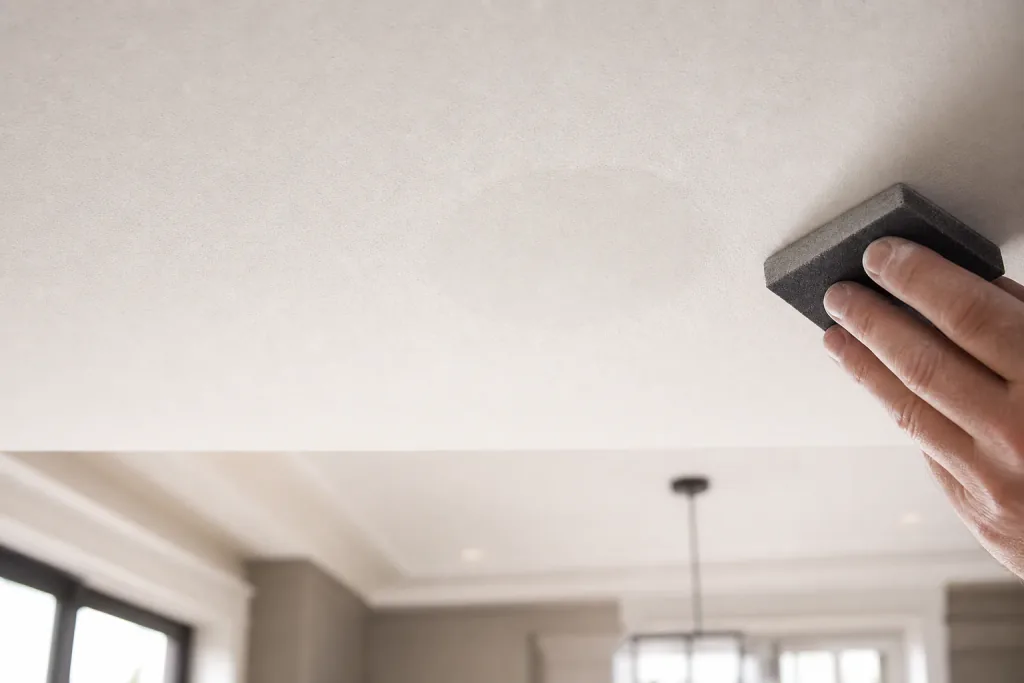

Plan on repainting high-traffic office areas every 2 to 5 years, typical workspaces every 5 to 7 years, and low-use rooms every 7 to 10 years or more. Water damage, visible wear, indoor air quality concerns, or a brand refresh can move that timeline up regardless of age. Higher-quality paint and better ventilation planning stretch every one of those intervals.
TL;DR:
- Lower quality flat paint may require repainting within two years, while a higher quality product lasted 6 to 10 years; labor usually dominates project cost.
- Move the schedule forward when peeling, persistent stains, fading, scuffs, or unresolved odors appear together, especially in visible areas; moisture damage can signal failed paint adhesion.
- Canadian rules set VOC limits of about 100 to 800 g/L across 53 coating categories; choose low emission paint, ventilate, and stage rooms before staff return.
- Use mild detergent and a soft cloth, touch up scuffs with matched paint, and add corner guards or chair rails to reduce abrasion.
- With materials staged and the scope fixed, a room can be repainted in 4 to 6 hours; working overnight or by zone limits disruption.
Table of Contents
- Recommended Repaint Intervals by Space and Use
- Clear Signs It’s Time to Repaint
- Factors That Change How Often You Must Repaint
- Paint Quality, Finish Selection, and Life-Cycle Cost
- Indoor Air Quality, VOCs, and Safe Repainting Practices
- Maintenance and Cleaning Practices That Extend Paint Life
- Field-Tested Repaint Logistics and Turnaround
- Scheduling Your Office Repaint Without the Downtime
- FAQ
- Sources
Recommended Repaint Intervals by Space and Use
Office repaint frequency depends heavily on where the paint lives, not just how old it is. A lobby wall takes more abuse in a month than a storage closet takes in a decade.
- Reception areas, corridors, and lobbies: repaint every 2 to 5 years because foot traffic, luggage carts, and constant hand contact wear down sheen and leave marks fast.
- Workstations and meeting rooms: repaint every 5 to 7 years, since furniture shuffling and moderate contact cause slower, more even wear.
- Low-use rooms, storage, and rarely occupied spaces: repaint infrequently, as minimal contact means paint ages primarily from time and light exposure.
- Washrooms, kitchens, and loading zones: these require special consideration due to moisture, grease, and impact damage accelerating paint failure, often necessitating more frequent repainting.
Mapping your floor plan against these bands gives you a working schedule before a single wall shows damage, aided by guidance on tenant improvement project timelines from Statera Contracting. From there, visible condition and operational factors adjust the exact timing.
Clear Signs It’s Time to Repaint
A schedule gives you a baseline, but a quick visual check tells you whether a space needs attention sooner. Walk through with this list on your next facility inspection.
- Peeling, cracking, bubbling, or flaking paint signals a failed bond with the substrate, often from moisture or poor original prep.
- Persistent stains, including nicotine ghosting, coffee splashes, or water marks that resist cleaning, mean the paint film has absorbed contaminants it can no longer release.
- Fading and uneven sheen show up first near windows and under direct lighting, where UV exposure breaks down pigment and binder.
- Scuffing and abrasion concentrate at chair-back height, door frames, and corners where carts and furniture make repeated contact.
- Odor or hygiene concerns that cleaning can’t resolve usually point to porous paint that’s absorbed moisture or organic residue beneath the surface.
- Branding updates or tenant turnover can trigger a repaint well before the paint itself shows wear, simply to match a new color scheme or signage package.
Any one of these on its own might wait for the next scheduled cycle. Several at once, especially in a high-visibility area, usually means it’s time to move the date up.
Factors That Change How Often You Must Repaint
The interval ranges above assume average conditions. Several variables push a space toward the short end or the long end of its band.
- Occupant traffic and abrasion rates: higher footfall and frequent furniture movement wear down even durable finishes faster than the baseline interval suggests.
- Cleaning intensity and methods: harsh chemicals or abrasive scrubbing degrade paint film faster than gentle, sheen-appropriate cleaning.
- Quality of original prep and repairs: walls that were properly primed and patched hold paint longer than those painted over old damage.
- Finish sheen and color choice: darker colors and flatter sheens show wear and touch-up lines more visibly than lighter, satin or semi-gloss finishes.
- Branding cycles and tenant churn: a company that rebrands every few years or leases to rotating tenants will repaint on that cycle regardless of paint condition.
Pro Tip: Photograph high-wear zones at every inspection and date the images; a visual record makes it easy to spot the point where wear accelerates and budget for the next cycle before damage spreads.
Paint Quality, Finish Selection, and Life-Cycle Cost
Paint grade has an outsized effect on how often you’re back on a ladder. Facility management case evidence shows that switching to a lower-quality flat paint forced a repaint within two years, compared with 6 to 10 years for the higher-quality product it replaced, according to facility paint lifecycle data. Since labor is typically the dominant cost in any repaint project, paying more for paint that lasts longer usually lowers total cost over time.
- Premium paints generally offer better hiding power, more even sheen retention, and easier cleaning without burnishing.
- Lower-cost paint can still make sense where the expected repaint cycle is already short, such as spaces tied to frequent branding updates or high tenant churn.
- Matching paint grade to your realistic repaint interval, rather than defaulting to the cheapest option, is what actually optimizes life-cycle paint costs.
Indoor Air Quality, VOCs, and Safe Repainting Practices
Product choice and scheduling both affect occupant exposure during a repaint. Canada’s Volatile Organic Compound Concentration Limits for Architectural Coatings Regulations set mandatory VOC limits across 53 coating categories, with limits ranging roughly between 100 g/L and 800 g/L depending on the category, which shapes which products are available for commercial use.
Guidance for improving indoor air quality in office buildings recommends ventilation, low-emission products, and administrative controls during renovations to limit occupant exposure to chemicals such as paints and adhesives.
Health Canada, draft indoor air quality guidance for office buildings
- Open windows and run HVAC systems to circulate fresh air during and immediately after painting.
- Stage work by zone so freshly painted areas can off-gas before staff return.
- Choose low-VOC paint products where indoor air quality is a priority, particularly in continuously occupied offices.
- Review the product’s Safety Data Sheet and follow manufacturer instructions, as recommended for reducing occupant exposure.
Tying IAQ choices to your repaint schedule, rather than treating them as a separate concern, keeps compliance and occupant comfort part of the same planning decision.
Maintenance and Cleaning Practices That Extend Paint Life
Routine upkeep delays the point where a full repaint becomes necessary, and facility maintenance guidance treats this as a standard part of any paint program.
- Clean walls gently with a soft cloth and mild detergent; avoid abrasive pads on satin or eggshell finishes, which burnish and leave shiny patches.
- Touch up small scuffs and scratches as they appear rather than waiting for a scheduled repaint, using matched paint stored from the original job.
- Install chair rails, corner guards, or entry mats in high-contact zones to reduce the abrasion that drives early repaints.
- Log inspection dates and photos by room so you can forecast next year’s repaint budget instead of reacting to damage.
Pro Tip: Keep a labeled can of each room’s exact paint color and sheen on a shelf; a five-minute touch-up often replaces what would otherwise become a half-day repaint job.
Field-Tested Repaint Logistics and Turnaround
A single room can often turn around in 4 to 6 hours when the crew stages materials ahead of time and the scope is locked before work starts, a pace we’ve seen hold up even in fast-turnover hotel settings. Clear scope and solid prep prevent the rework that shortens paint life and drags out timelines. For IAQ-sensitive offices or schedule-tight projects, loop in a professional before locking the plan.
— Enrico
Scheduling Your Office Repaint Without the Downtime
We handle office painting across the GTA with low-VOC product options and scheduling built around your business hours, not ours.
- We stage work overnight or by zone so occupied areas stay usable during the project.
- We offer estimates so you know the cost before work begins.
- We maintain workmanship standards and provide thorough worksite cleanup.
If you’re mapping out a repaint cycle for a lobby, corridor, or full office floor, request a quote and we’ll build a schedule around your occupancy, not just the calendar.
FAQ
How much paint does it take to paint a 2,000 square foot house?
The amount depends on ceiling height, number of coats, and how much trim and detail work is involved, so there’s no single figure that applies to every layout. A contractor can give you an exact quantity after measuring your specific walls and ceilings.
What is the hardest color to paint over?
Dark, saturated colors like deep reds, navy, and black are generally the hardest to cover because they require more coats of primer and topcoat to fully hide. Reds in particular can bleed through standard primer without a dedicated stain-blocking product.
Can you paint a room in 3 hours?
A small room with minimal prep and a single coat can sometimes move quickly, but most rooms need time for patching, priming, drying between coats, and cleanup. Staged crews can turn around a standard room in 4 to 6 hours when scope is locked in advance, which is closer to a realistic timeline.
How often do you need to repaint a home?
Home repaint frequency follows similar logic to offices: high-traffic entryways and kitchens need attention every few years, while bedrooms and low-use rooms can go a decade or longer between coats. Paint quality, sunlight exposure, and how well the space is maintained all shift that timeline in either direction.