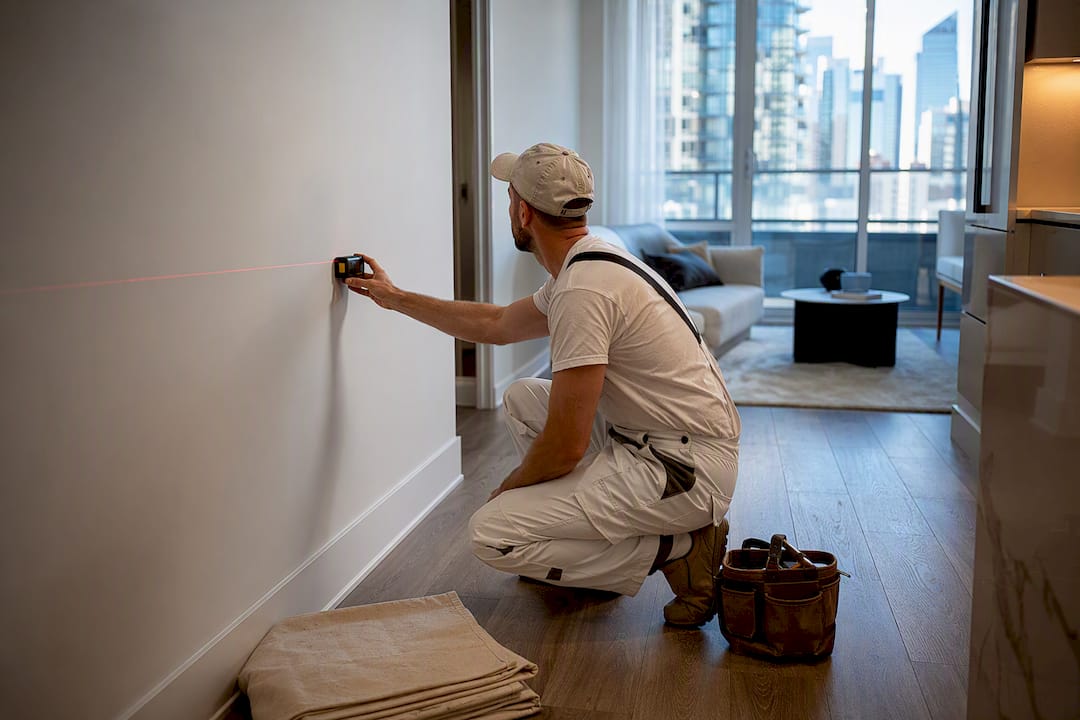
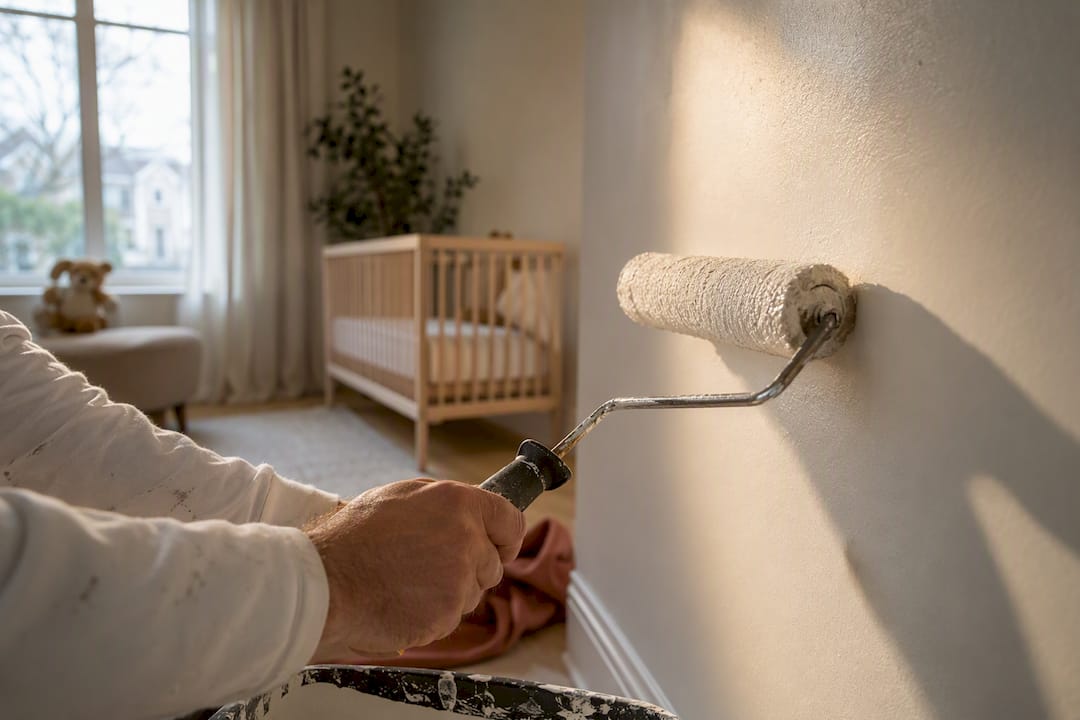
Use low or zero VOC paints whenever you want less fume exposure and less downtime after a paint job. Choose zero VOC when occupants must stay in the space during painting or when someone in the home is pregnant, has asthma, or reacts strongly to chemical odors. For everything else, pick a well-tested low VOC product suited to the surface, then manage exposure with ventilation. Always check the technical data sheet before you buy, not just the label.
TL;DR:
- VOC emission from paint can continue for up to two weeks, even after the smell fades, especially with zero VOC formulas.
- Always verify VOC levels through the technical data sheet rather than relying solely on product labels or marketing claims.
- Certification by third-party agencies like GREENGUARD adds confidence that the product meets stricter emission standards.
- Proper application sequencing, including ventilation and soft furnishings removal, significantly reduces indoor air exposure during and after painting.
- Water-based low VOC paints now often outperform oil-based options in durability, drying time, and ease of cleanup, making them the preferred choice for most interior surfaces.
Table of Contents
- What Do “Low VOC” and “Zero VOC” Actually Mean?
- How Do VOCs Affect Indoor Air Quality?
- How Do You Choose a Paint That’s Genuinely Low VOC?
- How Do You Reduce Exposure During a Paint Job?
- How Sigma Painting Chooses Low Emission Products on the Job
- When Can You Move Back Into a Freshly Painted Room?
- Water-Based Versus Oil-Based: Which Performs Better?
- Do Low VOC Paints Hold Up as Well as Conventional Ones?
- What’s the Environmental Footprint Beyond the VOC Number?
- How Much More Do Low VOC Paints Cost?
- What Are the VOC Rules Where You Live?
- Which Low VOC Products Work Best for Different Surfaces?
- What Actually Matters When You’re Choosing a Paint
- Get a Low-Odor Paint Job Done Without the Guesswork
- Where to Read More on VOC Standards and Air Quality
- Sources
- FAQ
What Do “Low VOC” and “Zero VOC” Actually Mean?
VOC stands for volatile organic compound, the carbon-based chemicals that evaporate from wet paint as it dries and cures. Paint manufacturers use them as solvents and carriers to keep pigment and resin workable in the can. Once the paint hits the wall, those compounds start releasing into the air, which is what you’re smelling.
The industry generally treats low VOC paint as anything under 50 grams per liter, while zero or no VOC paint tops out around 5 grams per liter or less. Those numbers matter more than the words on the front of the can, because “low VOC paint benefits” get used as marketing shorthand long before a product ever gets lab tested against that threshold.
A few things to check before you trust a label:
- The base paint may test at zero VOC, but tinting it with a colorant can push the final VOC count higher.
- Sheens matter: high gloss and semi gloss formulas often carry more VOCs than flat or eggshell versions of the same product line.
- “Natural” or “eco” on the label is not a regulated claim. Only the g/L figure on the data sheet tells you anything concrete.
Read the can, then read the paperwork behind it. The gap between the two is where most of the confusion about eco friendly wall paint actually lives.
How Do VOCs Affect Indoor Air Quality?
Fresh paint fumes cause real, immediate symptoms for a lot of people. Headaches, eye and throat irritation, dizziness, and nausea show up most often, and they hit children, pregnant people, and anyone with asthma or chemical sensitivities hardest.
Here’s the part most homeowners get wrong: smell fading doesn’t mean the paint is done emitting. Manufacturer guidance on some zero VOC formulas notes that most emissions happen during application and within the first 48 hours, but certain compounds can keep releasing at low levels for up to two weeks after the job wraps.
Fume fact: Emission timelines can extend well past the point where a room stops smelling like fresh paint, so odor alone is not a reliable signal that the air is clear.
There’s a second layer to this that most painting guides skip entirely. Chamber studies on architectural coatings show that VOCs released from paint don’t just sit in the air as-is. They react with other indoor compounds and outdoor ozone that drifts in through open windows, forming secondary organic aerosols, essentially new airborne particles created after the fact. That’s one more reason ventilation matters even once the smell is gone.
How Do You Choose a Paint That’s Genuinely Low VOC?
The can’s front label is advertising copy. The technical data sheet, sometimes called a TDS, is the document with the actual VOC figure in grams per liter, and it’s usually posted on the manufacturer’s website or available on request. If a retailer or contractor can’t produce one, treat that as a warning sign, not a technicality.
Third-party certification adds a layer of verification the label alone can’t give you. UL GREENGUARD and GREENGUARD Gold testing checks a product’s chemical emissions against specific exposure limits, with Gold covering stricter criteria aimed at schools and healthcare settings. A certified product has been independently tested; a product that just says “low odor” has not.
What to check before you buy:
- Ask for the technical data sheet, not just the marketing sheet, and confirm the g/L figure matches what the retailer claims.
- Look for GREENGUARD or GREENGUARD Gold certification if anyone in the home is highly sensitive to chemicals.
- Compare the VOC figure across the same sheen and finish, since gloss levels change the formula.
- If durability is non-negotiable (high-traffic trim, kitchen cabinets, kids’ rooms), don’t sacrifice quality chasing the lowest possible number.
That last point deserves emphasis. Industry trend coverage on interior architectural coatings points out that a high-performing low VOC paint paired with solid ventilation practice usually beats a weaker zero VOC product that scuffs or yellows within a year.
Pro Tip: Ask for the data sheet before you ask about the price. A five-minute email to the manufacturer will tell you more about a product’s actual VOC content than an hour of scrolling reviews.
How Do You Reduce Exposure During a Paint Job?
Getting a low emission paint job right is mostly about sequencing, not just product choice. Here’s the order that actually works:
- Pick your day. Paint on a cool, dry day when you can keep windows open without freezing or baking the room; humidity slows drying and extends odor.
- Clear the soft stuff. Remove or cover drapes, rugs, and upholstered furniture before you start. Fabric absorbs paint odor and re-releases it for days, which is why a freshly painted room can still smell “off” a week later even with the windows cracked.
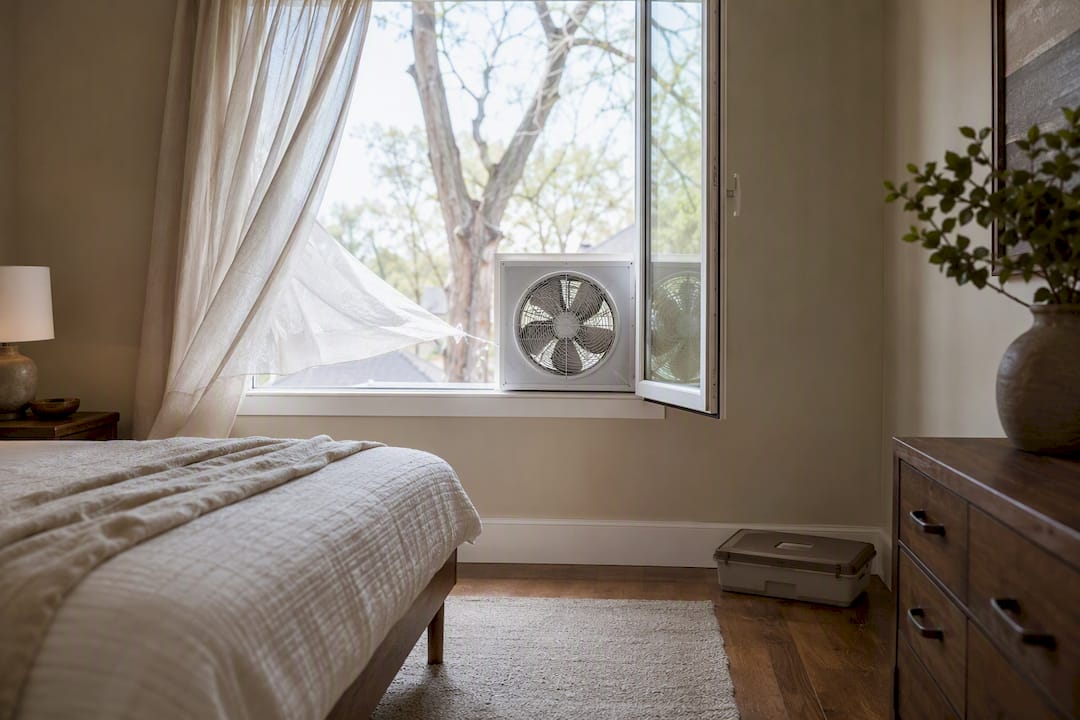
- Set up cross ventilation. Position a fan in one window blowing air out, and crack a window or door on the opposite side of the room to pull fresh air through, rather than just running one fan in a closed space.
- Respect dry times between coats. Rushing a second coat before the first has fully cured traps solvent underneath and extends the total odor period.
- Add filtration if needed. A portable air purifier combining activated carbon with a HEPA filter helps pull residual particles and odor-causing compounds out of the air faster than ventilation alone in a closed-up house.
Skip the folk remedies. Bowls of vinegar, sliced onions, and candles do essentially nothing against actual VOC off-gassing, no matter how often they show up in home hacks. Active air exchange is what clears fumes, not passive absorbers sitting in a corner.
Pro Tip: Run the fan setup for at least a full 24 hours after the last coat, not just while you’re painting. Most of the lingering smell homeowners complain about comes from stopping ventilation too early.
How Sigma Painting Chooses Low Emission Products on the Job
Professional crews don’t guess at VOC content. Sigma Painting sources coatings from established manufacturers like Cloverdale Paint and PPG Paints, which means every project draws from product lines with published technical data rather than off-brand cans with vague labeling.
On site, that translates into a repeatable routine: containment to keep dust and overspray out of living areas, a ventilation schedule mapped to the specific rooms being painted, and a cleanup pass before the crew leaves for the day.
If you’re vetting a contractor for a low-emission job, ask these questions directly:
- Which specific product and sheen will be used, and can I see the data sheet?
- What’s the VOC figure in g/L for that exact product, not the product line in general?
- How will you ventilate the space during and after application?
- What’s your plan for protecting floors, furniture, and fixtures during the job?
A contractor who answers all four without hesitation is one who actually plans for indoor air quality, not just paint coverage.
When Can You Move Back Into a Freshly Painted Room?
Most rooms are safe to walk through and use lightly within a few hours, once the paint is dry to the touch. Full return to normal occupancy, meaning windows can stay closed and furniture goes back in place, is a different question, and it depends heavily on which paint you used and how well the room was ventilated.
Low odor and zero VOC formulas tend to allow a faster practical return to a space because the odor itself dissipates quickly, which matters most in situations where people can’t simply stay elsewhere. That’s a real advantage in occupied homes, nurseries, or healthcare settings where a room needs to go back into use fast. But odor dissipating and emissions actually stopping are not the same event, and treating them as identical is the single most common mistake homeowners make.
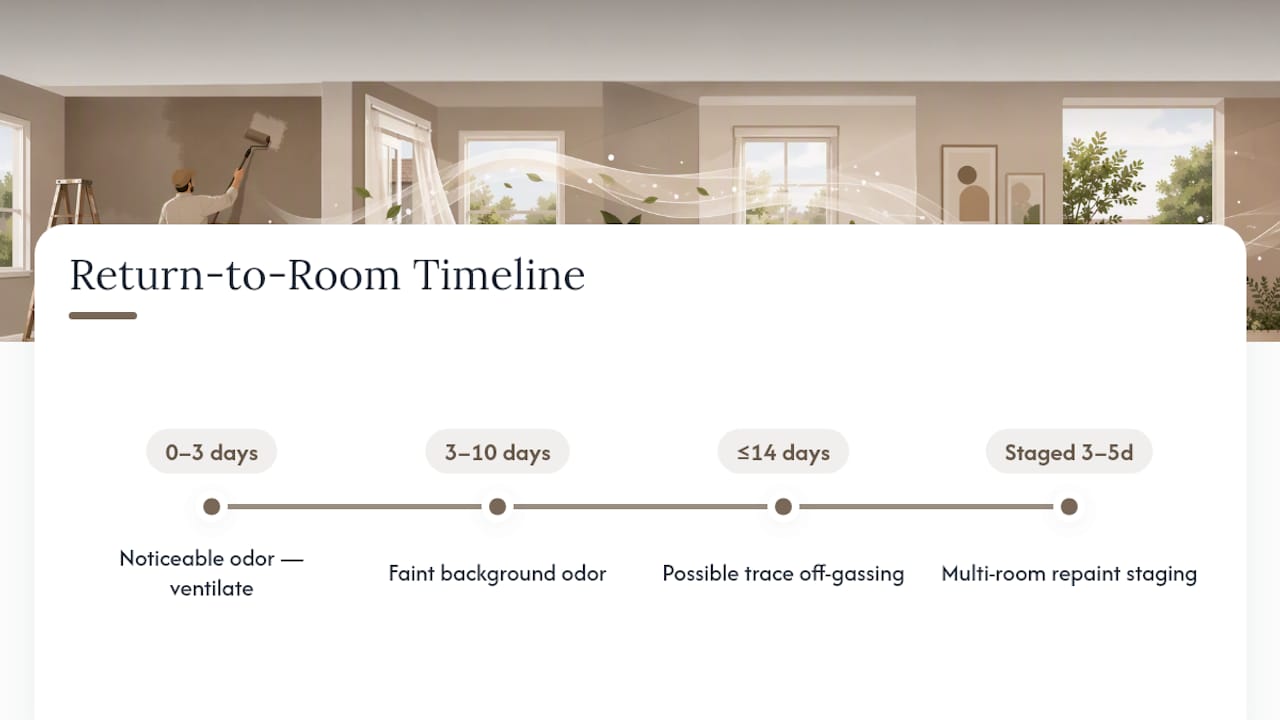
A realistic timeline looks like this: expect noticeable smell for the first one to a few days with active ventilation running, a much fainter background odor for several days after that, and the possibility of trace off-gassing continuing for up to a couple of weeks on some zero VOC products, per manufacturer guidance. If you’re planning a multi-room repaint, staging the work over three to five days gives earlier rooms time to fully clear before you’re living around fresh paint in the next one.
Water-Based Versus Oil-Based: Which Performs Better?
Water-based paints, usually labeled acrylic or latex, dominate the low VOC category for a simple reason: water replaces most of the solvent that oil-based formulas rely on. That’s why nearly every zero VOC product on the market today is water-based. They dry faster, clean up with soap and water, and off-gas far less than their oil-based counterparts.
Oil-based (alkyd) paints still show up in specific applications, mainly high-traffic trim, doors, and some cabinetry, because of the hard, glass-smooth finish they produce. But traditional oil-based formulas carry significantly higher VOC content and take longer to cure fully, which extends both odor and downtime. Genuine zero VOC oil-based options are rare and typically cost more.
For most interior walls and ceilings, water-based low VOC paint now matches or beats oil-based performance on washability and color retention, closing a gap that used to favor oil by a wide margin. Where oil-based still has an edge is on ultra-smooth trim work and certain stain-blocking jobs, where its leveling properties are harder to replicate. If you’re weighing the two for a specific surface, the honest answer is that water-based should be your default, and oil-based should be the exception you choose only when a specific finish demands it.
Do Low VOC Paints Hold Up as Well as Conventional Ones?
Early water-based low VOC formulas earned a reputation for chalky finishes and weak stain resistance, and that reputation still lingers in a lot of homeowner decision-making even though it’s outdated. Current low VOC lines from major manufacturers have closed most of that performance gap, particularly in scrubbability and fade resistance under normal interior conditions.
Coverage is where you’ll still notice a real difference between a budget low VOC can and a premium one. Cheaper low VOC paints often need a third coat to achieve full opacity, especially over dark or heavily patterned existing colors, which erases any time savings you thought you were getting from a faster-drying formula. Premium lines with higher pigment loads and better binders typically cover in two coats, matching conventional paint.
Durability under heavy wear, kitchens, bathrooms, kids’ rooms, hallways, still varies more by product tier than by VOC category alone. A high-end low VOC paint from a reputable line will outperform a bargain conventional paint on scrubbability nearly every time. The honest takeaway: don’t assume “low VOC” automatically means “lower performance.” Assume the price tier tells you more about durability than the VOC number does.
What’s the Environmental Footprint Beyond the VOC Number?
Lower VOC content addresses indoor air quality and outdoor smog contribution, but it’s not the whole environmental picture. Manufacturing any paint, low VOC or not, involves resin production, pigment processing, and packaging, all of which carry a carbon and water footprint independent of what’s in the finished can.
Disposal is the piece most homeowners overlook entirely. Leftover paint, whether it’s zero VOC or conventional, counts as household hazardous waste in most municipalities and shouldn’t go down a drain or into regular trash. Many regions run dedicated paint recycling or drop-off programs specifically because unused paint, cans, and rinse water can contaminate water systems regardless of the VOC rating on the label.
Packaging is a smaller but growing consideration. Some manufacturers have shifted toward recycled-content cans and reduced plastic in packaging as part of the same sustainability push that’s driving lower-VOC formulas, tying into the broader trend toward lower-emission interior coatings across the industry. If you care about the full footprint of a paint job, factor in how much you’re buying (avoiding overbuying cuts waste directly), whether your local program accepts leftover cans, and whether the manufacturer publishes any sustainability data beyond VOC content. The VOC figure is the easiest number to find, but it’s not the only one that matters.
How Much More Do Low VOC Paints Cost?
That gap has narrowed significantly as low VOC has become the default formulation for most major paint lines rather than a specialty product, so for a lot of standard interior paints, you’re no longer paying extra just for the VOC rating.
Where the premium still shows up is at the top end: certified zero VOC lines, especially those with GREENGUARD Gold certification, and specialty finishes like limewash or Venetian plaster tend to cost more per gallon than a standard low VOC wall paint. Budgeting for a project should account for coverage rate as much as sticker price. A premium low VOC paint that covers a room in two coats can end up cheaper overall than a discount can that needs three coats to look right.
For a realistic budget, price out the actual square footage and coat count rather than comparing gallon prices in isolation, and ask your contractor whether their estimate already factors in a specific product line or leaves room selection open. If pricing transparency matters to you, that’s worth asking about directly before signing anything, since some quotes bundle materials at a markup while others itemize product cost separately.
What Are the VOC Rules Where You Live?
VOC limits are set at different levels depending on where you are, and they don’t all use the same numbers. In the United States, the EPA sets federal limits on VOC content for architectural coatings, but individual states, most notably California through its South Coast Air Quality Management District, enforce stricter limits than the federal floor. Many major manufacturers now formulate to the strictest applicable regional standard nationwide, rather than making a separate batch for each jurisdiction.
In Canada, VOC limits for architectural coatings fall under federal regulations enforced by Environment and Climate Change Canada, with limits broadly aligned with the stricter end of the North American standards rather than a looser baseline. That’s part of why a lot of paint sold across Canada already meets low VOC thresholds by default, even on cans that don’t heavily market the fact.
The practical upshot for a homeowner: the regulatory floor sets a legal minimum, but the certifications discussed earlier, GREENGUARD and GREENGUARD Gold in particular, go well beyond what any regional VOC law actually requires. Regulation tells you a product is legal to sell. Certification tells you it was independently tested against a stricter benchmark. Don’t confuse the two when you’re comparing products.
Which Low VOC Products Work Best for Different Surfaces?
Different parts of a home put different demands on a low VOC paint, and matching the product to the job matters more than chasing a single “best” brand across every surface.
For interior walls and ceilings, a mid-to-premium low VOC acrylic in eggshell or matte finish handles most rooms well, balancing washability with a softer sheen that hides minor wall imperfections. Bathrooms and kitchens benefit from a low VOC paint specifically formulated with mildew resistance, since humidity is the real enemy in those rooms, not just wear.
Trim and doors take more abuse from hands, feet, and furniture, so a low VOC paint in semi-gloss or satin, formulated for hard surfaces, holds up better than a wall-grade product pressed into service on baseboards. Cabinets and furniture need a different category entirely: cabinet-grade coatings, whether sprayed or brushed, are formulated for adhesion and hardness in ways standard wall paint isn’t, which is why cabinet repainting typically uses a dedicated product line rather than leftover wall paint.
Specialty finishes like limewash and Venetian plaster occupy their own niche, offering naturally low-emission profiles by nature of their mineral-based composition, but they demand different application skills than standard rolling and brushing. If a room calls for one of those finishes, factor that skill gap into whether it’s a DIY job or one worth handing to a professional.
What Actually Matters When You’re Choosing a Paint
The advice that gets repeated most often, “just buy zero VOC and you’re covered,” misses the point homeowners actually need to understand. VOC content is one variable in a decision that also includes coverage, durability, and how the room actually gets used after the paint dries. A zero VOC paint that needs three coats and scuffs within a year isn’t a win for anyone, no matter how clean the can’s label looks.
What the evidence in this guide actually supports is a sequencing problem, not a shopping problem. Get the ventilation plan right, respect dry times, and clear soft furnishings before the first coat goes on, and the VOC rating of the product becomes a smaller variable in your total exposure than most people assume. Conventional advice treats product choice as the whole solution. It’s really just the first half.
If you take one thing from this guide, prioritize the data sheet over the marketing copy, and prioritize ventilation timing over brand loyalty. Both are things you control directly, and both matter more than which zero VOC line you pick off a shelf.
— Enrico
Get a Low-Odor Paint Job Done Without the Guesswork
Professional painting services offer a practical alternative to piecing together a low-emission paint job yourself, including product research, ventilation planning, and scheduling. Every project draws on premium coatings from established suppliers like Cloverdale Paint and PPG Paints, so you’re not stuck guessing at a data sheet you can’t find.

A typical estimate covers more than a price per gallon. For interior painting and kitchen or cabinet repainting jobs where fumes and downtime matter, A thorough painting quote process includes product selection matched to the surface, a ventilation and containment plan for the work area, and a cleanup pass before the crew leaves. Occupied homes, nurseries, and offices with people working nearby all get the same attention to protecting the space during the job, not just after it.
Sigma Painting serves homeowners, landlords, and builders across the Greater Toronto Area with free, fixed, and rapid estimates. When planning a room that needs a fast return to normal use, it is advisable to inquire about low VOC and zero VOC product options for the space.
Where to Read More on VOC Standards and Air Quality
For deeper reading beyond this guide, the ChemRxiv study on coating emissions covers the chemistry behind VOC off-gassing, while Paint.org’s trend coverage tracks where the coatings industry is headed on certifications. For homeowner-friendly product context, Ottawa Cabinet Painting’s guide walks through low VOC basics from a similar practical angle.
Sources
- How to get rid of paint smell — Homebuilding
- How to get rid of paint smell — BobVila
- Watching paint dry I: VOC emissions from architectural coatings and their impact on SOA formation — ChemRxiv
FAQ
What Is a Low VOC Paint?
A low VOC paint is a coating formulated to contain fewer volatile organic compounds than conventional paint, which reduces fumes and odor during and after application.
What Paint Brand Has the Lowest VOC?
VOC content varies by specific product line and even by sheen within the same brand, so the honest answer is to compare the technical data sheet for the exact product and finish you’re buying rather than assuming one brand always wins across its whole catalog.
What Is Very Low VOC Paint?
“Very low VOC” typically describes paint approaching the zero VOC threshold, generally 5 grams per liter or less, though the term isn’t as strictly standardized as the low VOC and zero VOC categories.
Does Benjamin Moore Paint Have Zero VOCs?
Some Benjamin Moore product lines are formulated and marketed as zero VOC in their base form, but tinting can add VOCs, so check that specific product’s data sheet rather than assuming the whole line tests at zero.
How Long Does Low VOC Paint Smell Last?
Expect the strongest odor in the first 24 to 48 hours, with a fainter smell tapering off over several days, though some products can continue low-level off-gassing for up to two weeks per manufacturer guidance.