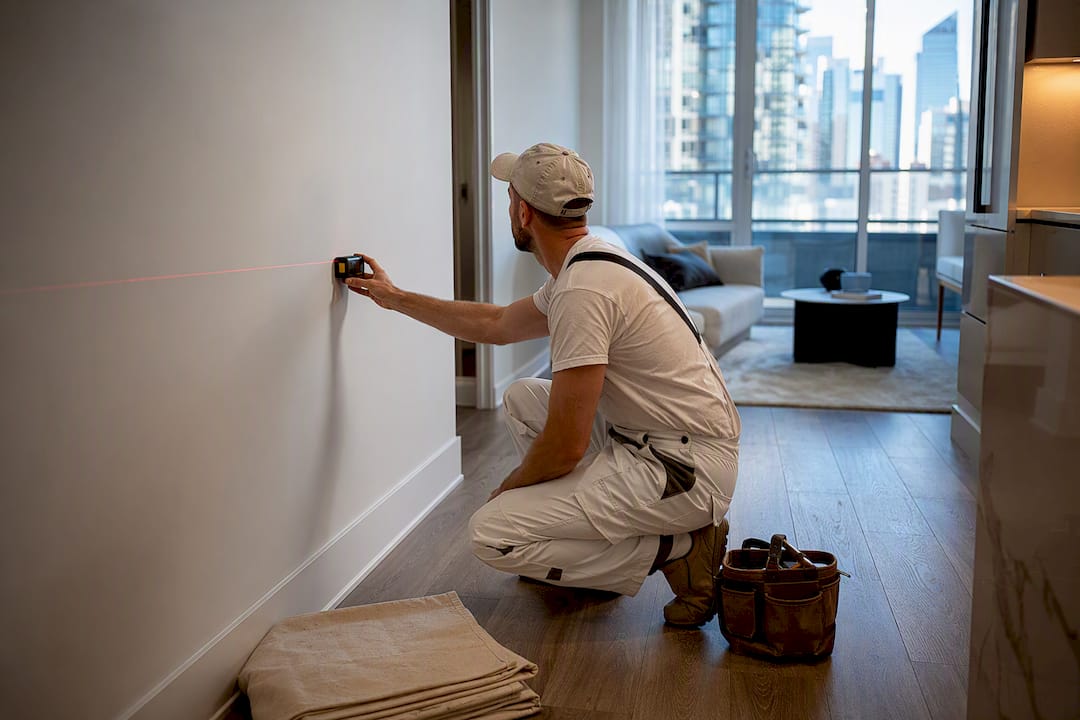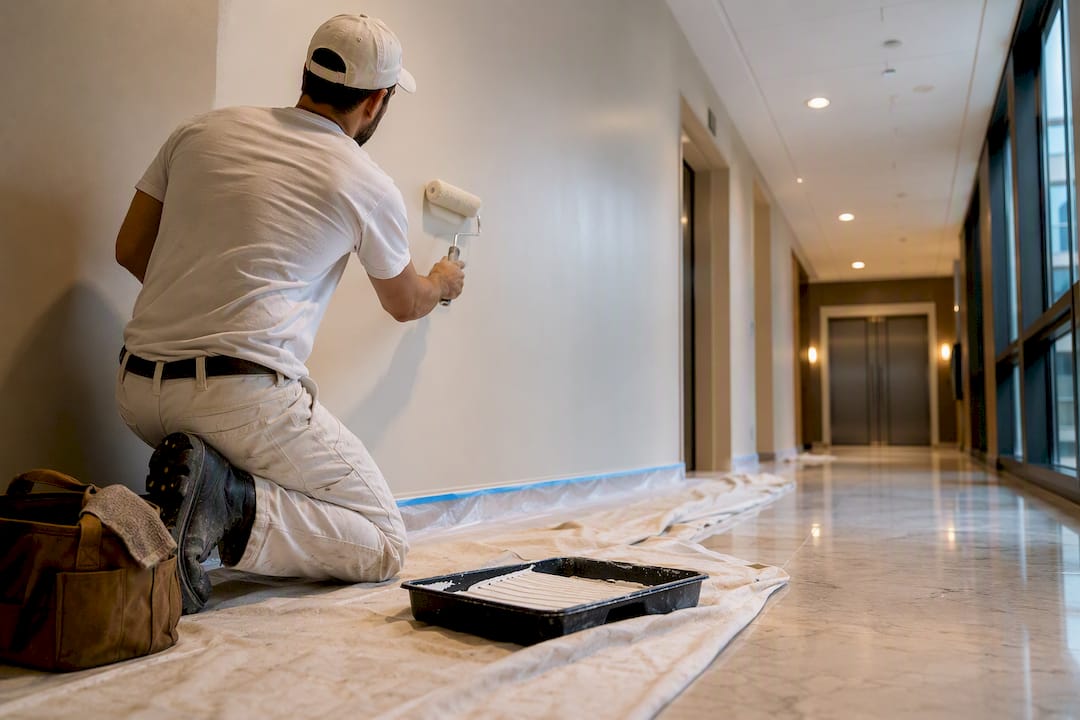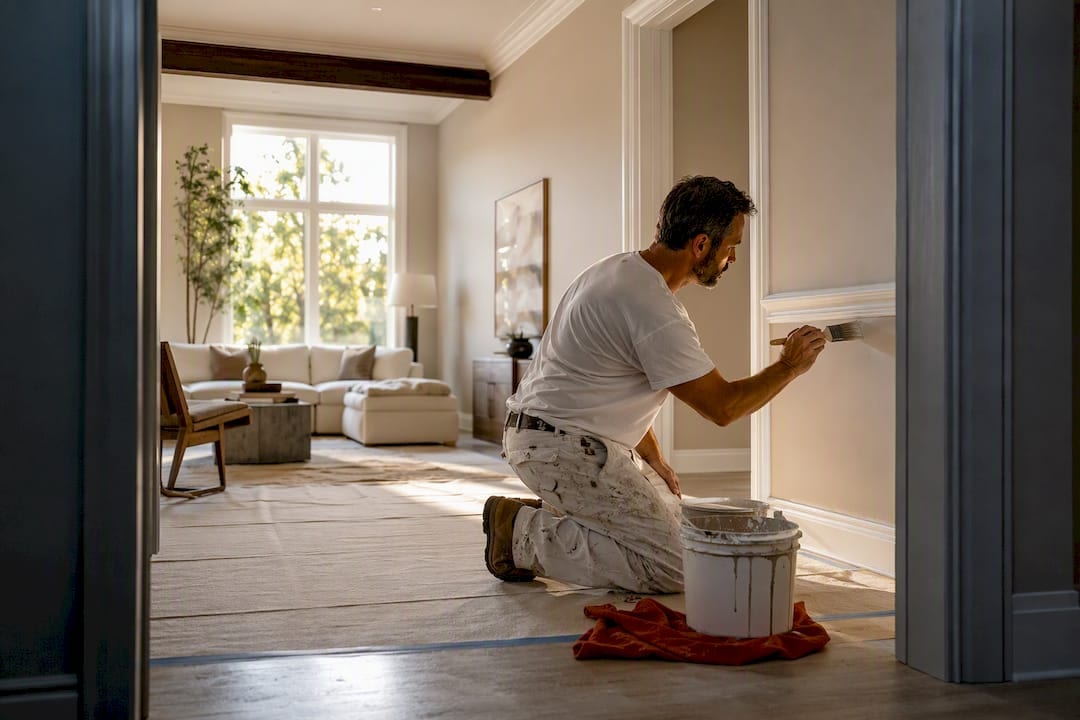
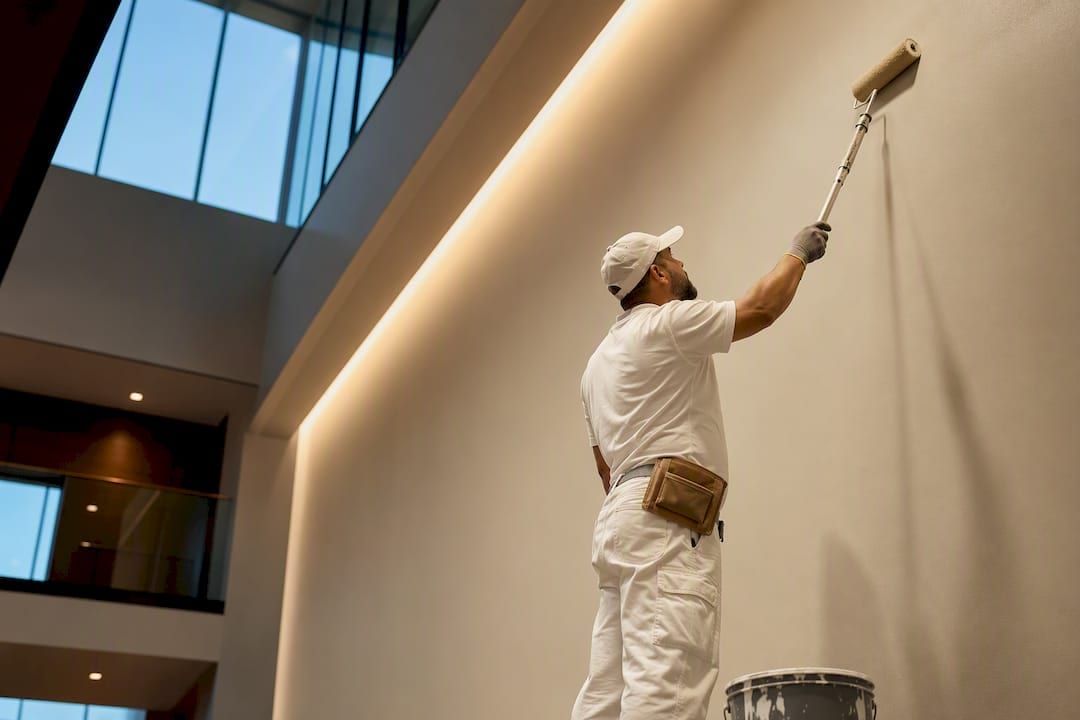
Interior commercial painting runs $1.50 to $6.00 per square foot, while exterior work costs $2.50 to $8.00 per square foot, depending on surface prep, access, and coating system. A 2,500 square foot job typically lands between $5,000 and $15,000. Treat these as planning benchmarks only. Get a line-item proposal or run Sigma Painting’s instant quote tool before locking a budget.
TL;DR:
- Most commercial painting projects range from $2,000 to $15,000 for 2,500 square feet, depending on surface prep, coating system, and access requirements.
- Surface preparation accounts for most cost differences; incomplete scope or skipping inspection often leads to unforeseen change orders.
- Access equipment, especially on higher buildings, can add hundreds to thousands of dollars daily, influencing overall project cost significantly.
- Pricing should be broken down into detailed line items like prep, coats, materials, and equipment, rather than relying on lump sum estimates.
- Environmental and regulatory factors, such as lead containment or permits, can add unexpected costs and scheduling delays if not addressed upfront.
Table of Contents
- Commercial Painting Cost Per Square Foot: Ranges and Real Examples
- What Drives Commercial Painting Costs Up or Down?
- How Contractors Actually Price a Commercial Job
- Comparing Bids: The Line Items That Actually Matter
- Scheduling Around Weather and Seasonal Pricing
- Contracts, Payment Terms, and the Costs Buried in the Fine Print
- Sigma Painting’s Approach to Transparent Estimating
- Permits and Regulatory Costs You Might Not Expect
- An Editorial Take on Getting This Right
- Get a Line-Item Estimate From Sigma Painting
- Sources
- FAQ
Commercial Painting Cost Per Square Foot: Ranges and Real Examples
Every commercial painting estimate starts with a per-square-foot range, but that range hides more than it reveals. The low end of $1.50 per square foot usually means smooth drywall, minimal patching, and a single finish coat over an existing color. The high end of $6.00 or more typically means heavy surface prep, two full coats, specialty coatings, or tight access, which slows down every part of the job.
Paint pricing guides put interior commercial rates between $1.50 and $6.00 per square foot and exterior rates between $2.50 and $8.00 per square foot. Industry averages land closer to $2 to $6 per square foot across both categories, with a 2,500 square foot job commonly totaling $5,000 to $15,000. The spread exists because “commercial painting” covers everything from a single retail storefront to a six-story parking structure, and those two jobs share almost nothing in terms of labor or equipment needs.
Here’s how those ranges translate into real budgets for common project sizes:
- 1,500 sq ft office suite (interior only): $2,250 to $9,000, with most straightforward jobs landing near $3,500 to $5,500 after standard prep and two coats.
- 2,500 sq ft retail space (interior, one accent wall system): $5,000 to $15,000, assuming drywall patching and a mid-grade coating.
- 5,000 sq ft warehouse or multi-tenant building (exterior stucco or brick): $12,500 to $40,000, depending on scaffolding needs and substrate condition.
- 5,000 sq ft interior office buildout (new construction, primer plus two coats): $10,000 to $22,500 before trim and door unit pricing.
Specialty work breaks these ranges entirely. High-rise exterior repaints that require swing stages or boom lifts often run well above $8.00 per square foot once rigging time gets factored in. Parking structures with epoxy floor coatings or traffic-bearing membranes can push total project cost past $10.00 per square foot when you include surface grinding, crack repair, and cure time. Interior epoxy floor systems for warehouses or commercial kitchens follow a similar pattern: the material itself isn’t expensive, but the prep work (grinding, moisture testing, patching) drives the number up fast.
The gap between a $5,000 quote and a $15,000 quote for the same 2,500 square foot space almost never comes down to labor rates. It comes down to what’s actually happening on the walls before paint goes on, which is exactly what the next section breaks down.
What Drives Commercial Painting Costs Up or Down?
Surface preparation is usually the single largest variable in any commercial bid, and it’s the one most property managers underestimate when comparing quotes. Coating industry analysis identifies surface prep, access equipment, coating selection, and scheduling constraints as the four factors that move a price the most, often more than labor rates or paint brand ever will.
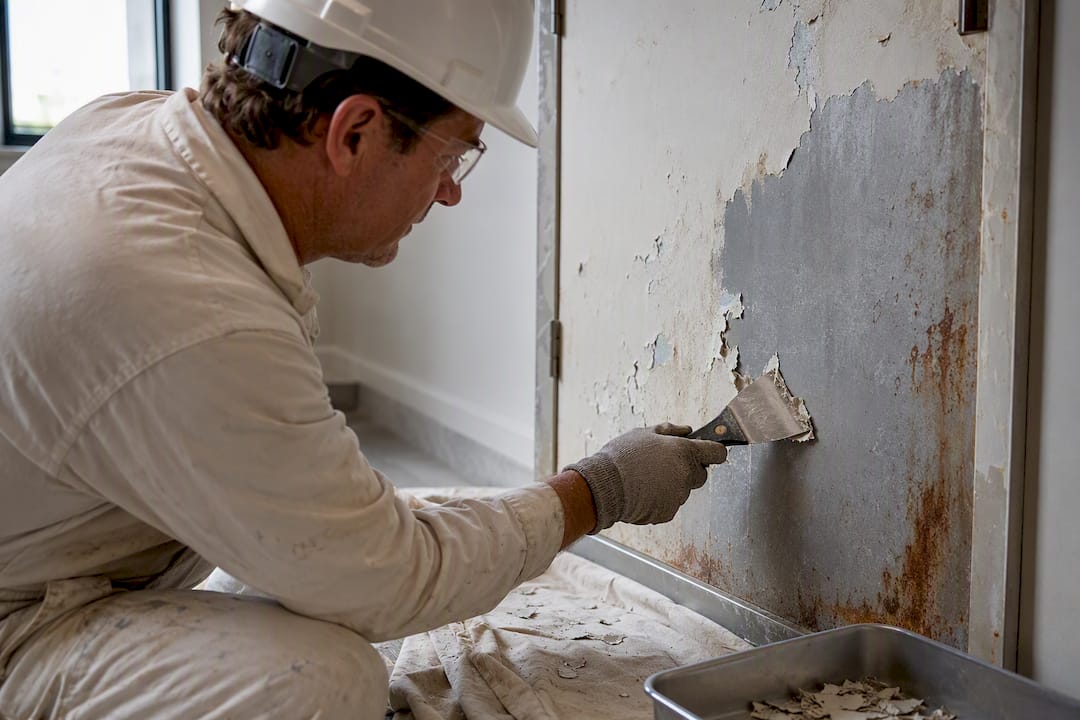
Surface preparation covers scraping failed paint, patching drywall, repairing rust on steel components, and addressing lead paint or asbestos containment protocols on older buildings. A wall that just needs a light sand and a coat of primer costs a fraction of one with peeling paint down to bare substrate, active rust bleeding through, or suspected lead content that triggers containment requirements. Contractors who skip a proper walk-through often underbid prep, then hit change orders once the crew opens up a wall and finds rot or corrosion nobody accounted for.
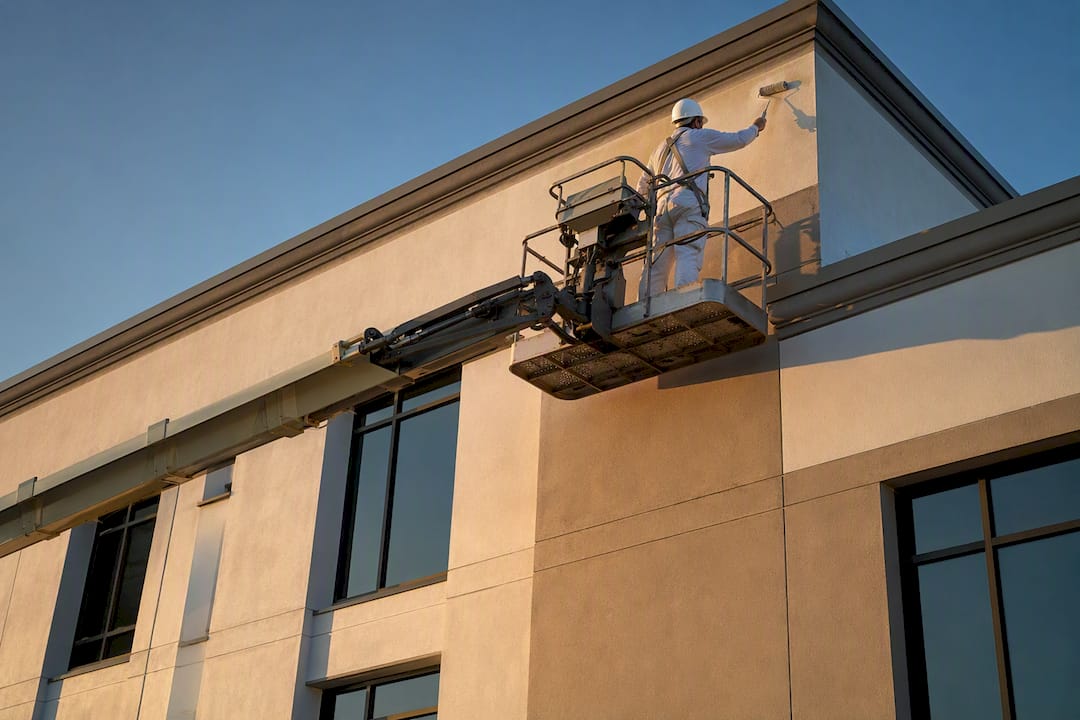
Access equipment changes the math on any job above ground level. Scaffolding, boom lifts, and swing stages can add several hundred to more than a thousand dollars per day depending on building height and rental duration. A three-story exterior repaint might need scaffolding for two weeks straight, and that rental cost gets baked into the per-square-foot number whether the property manager sees it broken out or not.
Pro Tip: Ask your contractor to itemize access equipment separately from labor. A bid that folds scaffolding into a flat per-square-foot rate makes it nearly impossible to tell whether you’re overpaying for rigging or getting a fair deal.
Coating systems carry their own cost multipliers. Standard interior latex is the budget baseline. Low-VOC premium lines add a modest per-gallon premium but often cut down on odor complaints and downtime for occupied buildings. Elastomeric coatings for stucco or masonry exteriors cost more per gallon than standard acrylic but stretch to bridge hairline cracks, which can extend the repaint cycle. Epoxy and industrial coatings for floors or high-wear areas sit at the top of the cost curve because they require specific substrate prep and cure conditions.
Labor productivity is where spray versus roll application makes a real difference. A sprayer can cover far more square footage per hour than a roller crew, but spraying uses more material because of overspray, and it requires more masking and containment in occupied spaces. Loaded hourly rates (wages plus insurance, equipment, and overhead) for commercial painting crews vary by region and job complexity, and that rate gets multiplied against the hours a job actually takes, not the hours a quote estimates.
Access logistics compound quickly on taller buildings. Estimating data suggests each additional story can raise per-square-foot cost by roughly 10% to 20%, which is why a four-story exterior repaint rarely scales linearly from a one-story quote.
How Contractors Actually Price a Commercial Job
Most contractors price commercial work one of two ways: per-square-foot rates for walls, ceilings, and large flat surfaces, or unit pricing for discrete items like doors, trim, columns, and railings. Per-square-foot pricing works well for open floor plans and warehouse walls. Unit pricing makes more sense for a building with 40 doors and 200 linear feet of trim, where measuring every surface by area would be tedious and imprecise.
A properly built bid separates coats and primers instead of folding them into one blended rate. Estimating guidance recommends breaking out surfaces by type, pricing each coat individually, and applying unit rates for anything that isn’t a flat wall. This matters because coverage assumptions vary. A gallon of primer might cover 350 to 400 square feet on porous drywall, while a finish coat on the same surface could cover closer to 400 square feet per gallon. If a bid doesn’t specify coverage rate, you can’t verify whether the material estimate is realistic.
Here’s how a realistic sample calculation comes together for a 3,000 square foot office interior:
- Labor: 120 hours at a loaded rate of $55 per hour = $6,600.
- Materials: Primer and two finish coats at roughly $0.40 to $0.60 per square foot of coverage = $1,800.
- Equipment: Standard ladders and drop cloths, minimal rental needed = $200.
- Overhead and profit markup: Applied to direct costs at a typical range of 45% to 80% depending on market and complexity = $3,870 to $6,880.
- Total estimated bid: roughly $12,470 to $15,480 for the full 3,000 square foot interior repaint.
That markup range looks wide, but it reflects real differences in contractor overhead, insurance costs, and local labor markets. A contractor working in a dense urban market with higher insurance premiums and union labor rates will land toward the top of that range. A smaller operation with lower fixed costs might come in near the bottom.
Accelerated schedules change the math further. After-hours work, weekend shifts, or compressed timelines to avoid disrupting tenants commonly add a premium on top of standard labor rates, since crews are working outside normal hours and productivity often drops slightly in off-hour conditions.
Comparing Bids: The Line Items That Actually Matter
The biggest mistake property managers make when comparing commercial painting quotes is comparing bottom-line totals instead of what’s inside them. Two bids that look $3,000 apart might reflect completely different scopes of work, and you won’t know until you ask for a breakdown.
Require these line items before comparing any bid:
- Surface preparation scope (scraping, patching, sanding, priming) spelled out by area or surface type.
- Number of finish coats, with primer counted separately.
- Product specifications, including brand and product line, not just “premium paint.”
- Access equipment costs, itemized separately from labor.
- Phasing plan for occupied buildings, including cleanup and daily site restoration.
Documentation matters just as much as pricing, including understanding office wall graphics cost options as part of your interior design and branding considerations. A responsible contractor provides proof of insurance and bonding, product data sheets or MSDS documents for every coating used, references from comparable commercial jobs, and color mockups before full production starts.
Watch for these red flags in any proposal: a scope description vague enough to mean almost anything, no certificate of insurance or bonding on request, and a single flat rate with no coat breakdown at all. That last one is the most common trap, because it hides whether you’re getting one coat or two, and one coat on a commercial exterior rarely holds up the way two coats does.
Pro Tip: Before comparing totals, normalize every bid to the same coat count, the same product spec, and the same access assumptions. A $9,000 bid with two coats of premium coating often beats an $8,000 bid with one coat of a builder-grade product, even though it looks worse on paper.
Scheduling Around Weather and Seasonal Pricing
Exterior commercial painting carries scheduling risk that interior work doesn’t, and that risk shows up in the price.
Shoulder-season scheduling (early spring or late fall in most climates) often comes with softer pricing because contractor calendars aren’t fully booked. Peak summer months, when everyone wants exterior work done, can carry a modest premium simply because demand outpaces available crews. Sigma Painting’s guide on exterior painting temperature windows covers the specific conditions that affect cure quality, and the best time to paint exterior surfaces generally falls in a 60°F to 75°F window with low humidity.
Occupied sites add their own scheduling cost. Phasing a job across nights or weekends to avoid disrupting tenants or customers usually carries a premium over standard daytime rates, since crews work fewer hours per shift and productivity per hour tends to dip slightly outside normal conditions. Weather delays compound this further: a rained-out exterior day doesn’t just push the schedule back a day, it can push back the entire crew’s next scheduled job, creating ripple effects that show up as change orders if the contract doesn’t address delay clauses upfront.
Property managers planning exterior repaints on a fixed calendar (before a lease renewal, ahead of an inspection, or tied to a broader renovation) should read Sigma Painting’s breakdown of weather-related delays before locking a start date. Building contingency into both budget and timeline avoids the scramble that happens when a two-week exterior job stretches to four because of an unlucky stretch of rain.
Contracts, Payment Terms, and the Costs Buried in the Fine Print
Commercial painting contracts typically follow a three-stage payment structure: a deposit to secure the schedule and order materials, progress draws tied to completed phases, and a final payment released once the punch list is resolved. Contract administration guidance notes that retainage (holding back a percentage of each progress payment until final completion) is common on larger commercial jobs and protects the property owner if work doesn’t meet spec.
Administrative requirements add cost and time that often get overlooked in a simple quote comparison. Submittal packages, certified payroll documentation on prevailing-wage jobs, physical color mockups, and waivers of lien all take contractor time to produce, and larger commercial jobs frequently require all four before work even begins.
Watch for these frequent extra charges that show up after contract signing:
- Disposal fees for old paint, containment materials, or construction debris.
- Traffic control costs for exterior work near parking lots, loading docks, or public sidewalks.
- Emergency substrate repairs discovered once prep work opens up a wall or exposes rot.
A written workmanship warranty should specify coverage duration and exactly what triggers a punch-list callback versus a separate paid repair. Ambiguous warranty language is one of the most common sources of disputes after project completion, so pin down the terms before signing, not after a problem shows up.
Sigma Painting’s Approach to Transparent Estimating
Sigma Painting builds every commercial estimate around line-item transparency rather than a single blended rate. Property managers requesting a quote through the commercial painting services page receive a breakdown covering prep scope, coat counts, product specifications, and access equipment, so nothing is buried in a flat number.
That approach extends to documentation. Responsible contractors provide proof of insurance and bonding, product data sheets for every coating used, and color samples before production starts. Manufacturer data sheets from Benjamin Moore and Sherwin-Williams cover VOC content, coverage rates, and application conditions, and those specs belong in any commercial submittal package regardless of which contractor you hire.
Sigma Painting’s stated positioning centers on transparency in pricing, timely project completion, and a written workmanship warranty backed by premium materials and skilled craftsmanship. For property managers who want a ballpark figure before scheduling a full walk-through, the instant quote calculator provides a starting estimate based on approximate square footage and project type.
Permits and Regulatory Costs You Might Not Expect
Most interior repainting on existing commercial buildings doesn’t require a permit, since it’s classified as cosmetic maintenance rather than construction work. Exterior work and anything involving structural elements or occupancy changes can be a different story.
Buildings suspected of containing lead-based paint, common in structures built before the 1980s in most jurisdictions, may trigger containment and disposal requirements that add real cost even without a formal permit. Testing for lead adds a modest upfront fee, and if it comes back positive, containment protocols (plastic sheeting, specialized disposal, sometimes respirator-rated crews) can add a noticeable percentage to the total job cost.
Scaffolding and boom lift setups on public-facing exteriors sometimes require a temporary use permit from the local municipality, particularly if equipment extends into a sidewalk or parking area. Fees for these permits are usually modest compared to the overall project, but the administrative lead time (sometimes a week or more) needs to be built into the schedule, not discovered the week the crew shows up.
Historic districts or buildings with heritage designations can add another layer: some municipalities require color and material approval before repainting a street-facing facade. This doesn’t always cost extra in fees, but it can add weeks to a timeline if approval isn’t secured before the contract start date. Ask your contractor upfront whether your building falls into any of these categories, since it changes both the budget and the schedule.
An Editorial Take on Getting This Right
The conventional advice on commercial painting cost stops at a per-square-foot number, and that’s the problem. A range is a starting point for a conversation, not a budget. What actually protects property managers is insisting on line items before a dollar changes hands, because that’s the only way to catch the gap between a contractor who priced two coats and one who quietly priced one.
Most overruns on commercial jobs don’t come from bad math. They come from prep work nobody scoped properly, or access costs folded into a rate nobody itemized. The fix isn’t more research into average pricing. It’s a proposal that names the coat count, the product, and the equipment before you sign anything.
If there’s one thing worth prioritizing first, it’s this: ask every bidder for the same breakdown, in the same format, before comparing a single total. Everything else, including finding the lowest number, comes second.
— Enrico
Get a Line-Item Estimate From Sigma Painting
Some contractors provide alternatives to vague, all-in quotes by breaking down prep, coats, materials, and access costs so clients know exactly what they’re paying for before work starts.
If you manage a commercial property in the Greater Toronto Area and want a real number instead of a rough guess, the instant quote calculator gets you a preliminary estimate in minutes. For a precise proposal, schedule a site walk and have a few details ready: approximate paintable square footage, current photos of the space, and any access constraints like limited parking or occupied hours. Every project moves forward with a written line-item proposal, a firm schedule, and a workmanship warranty, so there’s no guessing what’s included. Visit the commercial painting services page to start the conversation.
Sources
- How Much Does Commercial Painting Cost? (2026)
- Commercial Painting Cost Per Square Foot: Estimates, Budget Drivers, and Savings | Moorhouse Blog
- Commercial Painting Estimate Guide: Price Office Jobs
- How to Price Commercial Painting Jobs | DoorstepHQ
- Benjamin Moore — Safety data sheets
FAQ
How much should it cost to paint 1,000 square feet?
At $1.50 to $6.00 per square foot for interior work, costs vary widely depending on prep needs and coating grade. Most straightforward jobs with standard prep land closer to the middle of that range.
How much does it cost to paint a 2,000 square foot commercial space?
Using the same per-square-foot benchmarks, interior job costs vary depending on prep and coating choices. A 2,500 square foot job commonly runs $5,000 to $15,000.
How much should I expect to pay a painter per day?
Daily costs depend on crew size and loaded hourly rates, which commercial estimates build into the labor line of a bid rather than quoting as a flat daily figure. Requesting a line-item proposal from a professional contractor shows the labor hours and rate assumptions behind any daily estimate.
How much would it cost to paint a 12x12 room?
A 12x12 room’s commercial painting cost varies widely depending on surface prep, trim work, and coating quality.
What’s the biggest factor that changes a commercial painting quote?
Surface preparation is usually the single largest cost variable, since it directly affects labor hours and material use. Access equipment for multi-story buildings and coating system choice come in close behind as major cost drivers.