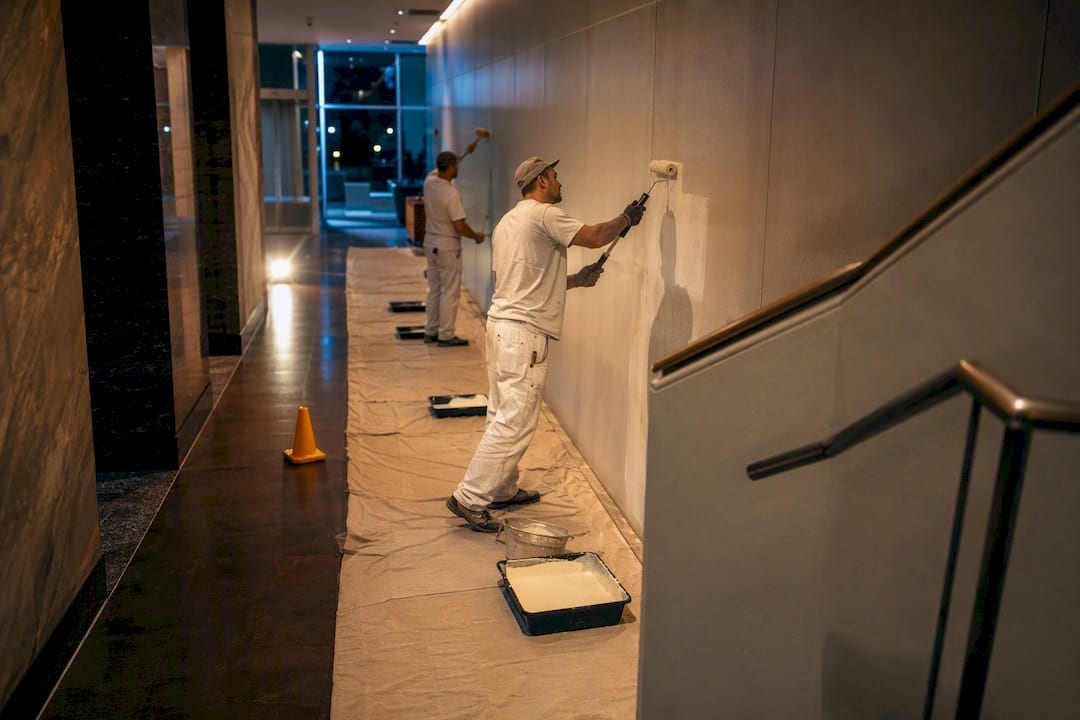
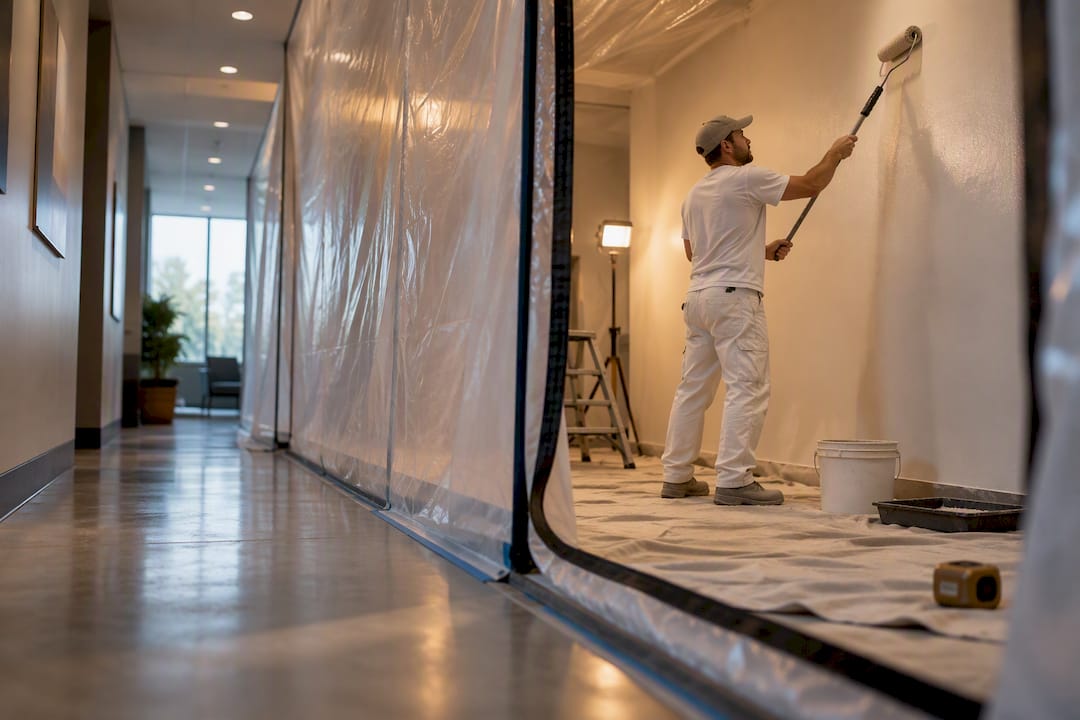
The fastest way to eliminate commercial repaint downtime is to phase the job around your operating hours, specify low-odor coatings, enforce tight containment, and run daily communication with one point of contact. Those four levers, applied together, let most tenants and staff keep working through the entire project. Sigma Painting builds every occupied-space bid around exactly this sequence.
TL;DR:
- Using phased zoning, tight containment, and low-odor paints can allow most occupied spaces to stay operational during painting projects.
- Scheduling should be based on operational traffic patterns, with high-revenue spaces more likely to justify after-hours work to minimize revenue loss.
- Clear communication routines, including daily updates and sign-offs, are essential to maintain trust and avoid staffing conflicts during repainting.
- Confirming low-VOC paint specifications and proper ventilation options is key to reducing tenant complaints about odors and dust.
- Proper verification through end-of-shift sign-offs, walkthroughs, and KPI tracking ensures the project stays on schedule and meets quality standards.
Table of Contents
- What Causes Downtime During a Commercial Repaint?
- Containment, Ventilation, and Paint Choices That Cut Complaints
- How Do You Keep Staff and Tenants Informed During the Work?
- Timeline, Cost Trade-Offs, and When to Pay the Premium
- How Do You Verify the Job Stayed on Schedule?
- Enrico’s Practitioner Notes: Five Habits That Cut Downtime
- How Sigma Painting Handles Occupied Commercial Projects
- Sources
- FAQ
What Causes Downtime During a Commercial Repaint?
Downtime isn’t really about paint. It’s an operations problem that happens to involve paint, which is why treating a commercial job like an oversized residential repaint almost always backfires. Most occupied repaints succeed when the project gets phased by zone, contained tightly, and finished with low-odor products that let the rest of the building keep functioning.
Here’s the planning sequence that actually works:
- Zone the facility first, quote second. Break the floor plan into practical sections, often 1,000 to 1,500 square feet each, so crews can rotate through without ever shutting the whole space down at once.
- Get operational sign-off on the rotation. Facility leads need to approve which zone closes when, before a contract gets signed, not after.
- Pick daytime phasing or after-hours work based on traffic patterns, not on what’s cheaper for the contractor.
- Build in a contingency phase for rework, weather delays, or surprises behind old drywall.
Retail and hospitality spaces usually default to after-hours or overnight shifts because foot traffic never really stops. Offices and light-industrial buildings often do fine with daytime zone rotation, since whole departments can shift desks for a day. A scheduling approach that maps critical operation windows and phases work around them consistently reduces surprise closures.
Before you sign anything, a facility manager should insist on:
- A full site walkthrough with the painting lead, not a sales rep
- Written blackout dates tied to your busiest revenue periods
- Egress and fire-code confirmation for every phase
- Any special access requirements (freight elevators, loading docks, badge systems)
Start this process four to six weeks out on multi-floor or multi-tenant buildings. Rushed scheduling is where most downtime disasters begin.
Pro Tip: Ask your contractor to zone the space before quoting, not after. A price built around arbitrary square footage rarely matches a schedule built around how your business actually operates.
Containment, Ventilation, and Paint Choices That Cut Complaints
Odor and dust are what actually drive tenant complaints, not the presence of painters. Solve those two problems and most disruption disappears.
Containment starts with plastic sheeting, zippered doorway barriers, and protected walkways that keep dust and drips out of active areas. Daily cleanup isn’t optional. Crews should leave every worked zone reoccupation-ready by the next shift, not by the end of the week. Containment, ventilation, and low-VOC products form the core toolkit for keeping occupied buildings livable during the work.
On ventilation, negative-pressure setups paired with HEPA air movers pull fumes out of the work zone instead of pushing them into hallways or shared HVAC returns. Coordinate directly with building engineering on damper settings before day one, not mid-project.
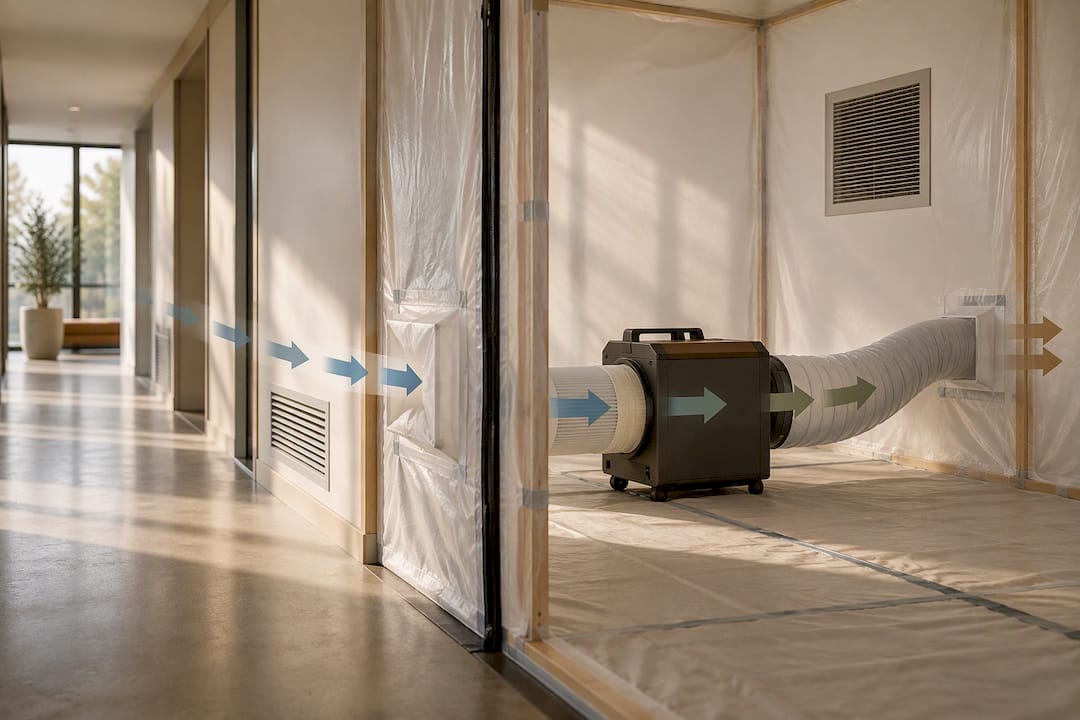
Product selection matters as much as containment. Low-VOC and zero-VOC waterborne paints have become close to standard on occupied sites like restaurants, dental offices, and daycares, because they cut off-gassing time dramatically compared to older solvent-based formulas. That shorter off-gas window is often the difference between reopening a space same-day versus waiting overnight.
Before work starts, confirm the contractor’s spec sheet covers:
- Low-VOC or zero-VOC paint on every occupied-adjacent surface
- HEPA-filtered negative-air equipment on multi-day jobs
- A written daily cleanup and containment teardown standard
Pro Tip: If a bid doesn’t specify the paint line by name, ask. “Premium paint” on a proposal means nothing. Low-VOC waterborne formulas should be named products, not a vague promise.
How Do You Keep Staff and Tenants Informed During the Work?
Confusion, not the painting itself, is what erodes trust on a commercial job. Fix the communication routine and most staffing headaches resolve themselves.
Every project needs one named point of contact on the contractor’s side. That person owns the schedule, fields questions, and reports daily, so facility staff aren’t chasing down whichever painter happens to be on-site. A walkthrough followed by a fixed-price milestone bid keeps that contact accountable to a schedule both sides signed off on.
The daily update itself should be short. Three sentences cover it: what got finished yesterday, what’s happening today, and what the crew needs from your team to keep moving. Pair that with an end-of-shift photo sign-off so both sides have a visual record of what’s done before the next shift starts.
For after-hours work specifically, lock down:
- Who holds keys or badge access after building staff leave
- Where equipment and materials stage overnight
- Security check-in procedures and alarm reset responsibility
- Lock-up confirmation before the crew leaves each night
Contracting matters here too. Milestone-based payments, tied to completed zones rather than elapsed time, keep the contractor’s incentives lined up with your need to stay operational. Build a contingency line item into the contract up front instead of negotiating it mid-project when tempers are short.
Timeline, Cost Trade-Offs, and When to Pay the Premium
Scope, surface prep, and coat count drive most of the timeline variation between two seemingly similar buildings. A repaint over sound, clean drywall moves fast. One requiring patch work, primer, and three coats on textured walls does not, no matter how good the crew is.
The real decision isn’t “how much does the paint job cost.” It’s whether the after-hours labor premium costs less than the revenue you’d lose from a daytime closure. For a restaurant or retail storefront, that math almost always favors paying more for night work. For a back-office suite with no public traffic, daytime zone rotation is usually the cheaper, faster path.
A quick way to frame the decision:
- High-revenue-per-hour space (retail, hospitality, clinics): pay the after-hours premium; the lost revenue from closure dwarfs the labor markup.
- Low-traffic or internal space (back office, storage, mechanical rooms): daytime phased work is fine and saves money.
- Mixed-use buildings: split the strategy by zone rather than picking one approach for the whole property.
Occupied projects using phased scheduling with low-VOC products routinely avoid full closure entirely, which is the real budget win compared to any per-gallon price comparison.
How Do You Verify the Job Stayed on Schedule?
Verification is where a lot of managers drop the ball, mostly because the project “looks done” and everyone moves on too fast.
- Require end-of-shift photo sign-off for every zone before the crew leaves, and a cleanup sign-off confirming the space is safe to reoccupy.
- Run a formal walkthrough at completion, checking for touch-ups, verifying indoor air quality feels normal, and confirming janitorial handoff.
- Track four KPIs: schedule adherence, unplanned downtime hours, tenant or staff complaints logged, and how fast the punch list closed.
- Hold a short post-project review with the contractor lead to capture what worked and what to change next time, especially useful if this building gets repainted again in a few years.
For longer-term upkeep, coating durability and maintenance cycles are worth a separate look at protecting commercial paint once the project wraps.
Enrico’s Practitioner Notes: Five Habits That Cut Downtime
Start with your lowest-risk zone. Prove the process there before touching anything customer-facing, because that’s where you catch scheduling problems while they’re still cheap to fix. Photo sign-off at the end of every shift isn’t paperwork, it’s the fastest way to hand a space back with zero disputes.
The tightest example I know is a hotel client turning rooms in 4 to 6 hours between guest checkouts, start to finish, paint to made-up bed. That kind of turnaround only happens when zoning, staging, and communication are dialed in before the first roller touches the wall.
— Enrico
How Sigma Painting Handles Occupied Commercial Projects
Most commercial repaints fail on scheduling, not craftsmanship. Sigma Painting builds every occupied-space bid around a site walkthrough and a fixed-price milestone quote, so you know the schedule and the cost before a single wall gets cut in.
That means daily status reporting with end-of-shift photo sign-off, a written schedule commitment with a built-in contingency buffer, and a single point of contact who answers your calls instead of routing you through a call center. Sigma Painting handles commercial painting across offices, retail, and hospitality throughout the GTA, using phased zoning and low-odor coatings as the default approach, not an upcharge. Property managers coordinating multiple trades on-site may also find value in reviewing construction scheduling practices for trades alongside their painting timeline.
If you’re planning a repaint and need a schedule you can actually hand to your operations team, start with the full services list or run your numbers through the instant quote calculator before booking a walkthrough.
Sources
External guidance on scheduling and tenant disruption came from Color Splash Painting. For logistics on multi-tenant coordination, see multi-unit painting logistics and retail store repainting tactics.
- How to Schedule Commercial Painting Projects Without Disrupting Your Facility Operations — Blair Commercial Painting
FAQ
How Long Does a Commercial Repaint Typically Take?
Timeline depends on surface prep, coat count, and square footage, but phased zoning lets most buildings stay operational throughout rather than closing for the full duration. A phased, zone-based approach is what keeps the timeline from becoming a closure.
What Paint Reduces Odor Complaints on Occupied Sites?
Low-VOC and zero-VOC waterborne paints cut off-gassing time significantly compared to older solvent-based formulas, which is why they’ve become close to standard in restaurants, dental offices, and daycares. Pairing that product choice with negative-pressure ventilation handles most remaining odor concerns.
Should I Choose After-Hours or Daytime Phased Work?
High-revenue-per-hour spaces like retail and hospitality usually justify the after-hours labor premium because closure costs more than the markup. Lower-traffic spaces, like back offices, typically do fine with daytime zone rotation at a lower cost.
Does Sigma Painting Offer Fixed-Price Bids for Commercial Jobs?
Commercial projects are often quoted through a site walkthrough followed by a fixed-price milestone bid, so the schedule and cost are set before work starts. Pricing for commercial painting is available by request through a walkthrough or the quote calculator.
How Soon Can a Space Be Reoccupied After Painting?
Reoccupation timing depends on the coating used and ventilation during the job, with low-VOC waterborne products generally allowing faster reentry than solvent-based paints. A cleanup and photo sign-off at the end of each shift confirms the zone is actually ready before anyone moves back in.