
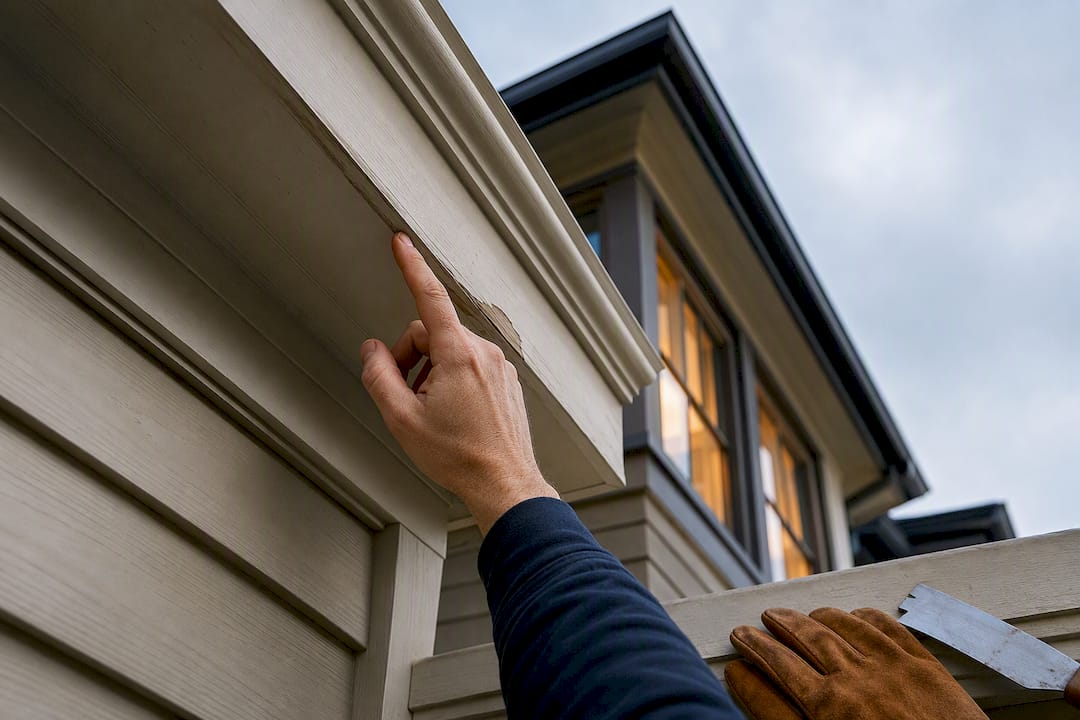
Most exterior paint jobs hold up for 5 to 12 years, but the number that actually matters is how well the surface was prepared before the first coat went on. Climate, substrate, and paint quality all shift the timeline, but poor prep is the reason most jobs fail early. If your paint is under seven years old and already peeling, start by checking the areas around trim, caulk joints, and south-facing walls, since that’s where prep shortcuts show up first.
TL;DR:
- Proper surface preparation, including washing, scraping, and priming, can extend paint life from around three years to a decade or more.
- Climate factors such as UV exposure, freeze-thaw cycles, and humidity significantly influence paint durability, especially on vulnerable surfaces like wood.
- Regular maintenance, including annual washing, recaulking, and quick touch-ups, can add several years to a paint job’s lifespan.
- Two coats of high-quality paint, applied under optimal weather conditions with proper dry times, provide the best long-term protection.
- Expect a typical exterior repaint every 7 to 10 years, with thorough inspection and prep reducing early failure risks.
Table of Contents
- Exterior Paint Lifespan by Surface Type
- What Actually Determines Exterior Paint Longevity
- Signs Your Exterior Paint Is Failing
- Maintenance Habits That Add Years to a Paint Job
- Getting the Application Right: Primer, Coats, and Weather Windows
- Does Paint Color Affect How Long It Lasts?
- A Simple Inspection Checklist for Homeowners
- Why Prep and Skilled Application Decide the Outcome
- Planning Your Repaint Cycle: What I’d Tell a Homeowner
- Get a Longer-Lasting Exterior With Sigma Painting
- Sources
Exterior Paint Lifespan by Surface Type
Wood moves. It expands and contracts with humidity and temperature swings, which is why painted wood siding and trim typically need attention every few years, even with a quality acrylic finish. Fiber cement and brick hold paint far longer because the substrate itself is dimensionally stable.
Here’s how the ranges generally break down:
- Wood siding and trim: a shorter lifespan compared to more stable surfaces
- Fiber cement: a longer lifespan due to dimensional stability
- Vinyl: a moderate lifespan depending on conditions
- Stucco: a moderate lifespan depending on conditions
- Brick: tends to hold paint longer due to substrate stability
- Metal (railings, downspouts, doors): lifespan varies, influenced by rust exposure
Those are realistic middle-ground numbers, not best-case marketing figures. Consumer Reports lab testing found that top-performing modern exterior paints resisted cracking, fading, and mildew for roughly nine years under accelerated weathering that simulates real sun, rain, and temperature cycling. That’s the ceiling you get with premium product and correct application. Skip the prep, and even a nine-year paint can fail in three.
What Actually Determines Exterior Paint Longevity
Surface preparation decides more of the outcome than the paint can label does. Pressure washing to remove chalk and grime, scraping loose material, sanding rough transitions, and spot priming bare or stained wood all directly affect how long the film bonds to the substrate. Skip any of these steps and even a premium product tends to fail early, often losing adhesion within a few years instead of a decade.
Climate does its own damage, in different ways depending on the exposure:
- UV exposure breaks down resin binders and fades pigment, especially on south and west walls.
- Freeze-thaw cycles push moisture into hairline cracks and pop the film loose.
- Humidity and coastal salt feed mildew growth and accelerate corrosion on metal surfaces.
Formulation matters too. Acrylic resin content, built-in mildew resistance, and UV-stable pigments separate a paint that holds its color for a decade from one that chalks out in four years. Sherwin-Williams’ application guidance recommends full two-coat coverage and proper dry times between coats, since rushing this step is one of the most common causes of early failure.
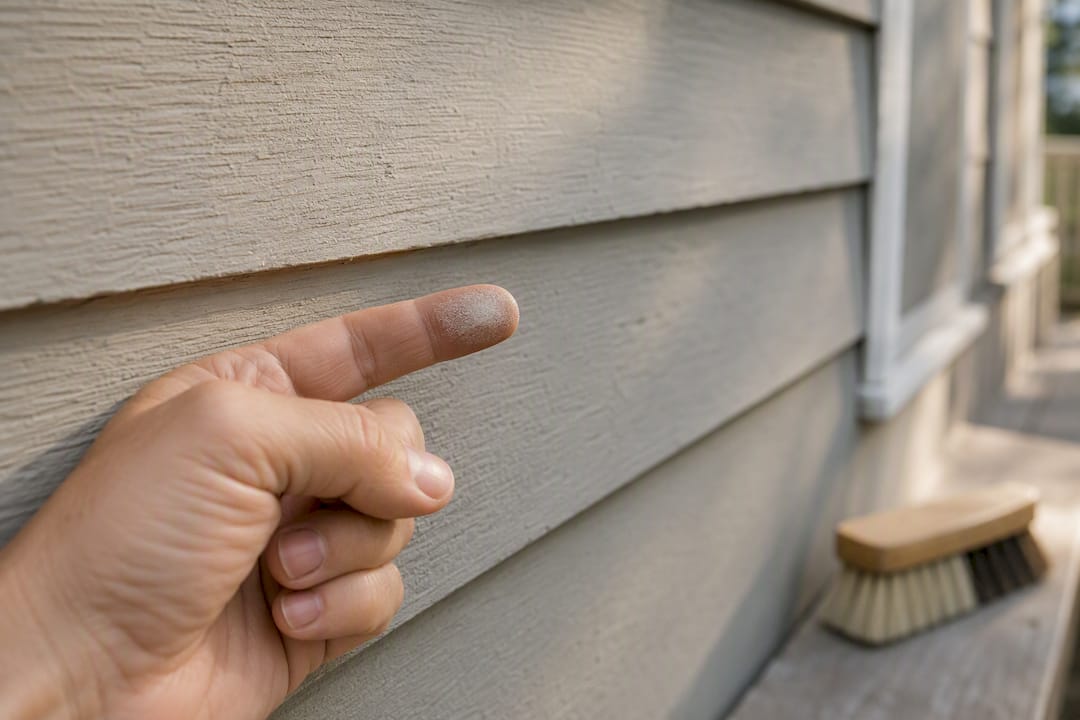
Pro Tip: Run your fingernail across a weathered wall. If it comes away covered in a powdery residue, that’s chalking, and painting over it without washing first guarantees early peeling no matter how good the paint is.
Signs Your Exterior Paint Is Failing
Not every flaw means a full repaint. Here’s how to read the symptoms:
- Chalking — a powdery film on the surface signals UV breakdown; washable, but a warning sign.
- Cracking or “alligatoring” — fine surface cracks that let water behind the film; needs attention before it spreads.
- Peeling or blistering — the paint is lifting off the substrate, usually from moisture trapped underneath.
- Mildew spotting — dark blotches in shaded, damp areas that wash off but tend to return.
- Fading — mostly cosmetic, though heavy fading on dark colors can signal binder breakdown underneath.
Past that, and especially with peeling or cracking spread across multiple walls, plan for a full repaint rather than chasing patches.
Maintenance Habits That Add Years to a Paint Job
A coherent maintenance routine is one of the highest-return activities a homeowner can do for exterior paint, according to contractor-sourced lifespan data. None of it is expensive. All of it is easy to skip.
- Wash the exterior once or twice a year. A soft wash removes dirt, pollen, and salt buildup before they degrade the film. Skip pressure washing on older paint. Use a garden hose and mild detergent instead.
- Recaulk every 3 to 4 years. Gaps around windows, doors, and trim let water behind the paint, which is the single fastest way to trigger peeling.
- Keep gutters and flashing clear. Overflowing gutters dump water straight down exterior walls, and that constant run-off strips paint years before its time.
- Touch up small chips and scuffs as they appear. A quart of matched paint applied to a scraped corner now can delay a full repaint by two or three years.
Pro Tip: Walk your property right after the first hard rain of spring. Water stains running from a gutter or window sill show up clearly on wet paint and point straight to the spot that needs caulk or flashing repair.
Getting the Application Right: Primer, Coats, and Weather Windows
Primer isn’t optional on bare wood, chalky surfaces, or areas with tannin bleed from cedar and redwood. Skipping it on these surfaces is one of the fastest routes to peeling within two years.
For coverage, two full coats is the practical minimum for exterior work. A third coat, or a thicker single-coat film with a premium product, tends to pay off on high-exposure walls and darker colors where UV stress is highest.
Temperature and humidity matter more than most homeowners assume. Painting outside a product’s recommended temperature range or applying it right before a rain event is a common cause of early adhesion failure, since the film never cures properly.
When comparing bids, ask for a written scope that spells out:
- Prep steps (washing, scraping, sanding, priming)
- Minimum dry time between coats
- Number of coats and total film thickness
- Warranty terms tied to workmanship, not just product
Does Paint Color Affect How Long It Lasts?
Dark colors absorb more heat, and that extra thermal stress accelerates binder breakdown faster than lighter shades experience. If you’re set on a dark exterior, look for a UV-stable formulation built for fade resistance, since some premium lines now advertise multi-year color protection specifically to offset this effect.
Sheen matters separately from color:
- Flat and matte finishes hide surface imperfections well but show dirt and mildew more visibly over time.
- Satin and semi-gloss finishes resist staining and clean up easier, though they reveal substrate flaws more readily.
A Simple Inspection Checklist for Homeowners
Walk the property once a year, ideally in early spring and again after the first hard freeze. Check gutters and downspouts for overflow marks, inspect caulk joints around windows and doors, and look closely at south-facing walls where UV damage concentrates first.
- Gutters and downspouts clear and properly pitched
- Caulk joints intact around windows, doors, and trim
- Vents and penetrations sealed
- South and west walls checked for chalking or fading
- Trim and fascia boards checked for peeling
Keep notes with photos each visit. A pattern of small issues in the same spot usually points to a structural cause, like a failed gutter, rather than a paint problem alone.
Why Prep and Skilled Application Decide the Outcome
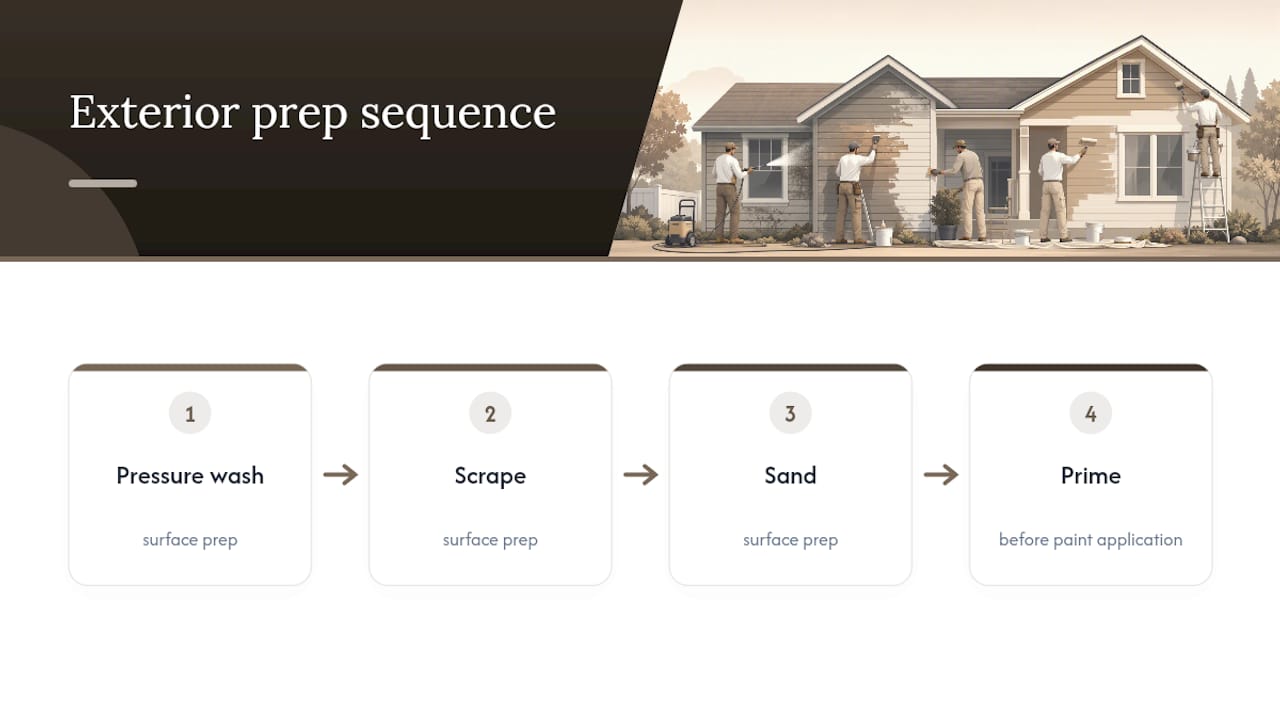
Every exterior project should include comprehensive prep: pressure washing, scraping, sanding, and priming before paint application. That sequence is what converts a good paint choice into a paint job that actually reaches its full lifespan range instead of failing at year three.
Transparent, itemized bids let homeowners see exactly what prep work is included before signing, which matters since proper power washing and surface prep is consistently the factor separating a 5 year repaint from a 12 year one. Skilled application, correct dry times, and premium materials work together, not independently.
Planning Your Repaint Cycle: What I’d Tell a Homeowner
Budget for a full exterior repaint roughly every 7 to 10 years, and inspect annually so you’re never caught off guard. Small, contained jobs, like a single shaded wall with light mildew, are reasonable DIY territory. Anything involving multiple walls, peeling paint, or bare wood exposure calls for a professional who can diagnose the cause, not just paint over it. Inspect before you assume, and prep before you paint.
— Enrico
Get a Longer-Lasting Exterior With Sigma Painting
A repaint that fails in four years costs more than one that lasts twelve, even if the second job has a higher price tag upfront. Some exterior painting services emphasize premium paint products, a full prep sequence of washing, scraping, and priming, and workmanship warranties that back the labor, not just the product.

When you’re comparing bids, ask each contractor to itemize their prep checklist and dry-time schedule in writing. That single request tells you more about expected paint longevity than any brand name on the label. If you’re ready to see what a properly scoped exterior job looks like for your property, request an estimate through Sigma Painting’s exterior painting page and get a bid that spells out exactly what’s included before any work starts.
Sources
For lab-tested lifespan data, see Consumer Reports’ exterior paint testing. For application specs, review Sherwin-Williams’ exterior painting guide and routine property checks from Vanguard Home Watch.
- 3 Best Exterior Paints of 2026, Lab-Tested and Reviewed - Consumer Reports
- How to Paint a House Exterior | Sherwin-Williams


