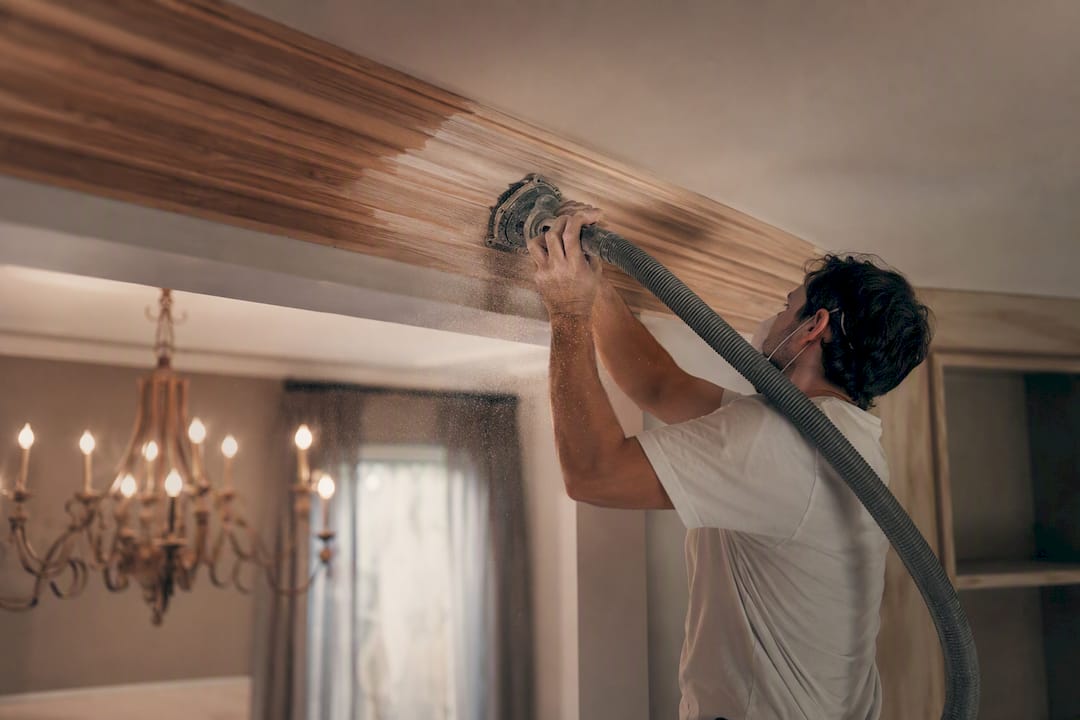
For most pros and serious DIYers, a random-orbit sander paired with a HEPA-certified extractor and net-style abrasives delivers the best balance of finish quality and dust control. That combination handles woodworking, drywall, and general finish work with the least mess and the fewest health tradeoffs.
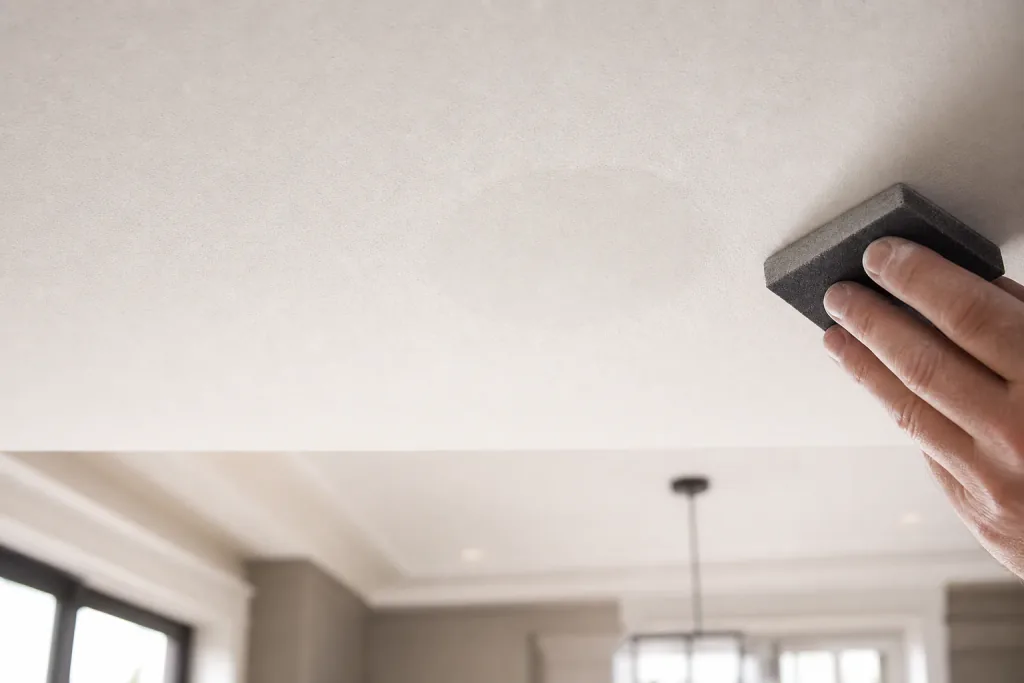
Two situations call for something different. Body shops and collision centers usually do better with air-powered systems like Pro Spot’s, since they avoid electrical components near flammable overspray. And for one-off jobs like sanding a ceiling patch or a single door, a handheld net-abrasive attachment on a wet/dry vacuum gets the job done without the investment.
Before buying anything, check two things: the extractor’s actual filter class (HEPA, not just “high efficiency” marketing language) and whether your sander is compatible with autostart triggering.
- Best all-around: Random-orbit sander + HEPA extractor + net abrasive
- Best for body shops: Air-powered dust-free systems (Pro Spot DE-Pro, DE-Combi)
- Best for quick jobs: Handheld net-abrasive pole attachments with a shop vacuum
- Before you buy: Confirm HEPA rating and tool-to-extractor compatibility
Key Takeaways
Extractor seal integrity and airflow matching determine dust-free sanding performance more than any single tool’s brand or price point.
| Point | Details |
|---|---|
| Match tool to extractor | Confirm hose diameter and airflow compatibility before buying either piece separately. |
| Filter class isn’t everything | A HEPA filter in a leaky housing still exhausts fine dust; sealed housings matter as much as the filter rating. |
| Net abrasives resist clogging | Mesh-style abrasives like Mirka Abranet extend usable life and keep extraction consistent longer than solid discs. |
| Budget for consumables | Filters, bags, and abrasives add real ongoing cost beyond the initial equipment purchase. |
| Hire for high-stakes jobs | For occupied homes and fine cabinetry finishes, Sigma Painting’s contained, professionally managed approach reduces the risk a DIY setup carries. |
Table of Contents
- What Are the Best Dustless Sanding Systems You Can Buy?
- Comparing Dustless Sanding Equipment Side by Side
- How Do You Match an Extractor to Your Sanding Job?
- How Do You Keep a Dustless Sanding System Working Properly?
- When Should Homeowners Consider Hiring a Painting Contractor Instead?
- What’s the Lead Time for Buying or Renting a Dustless Sanding System?
- Editorial Take: What Actually Matters When You’re Choosing a System
- A Lower-Disruption Alternative to Buying Equipment Yourself
- Sources
What Are the Best Dustless Sanding Systems You Can Buy?
The dustless sanding market splits into three real categories: integrated brand systems, industrial net-disc setups, and shop-specific pneumatic rigs. Here’s what’s actually worth considering.
-
Mirka Abranet + DEROS/DEXOS extractor. This is the benchmark integrated system for professionals. Abranet’s open mesh structure lets dust pass through the abrasive itself into the extractor instead of clogging the disc surface, which keeps cut rate consistent and extends abrasive life. Pair it with a Mirka DEROS or DEXOS extractor and you get one of the most complete dust-free sanding packages sold today.
-
Festool (extractors and sanders). Festool built its reputation on extractor integration, particularly the autostart feature that fires up the vacuum the instant you pull the trigger. The ETS and RTS lines pair tightly with Festool’s own CT-series extractors and coaxial hoses, which matters more than most buyers expect. A mismatched hose diameter chokes airflow no matter how strong the extractor motor is.
-
3M Xtract system. 3M’s net discs and matched pneumatic or electric extractors are built for industrial shops running higher volumes. 3M states the system can capture up to 99% of sanding dust when the discs and extractor are used together as designed, not mixed with generic parts.
-
Pro Spot DE-Pro / DE-Combi. These are shop-built workstations, not handheld add-ons. Pro Spot designed them as air-powered, low-airflow units with disposable dust bags, which removes electrical risk near paint booths and keeps auto-body shops compliant without rewiring their bays.
-
Full Circle / FCI Dust-Free. For drywall patching, ceiling work, and corner sanding, Full Circle’s lightweight pole and hand attachments connect to any standard wet/dry vacuum. It’s the cheapest entry point into dustless sanding techniques if you already own a shop vac.
-
Radius 360. This portable dust-free sanding system targets contractors who need a self-contained unit they can move between job sites without hauling a full extractor cart.
Comparing Dustless Sanding Equipment Side by Side
Price bands below are general market positioning, not fixed quotes, since retailers and rental shops vary.
| System | Best for | Type | Extraction approach | Filter level | Mobility |
|---|---|---|---|---|---|
| Mirka Abranet + DEROS/DEXOS | Woodworking, drywall finishing | Electric random-orbit | Net abrasive + matched extractor | HEPA-capable | Portable |
| Festool ETS/RTS + extractor | High-finish pro work | Electric random-orbit | On-tool shroud + autostart extractor | HEPA-capable | Portable |
| 3M Xtract system | Industrial/metal/fiberglass | Electric or pneumatic orbital | Net disc + matched extractor | Standard to HEPA | Portable to mobile cart |
| Pro Spot DE-Pro / DE-Combi | Auto-body shops | Pneumatic | Air-powered vacuum module | Standard | Shop workstation |
| Radius 360 | Multi-site contractors | Electric, self-contained | Integrated extraction unit | Standard | Mobile |
Entry-level setups (a Full Circle attachment on an existing shop vacuum) run well under mid-tier options. Mid-range covers most Mirka and Festool tool-plus-extractor combos. Pro-tier pneumatic shop workstations like Pro Spot sit at the top, reflecting their dedicated bay-installation design.
How Do You Match an Extractor to Your Sanding Job?
Airflow matters more than horsepower on the spec sheet. An extractor rated too low for your sander’s shroud design causes the abrasive to load up fast and suction to drop off mid-job, a problem independent tool testing has traced directly to mismatched shroud, hole pattern, and extractor airflow rather than any single weak component.
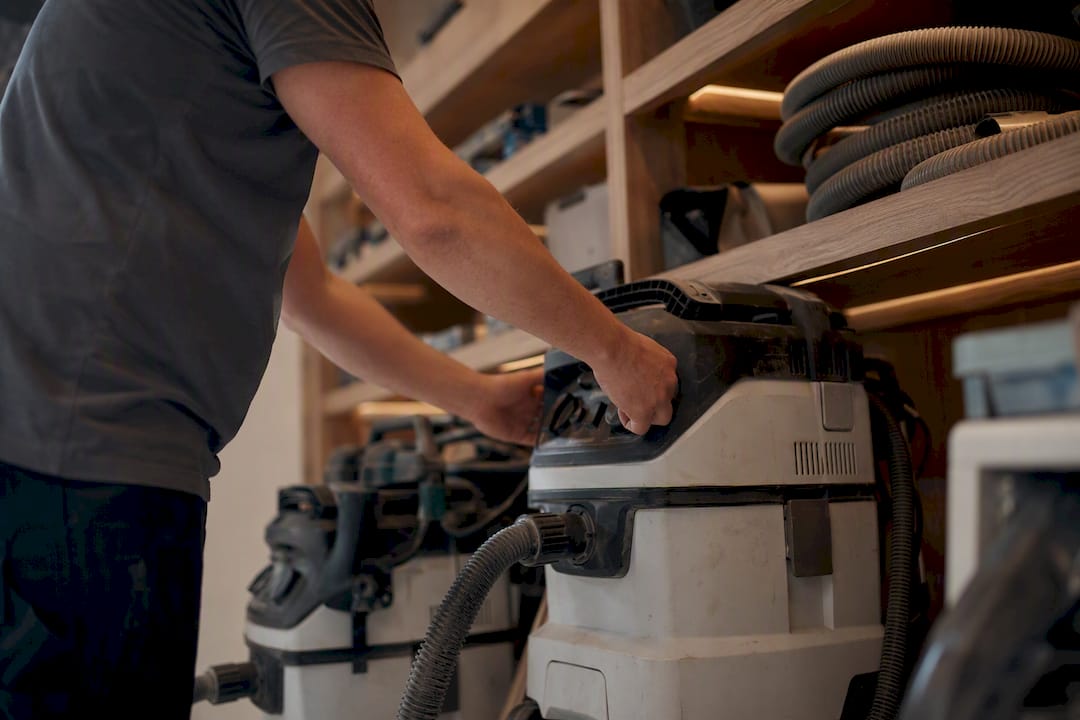
Filtration class deserves equal attention. A HEPA filter captures 99.97% of particles down to 0.3 microns, but that number is meaningless if the housing around it leaks. A sealed bypass housing keeps unfiltered air from sneaking around the filter media, which is often the actual point of failure in cheaper extractors.
- Confirm hose diameter matches both the tool and the extractor port
- Check whether your sander supports autostart (Festool’s version, Makita’s AWS) before assuming compatibility
- Stock spare filters and bags before the job, not after suction drops
- Ask any vendor or rental shop for CFM rating and filter class in writing, not a verbal estimate
Net abrasives like Mirka Abranet generally outperform solid discs on airflow-dependent extraction since the mesh structure resists clogging longer than a punched-hole disc.
Pro Tip: Ask about replacement filter cost before you buy the extractor, not after. Some units are cheap upfront but charge a premium for proprietary filter cartridges that need swapping every few dozen hours.
How Do You Keep a Dustless Sanding System Working Properly?
Extraction performance degrades gradually, which is exactly why most operators don’t notice the drop until dust is already visible in the air.
- Before starting, check hose seals, shroud contact against the workpiece, and that you’ve loaded the correct abrasive grade for the extractor’s rated airflow.
- Watch for visible loading on the abrasive face during the day. Swap it before it stops cutting cleanly, not after.
- Change filters and bags on the manufacturer’s recommended hours-of-use cycle, not just when they look full.
- Treat reduced suction, gritty residue around the shroud edge, or visible dust plumes as immediate signals to stop and inspect the seal.
Even a well-matched system won’t hit 100% capture. HEPA filtration handles particles at 0.3 microns extremely well, but manufacturers including Mirka still recommend PPE as a backup, not a formality.
When Should Homeowners Consider Hiring a Painting Contractor Instead?
Buying a dustless sanding system makes sense for a shop or a series of DIY projects. It makes less sense for a single high-stakes job in a home you’re still living in.
Occupied homes, cabinetry with a fine finish target, and large contiguous wall areas all raise the cost of a mistake. Professional crews manage dust differently than a one-off DIY setup: tool-triggered extractors running continuously, taped containment zones, HEPA machines running independently of the sanders, and staged room-by-room turnovers so the rest of the house stays livable.
- Occupied bedrooms or living spaces during the project
- Kitchen cabinetry where a swirl mark means a redo
- Multi-room jobs where containment between spaces matters
- Tight timelines where equipment downtime isn’t an option
Sigma Painting’s cabinet painting and refinishing work and interior painting services both build this containment approach into the standard process, not as an upsell.
What’s the Lead Time for Buying or Renting a Dustless Sanding System?
Availability varies more than most buyers expect, and it’s worth checking before you commit to a project timeline.
Retail-stocked systems, Full Circle attachments, standard Festool sanders, and mid-tier Mirka combos, typically ship or are available for pickup within days through authorized dealers. These are the systems most likely to sit on a shelf at a specialty tool retailer.
Full extractor-and-sander bundles, especially matched HEPA-rated packages from Mirka or Festool, sometimes require a special order if your local dealer doesn’t stock the specific model combination you want. Expect a week or two in that case, longer around peak renovation seasons in spring and fall when contractor demand spikes.
Pro Spot’s shop workstations are closer to equipment purchases than tool purchases. Since they’re often configured for a specific bay layout, factor in freight time and possibly an installation appointment, not just shipping.
Rental shops carrying dustless sanding equipment are less common than general tool rental and tend to concentrate in larger metro areas. If you’re counting on a rental for a short-term job, call ahead to confirm they stock an extractor with the filter class you actually need. Not every rental counter carries HEPA-rated units, and a mismatched rental defeats the purpose of dustless sanding.
Editorial Take: What Actually Matters When You’re Choosing a System
The gear conversation online tends to obsess over which sander has the best ergonomics or the quietest motor. That’s the wrong starting point. The extractor and the seal around its filter housing determine whether dustless sanding techniques actually work, and that part gets far less attention than it deserves.
A leaky housing on a HEPA-rated extractor performs worse than a well-sealed unit with a lower filter class. That’s counterintuitive, and it’s exactly the kind of detail that separates a system that looks good on a spec sheet from one that performs on a real job site.
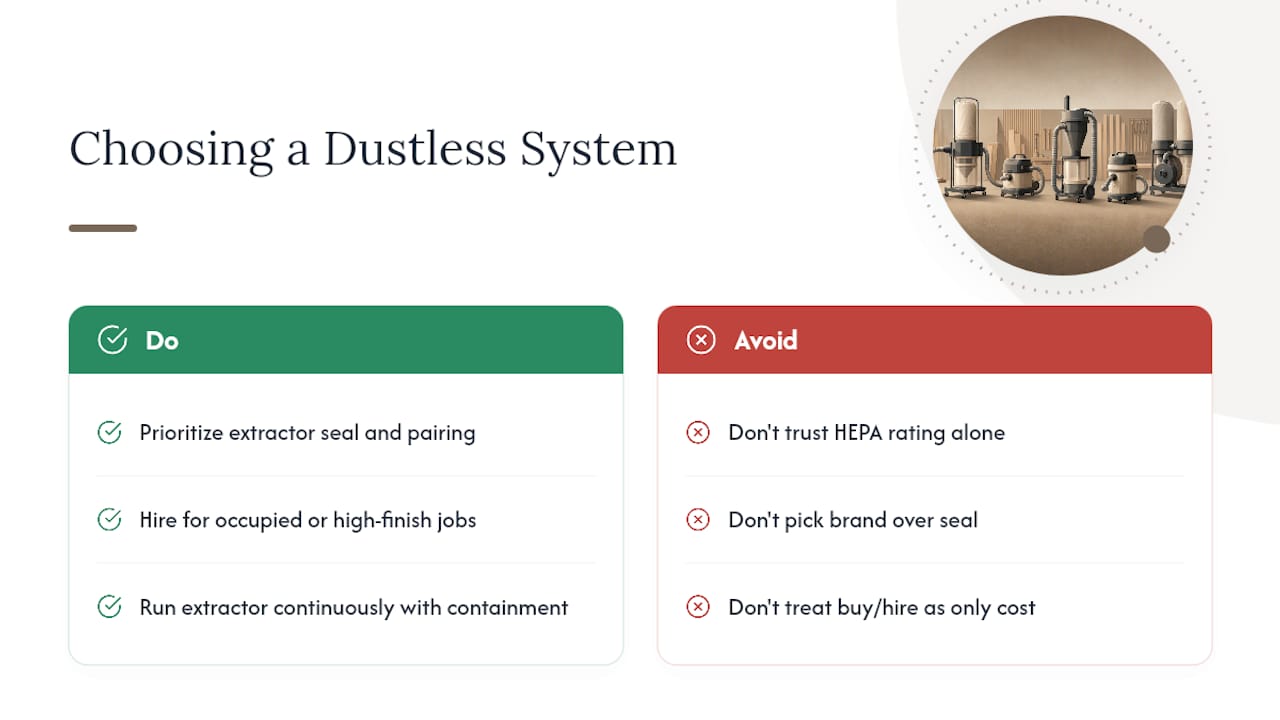
The second miscalculation is treating “buy versus hire” as purely a cost question. For a single room or a garage workbench, buying makes sense. For occupied living space, high-finish cabinetry, or a job where a redo means weeks of disruption, the math shifts. A contractor’s containment protocol and continuous extractor operation reduce risk in ways a weekend DIY setup usually can’t match, no matter how good the equipment is.
Prioritize the seal and the pairing before the brand name on the tool.
— Enrico
A Lower-Disruption Alternative to Buying Equipment Yourself
If you’ve read this far weighing whether to invest in a dustless sanding system or hire it out, there’s a simpler answer for occupied homes: let a crew that already owns the matched gear handle it, following a low-dust door replacement process for homeowners. Sigma Painting runs tool-triggered HEPA extraction, taped containment, and staged room turnovers on every project, so you get the dust control benefits without buying, storing, or maintaining equipment you might use once.
This matters most for kitchen cabinetry, occupied bedrooms, and multi-room repaints where a sanding mistake or a dust leak costs you more than a redo, it costs you weeks of disrupted living. Sigma Painting’s interior painting services across the Greater Toronto Area include full prep, dustless sanding, and cleanup as standard, not an add-on line item. For homes needing sanding prep before a full paint job, our painting preparation checklist shows what a properly contained job site should look like. If your project falls into any of the higher-risk categories above, request an estimate and get a firm scope before deciding whether to rent equipment yourself.