
Warrantied in writing

View our warranty
Toronto painting guide

Specialty Finishes in Toronto

A clear guide to choosing, specifying, and sampling specialty wall finishes in Toronto homes and commercial spaces.

Request an Estimate
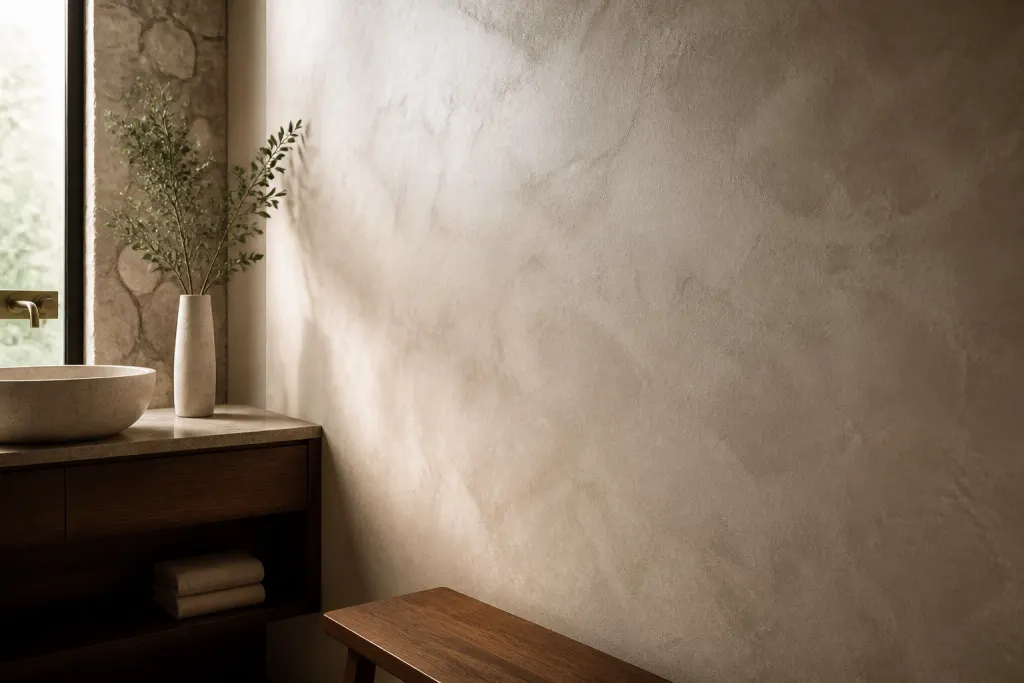
Illustrative concept image of a refined mineral plaster wall in a warm contemporary interiorIllustrative concept image
Quick answer

Specialty finishes are hand-applied systems whose depth, movement, sheen, and maintenance depend on the substrate and application sequence. A Toronto homeowner should choose the finish only after reviewing a sample in the intended room, confirming whether the wall is compatible, and agreeing on the approved visual standard before the full application begins.

Last reviewed
September 4, 2026
Written for
GTA homeowners and project teams comparing a real painting scope.

Choose the visual effect before the product name

A design brief that says “plaster” can describe very different outcomes: soft matte movement, polished depth, a mineral-wash variation, seamless cementitious texture, or a deliberately tactile trowelled surface. The desired light reflection, colour variation, room use, and maintenance expectations give the applicator a better starting point than a product name alone.

Limewash, Venetian plaster, Marmorino, and microcement each have different visual and practical characteristics. The right one should be selected around the actual wall or wet-area condition, not because an online photograph happened to be attractive.

The sample is the approval standard

Hand-applied finishes cannot be evaluated accurately from a small digital swatch. Light direction, wall texture, colour, trowel movement, layer count, burnishing, and sealer change how the finish reads. A sample board or test area in the project room gives everyone a shared visual reference before the larger wall is started.

Keep the approved sample available through the project. It is the useful reference for variation, sheen, edges, transitions, and touch-ups—not a generic product image.

  • View samples in daylight and the room’s evening lighting.
  • Confirm the acceptable amount of movement and natural variation.
  • Document the colour, layers, sealer, and approved sample location.

Start with the surface and room conditions

Specialty coatings do not correct unresolved wall movement, moisture, adhesion problems, or poor drywall work. Surface readiness is part of the specification: a smooth Level 5 finish may be appropriate where critical light will expose every imperfection, while masonry, brick, or previously painted walls need a separate compatibility review.

Wet rooms, fireplaces, and exterior walls add their own requirements. Confirm where the finish can be used, whether a sealer is required, and how it will be cleaned or repaired before choosing it for a high-use surface.

Evidence behind the advice

Compare the written scope with real work, independent reviews, and the warranty terms that apply to the selected coating system.

Questions people ask

What are specialty wall finishes?

They are decorative systems whose appearance is created by material, layering, and hand application rather than a standard uniform paint coat. Examples include limewash, Venetian plaster, Marmorino, microcement, and custom decorative coatings.

Why is a sample board important for Venetian plaster or limewash?

It establishes the approved appearance in the project’s real light. Hand-applied finishes naturally vary, so the sample is how the client and applicator agree on colour, depth, sheen, movement, and the acceptable level of variation.

Can specialty finishes go over any wall?

No. The substrate needs to be compatible, sound, clean, and prepared for the selected system. Existing coatings, moisture, cracking, wall flatness, and the room’s use need review before an applicator confirms a system.

Ready for a Flawless Finish?

Schedule your complimentary on-site estimate today. No obligation, no pressure — just honest advice and a clear quote.

Call Now · 289-988-1318