

Use siliconized acrylic caulk for interior joints that barely move and will be painted: trim, baseboards, crown molding, drywall seams. Use urethane caulk for exterior joints that move, or where two different materials meet. Both take paint, but they are different products with different jobs. Picking the wrong one is a common reason a fresh paint job cracks along the lines. At Sigma Painting, caulking is part of the prep on our interior and exterior projects, so the choice below is one we make on the job.
TL;DR
- Siliconized acrylic is a water-based caulk with a little silicone-like additive for adhesion. It is not the same as 100% silicone, and it paints well.
- Urethane (polyurethane) caulk handles far more joint movement, bonds to most surfaces and is paintable, but it cures slowly and is for exterior use.
- Interior trim, baseboards and drywall seams: siliconized acrylic. Siding, window and door perimeters, masonry and mixed-material joints: urethane.
- Never use pure silicone where you plan to paint.
- Cold weather matters: check the product’s minimum application temperature before you caulk.
Table of Contents
- What “siliconized” actually means
- Side by side
- Paintability: the question behind “best paintable caulk”
- Movement and lifespan
- Which one for which joint
- Applying it so it lasts
- Why caulk choice shows up in the paint job
- Where Sigma Painting fits
- Our perspective
- FAQ
- Sources
What “siliconized” actually means
The word causes most of the confusion. A siliconized caulk is an acrylic latex caulk with a small amount of a silicone-like material added for better adhesion. The American Paint Association’s guide says a true silicone caulk is about 95% or more silicone polymer, so the two are not interchangeable. Siliconized acrylic cleans up with water and can be painted with latex paint.
Urethane caulk is a different chemistry altogether. It cures by reacting with moisture in the air and forms a tough, rubbery bead. Many products sold as urethane or polyurethane are rated to ASTM C920, the standard that classifies sealants by how much movement they tolerate.
Side by side
| Siliconized acrylic | Urethane / polyurethane | |
|---|---|---|
| Typical movement | About ±7.5% to ±12.5% depending on product (TSIB, Würth) | ±25% to ±50% depending on product (Pecora) |
| Paintable | Yes, with latex paint; check the label | Yes, after full cure |
| Cleanup | Water | Solvent |
| Location | Interior and exterior low-movement joints | Exterior, and mixed-material joints |
| Cure | Dries quickly | A week or more to fully cure (TSIB) |
| Tooling | Can be difficult to tool and shrinks as it dries | Bonds to most surfaces, including painted ones |
Natural Resources Canada’s air-barrier table puts the gap in numbers: urethane handles up to 50% joint movement, against 10 to 15% for acrylic latex with silicone. It also lists urethane as exterior-only and siliconized acrylic as suitable inside and out.
Paintability: the question behind “best paintable caulk”
If you are painting, the best paintable caulk depends on the joint.
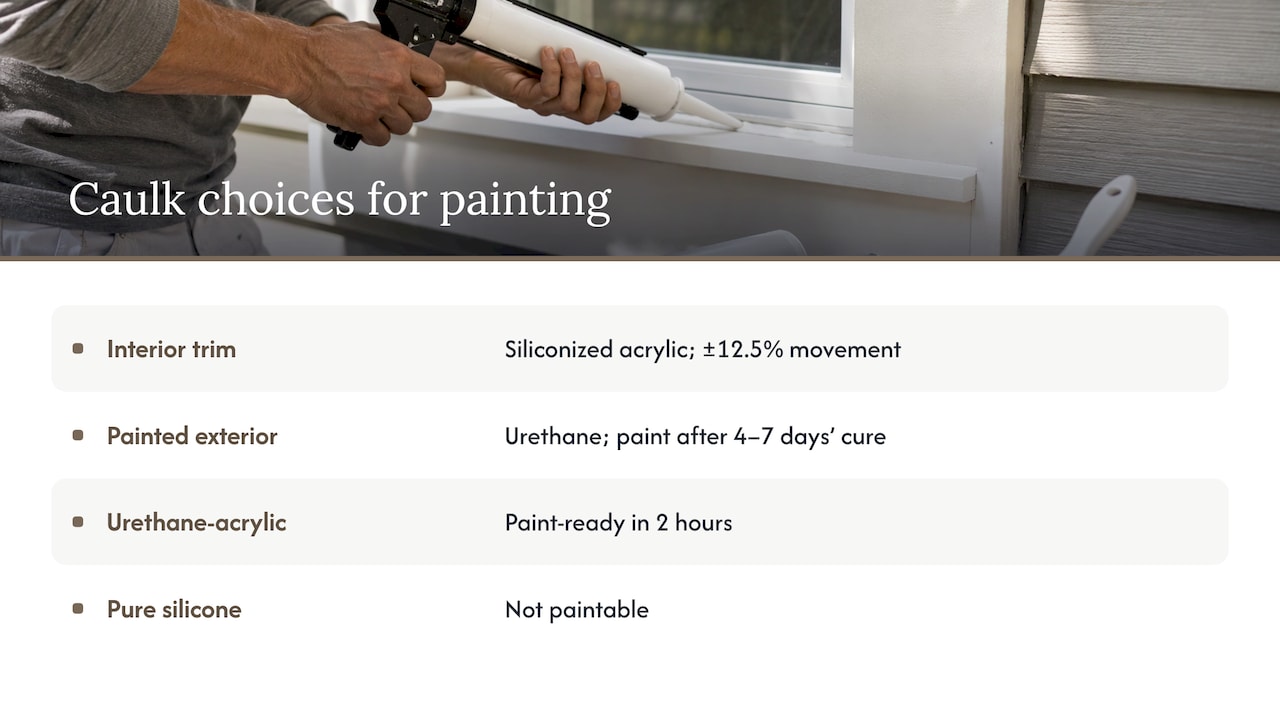
Interior trim, baseboards, crown molding, window casings, drywall seams. These joints move little. Siliconized acrylic is the usual choice. Würth’s guide lists its siliconized acrylic for trim, baseboard, crown molding and sealing drywall joints before painting, with ±12.5% movement and an application range of 5°C to 35°C. Window Force also names acrylic latex as the usual choice for painted interior casing. If you are caulking crown molding, our guide on how to caulk crown molding walks through the bead and tooling.
Exterior joints that will be painted. Urethane is the default when the joint will be painted or one side is wood, brick or concrete, per the same Window Force guidance. Wait for it to cure first. DAP’s Canadian data sheet for its polyurethane sealant says paintable after 4 to 7 days of full cure. Bostik notes that one-part polyurethanes take water-based and two-component paints, so read the label.
Hybrids. Urethane-acrylic products sit in between. DAP’s 2026 Canadian catalog lists an elastomeric urethane acrylic sealant that is paint-ready in 2 hours, cleans up with water and is used inside and out. It suits windows, siding, trim and baseboards where you want flexibility without a long wait.
Pure silicone is the wrong answer for paint. Würth lists its 100% silicone as not paintable, and CRLaurence names silicone on a surface to be painted as an application sure to cause problems. Paint beads up or peels off it.
Movement and lifespan
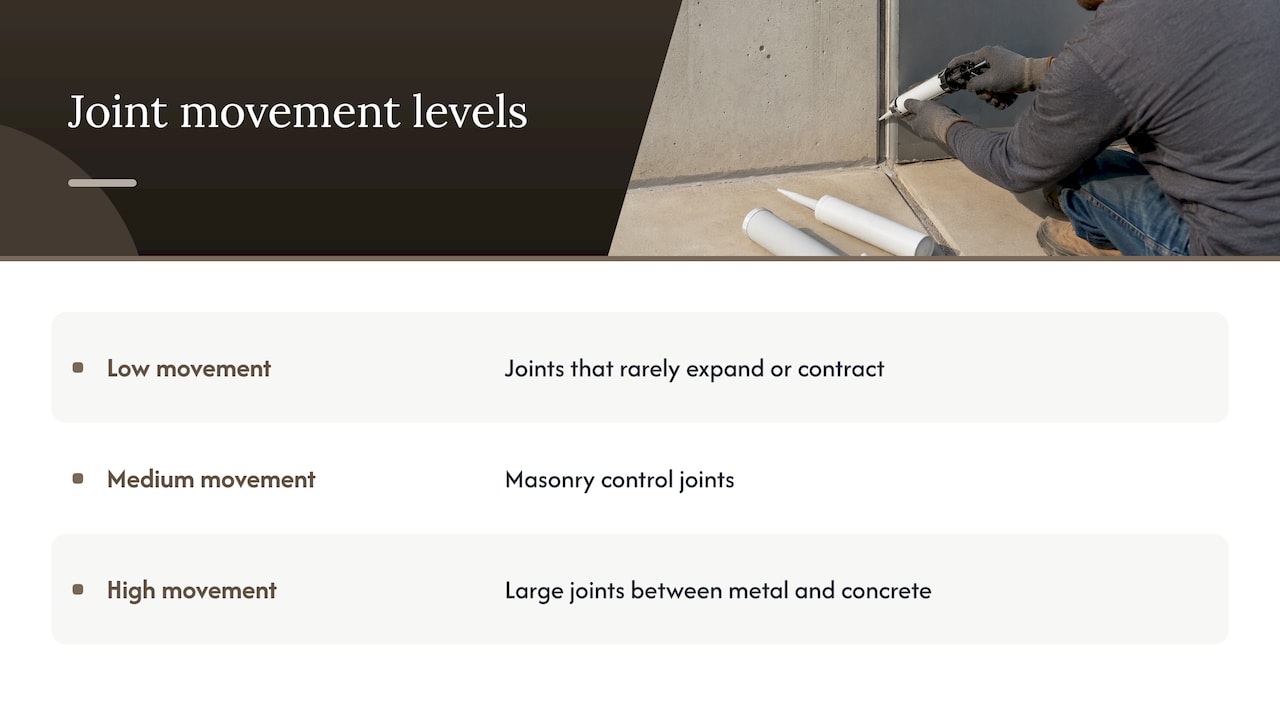
Movement is the most important selection factor, according to TSIB, the Canadian technical bulletin on caulking. Joints that do not expand and contract constantly can take a low-movement caulk. Slow-moving joints such as masonry control joints need a medium-movement product. Large joints between dissimilar materials, such as metal and concrete, need high movement.
Toronto-area exteriors see sharp swings between summer heat and January cold, so exterior joints work harder than the same joint indoors. That is why a siliconized acrylic that looks perfect on a bedroom baseboard can split along a window frame within a couple of winters.
Durability figures vary by source and by product. NRCan rates both as very good, at 25+ years for urethane and 30+ for siliconized acrylic. NRCan also says brands vary widely within the same type and recommends choosing the premium product for long-term durability. In practice, joint design, prep and exposure matter as much as the label.
Which one for which joint
- Baseboards, door casings, crown molding, drywall seams: siliconized acrylic. Easy to tool, paints well, water cleanup.
- Window and door perimeters outside, siding joints, trim-to-masonry: urethane. It bonds to wood, vinyl, brick and metal flashing, per TSIB.
- Wood-to-brick or wood-to-concrete joints: urethane, but dust matters. Window Force’s engineer notes concrete or mortar dust can act as a release layer so the bead peels, and water at application causes bubbles.
- Bathrooms that will be painted: a paintable acrylic or hybrid at the trim and ceiling lines, with a mildew-resistant paint. See our bathroom paint guide and the notes on stopping mildew from returning.
- Painted trim, mixed with millwork: siliconized acrylic for the gaps, then the right finish. See our trim paint guide for what goes over it.
A note on glass: urethane cannot directly contact glass and may stain porous stone and concrete, so it is not used in structural glazing (TSIB).
Applying it so it lasts
- Check temperature. Würth lists 5°C to 35°C for siliconized acrylic. The American Paint Association advises avoiding caulk below 5°C (40°F) because frost interferes with adhesion. DAP’s polyurethane lists 4.4°C to 37°C. Cranco notes one urethane acrylic will not set below 1.7°C or if freezing is expected within 24 hours. In a Toronto late fall, that narrows the window for exterior work.
- Prep the joint. Clean, dry, free of dust and old sealant. Old silicone must be removed to a clean surface: new silicone will not bond to old silicone, and polyurethane will not bond to it either (Window Force).
- Use backer rod in deeper joints. NRCan recommends a backer rod or foam rope in joints of 6 mm (1/4 in.) and larger.
- Respect cure times. Urethane takes a week or more to fully cure. Painting too early gives a tacky, wrinkled film.
- Leave drainage alone. Do not caulk weep holes, the bottom edges of lap siding or flashing gaps. Sealing them traps moisture in the wall. Caulk also should never cross a moving joint such as where a sash opens.
- Follow the data sheet. Match joint size, substrates, movement, exposure and paint requirements to the product’s data sheet, as Cranco advises.
For air sealing context around where caulk fits in a wider building envelope, this overview of air sealing versus insulation covers which comes first.
Why caulk choice shows up in the paint job
Caulk is the line between a finish that looks factory-smooth and one that shows hairline cracks in the first year. The wrong product shrinks, splits, or rejects paint. That is why professional prep treats caulk as a material decision and not an afterthought: product type, cure time and paint compatibility all have to line up with the coating on top.
On painted millwork, that also means sequencing: caulk gaps, let the product reach its paint-ready time, prime where needed, then finish. For more on the layers over the caulk, see our pieces on waterborne alkyd versus latex for trim and painting MDF trim. If the trim is built in, homeowners planning custom pieces can look at when to hire for cabinet crown molding.
Where Sigma Painting fits
Sigma Painting offers interior painting and exterior painting across the GTA, with comprehensive prep and cleanup, premium materials and a complimentary colour consultation on every service. We also offer drywall repair, water damage wall repair and stucco repair, which is where a lot of caulking decisions get made. Estimates are free and fixed. See all our services to request one.

Our perspective
Most callbacks on painted trim trace back to a sealant that did not match the joint. A siliconized acrylic on a stable interior seam is hard to beat: it tools cleanly, takes paint and leaves a crisp line. Outdoors, where wood meets brick or a window frame flexes with the seasons, we reach for urethane and give it the time to cure before any paint goes on.
Our approach is to treat prep as part of the finish. That means the right sealant, the right cure window and clean, dust-free joints, backed by our written workmanship warranty and a spotless worksite. It is how we deliver the flawless finish our clients expect on a single room or a whole building.
Enrico
FAQ
Is siliconized caulk the same as silicone?
No. Siliconized caulk is an acrylic latex product with a small amount of silicone-like additive for adhesion. A true silicone caulk is about 95% or more silicone polymer, according to the American Paint Association. Siliconized acrylic can be painted with latex paint, while pure silicone generally cannot.
Can you paint over urethane caulk?
Yes, once it has fully cured. DAP’s Canadian polyurethane sealant is paintable after 4 to 7 days. Check the label for compatible paint types, since some products accept only water-based paints.
What is the best paintable caulk for interior trim?
A siliconized acrylic or acrylic latex caulk. It tools well, cleans up with water and is designed for baseboards, crown molding, casings and drywall joints before painting. Always confirm paintability on the product’s data sheet.
When should you not use caulk?
Do not caulk weep holes, siding drainage gaps or flashing overlaps, and do not bridge a moving joint such as a sash. Sealing these traps moisture inside the wall, as noted by CRLaurence’s sealant guide and Window Force.
Sources
- American Paint Association: Caulking Compounds and Sealants
- Natural Resources Canada: Keeping the Heat In, Chapter 3
- TSIB bulletin 50.102: Caulking and Sealing Information
- Würth Canada: Sealant Selection Guide
- Pecora: Sealant installation instructions
- DAP Canada: Polyurethane Construction Sealant data sheet
- DAP Canada: 2026 product catalog
- Bostik: Construction and Facade brochure
- Window Force: Polyurethane caulk vs silicone
- Cranco: Best polyurethane caulk
- CRLaurence: Sealant requirement estimator


