
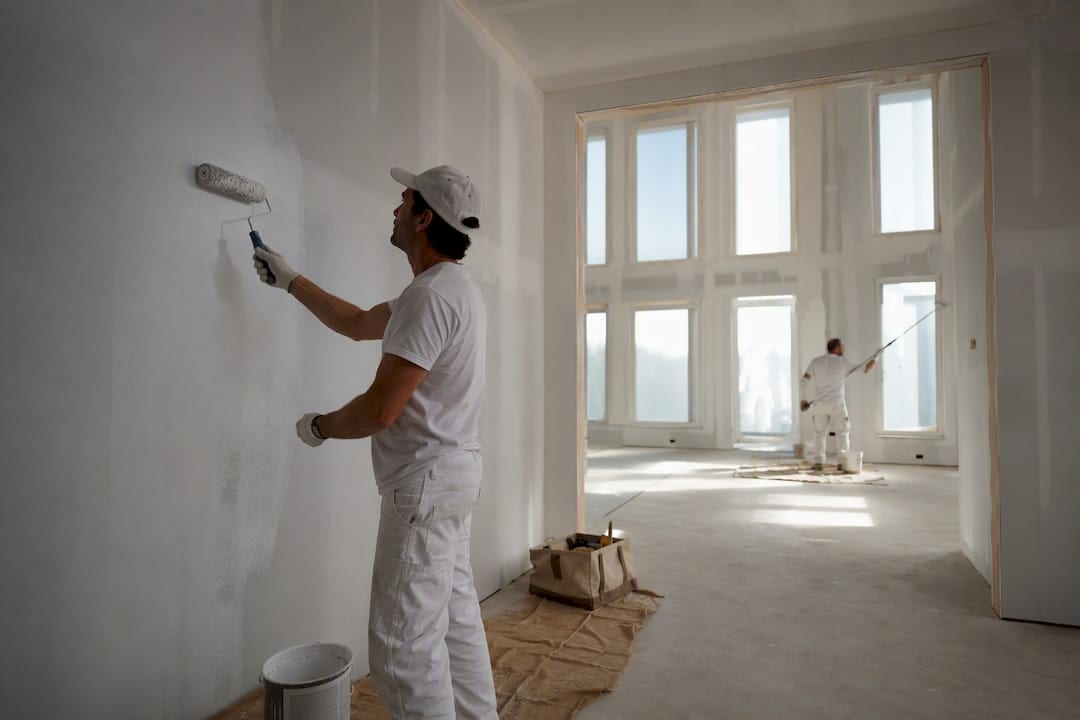
Painting a new build typically runs $1.20 to $4.50 per square foot for interior work and $2.00 to $6.00 per square foot for exteriors, depending on siding type, finish level, and how much prep the drywall needs. A 2,000 square foot home painted inside and out typically falls within a wide cost range depending on project scope. The single rule that matters more than any price sheet: budget for prep and labor hours first, because paint itself is rarely more than 15% of the final bill.
TL;DR:
- Labor costs typically account for 40% to 50% of the total painting bill, making crew hours the primary factor in final pricing.
- Drywall condition, ceiling height, and detail complexity are the main factors causing bid variations of thousands of dollars.
- Quotes should specify prep scope, coat count, paint tier, and estimated crew hours to enable accurate and fair comparison.
- Weather conditions and humidity significantly affect exterior painting schedules, possibly increasing costs during cold or damp periods.
- Itemized, written estimates with clear scope, coat counts, and guarantees are essential for evaluating reputable contractors and avoiding hidden fees.
Table of Contents
- What Does New Construction Painting Cost Per Square Foot?
- How Do Painters Price a New Construction Job?
- What Actually Drives the Price Up or Down?
- What Does It Cost to Paint Homes of Different Sizes?
- How Do You Compare Contractor Quotes Fairly?
- What Does “Prep” Actually Include on a New Build?
- How Long Does New Construction Painting Take?
- What Should a Premium New Construction Quote Include?
- What Warranties Do Painting Contractors Typically Offer?
- How Do Weather and Humidity Affect Painting Cost and Timing?
- What’s the Real Lesson in All These Numbers?
- How Do You Get an Itemized Quote for Your New Build?
- Where Do These Numbers Come From?
- Sources
What Does New Construction Painting Cost Per Square Foot?
Interior pricing on a new build usually falls between $1.20 and $4.50 per square foot, and where you land in that range depends almost entirely on scope. Walls-only work, with one coat of primer and two coats of finish paint, sits at the low end. Full interior painting, which includes ceilings, trim, doors, and closets, pushes toward the top of the band because you’re paying for surface area you’d otherwise skip.
Exterior work runs a wider spread, generally $2.00 to $6.00 per square foot. Vinyl and pre-primed hardboard siding sit toward the lower end since they need less prep. Stucco, brick, and board-and-batten siding push costs up because of texture, absorption, and the extra coats they demand. Some contractors quote flat per-square-foot figures well above that range for premium new-construction work. One Ontario contractor landing page, for example, publishes rates of $6.25 to $8.25 per square foot for a full new-build exterior package, which shows how much presentation and included services vary between an independent cost guide and a contractor’s own pricing page.
Here’s what each pricing band typically assumes:
- Interior walls-only ($1.20–$2.20/sq ft): one primer coat, two finish coats, standard 8 to 9 foot ceilings, minimal color changes between rooms.
- Full interior ($2.50–$4.50/sq ft): ceilings, trim, doors, closets, and multiple accent colors, plus the extra masking and cutting-in time that comes with them.
- Exterior on vinyl or hardboard ($2.00–$3.50/sq ft): one primer coat where needed, two topcoats, standard caulking around windows and trim.
- Exterior on stucco or masonry ($3.50–$6.00/sq ft): heavier primer requirements, texture-related paint absorption, and often a third coat on sun-exposed elevations.
Materials, labor, and prep don’t split evenly, and that surprises a lot of first-time builders. On a typical new-construction job, labor accounts for roughly 40% to 50% of the total cost, materials run somewhere between 10% and 20%, and the remainder covers prep, equipment, and contractor overhead. That means a quote that looks expensive because of a “premium paint” line item is usually expensive because of labor hours, not the paint can. If you want a starting point tailored to your own square footage, Sigma Painting’s instant quote calculator converts your home’s dimensions into a working estimate before you ever call a contractor. For a deeper look at exterior-specific numbers, see our exterior painting cost guide.
How Do Painters Price a New Construction Job?
Contractors use one of three pricing models, and knowing which one you’re looking at changes how you compare bids.
- Per square foot. This is the fastest way to get a ballpark, and most online cost guides use it because it scales cleanly. The catch: two quotes at “$3.00 per square foot” can cover completely different scopes. One might include two coats and trim; the other might mean walls only with primer billed separately. Per-square-foot ranges are a planning tool, not a purchase price, and contractors themselves treat them that way until they’ve walked the site.
- Per room or per component. Trim, doors, cabinets, and closets often get priced individually rather than folded into a blanket rate, especially on new builds where trim packages vary wildly between a builder-grade spec and a custom millwork upgrade. This model tends to produce more accurate totals on homes with unusual layouts or a lot of built-ins.
- Day rate or time and materials. Contractors default to this when the scope is uncertain, which is common on new construction if drywall finish quality hasn’t been confirmed yet. You’re paying for actual labor hours plus materials, so ask directly how many hours and how many painters they’re budgeting. Since labor hours drive close to half the total cost on most jobs, this is the number that actually predicts your final invoice.
Coat count and primer inclusion swing the effective per-square-foot price more than almost anything else on the quote. A bid built around two topcoats with no separate primer coat will look cheaper per square foot than one that includes a dedicated primer pass, even if the second contractor is doing better, more durable work. Reputable estimating guidance recommends breaking every quote into materials, labor, overhead, and profit rather than accepting a single blended rate, and that habit alone will save you from comparing apples to oranges. Industry blogs that cover square-foot pricing mechanics from the contractor’s side make the same point: the rate only means something once you know what it’s built on.
What Actually Drives the Price Up or Down?
Prep scope is the single biggest reason two quotes for the same house come in thousands of dollars apart. Contractors and industry sources consistently point to drywall repairs, primer coats, and masking as the leading cause of bid divergence, not the paint brand a contractor happens to use.
A handful of factors do most of the work in either direction:
- Drywall condition and finish level. New drywall that needs skim-coating or extra sanding before it’s paint-ready adds labor hours that show up directly in the quote.
- Ceiling height. Anything above a standard 9 foot ceiling usually means scaffolding or extension ladders, which slows the crew down and adds a line item.
- Trim and detail density. A house with heavy millwork, wainscoting, or multiple accent walls takes far longer to cut in than a home with plain drywall and simple baseboards.
- Number of colors. Every additional color means more masking, more brush changes, and more cleanup between rooms, even on a small house.
- Access and site logistics. New builds still under construction sometimes lack finished driveways, power, or clear staging areas, which slows crews down in ways a finished-home quote wouldn’t account for.
- Regional labor rates. Painters in high-cost metro areas typically charge 15% to 40% more than crews in rural or lower-cost regions for identical scopes, and exterior work is especially sensitive to this because it depends on local skilled-labor availability.
Pro Tip: Ask every contractor to state the drywall finish level they’re pricing against (Level 4 versus Level 5, for example). Two quotes that look identical on paper can hide a full extra day of sanding and skim-coating if one bidder assumed a lower finish standard.
What Does It Cost to Paint Homes of Different Sizes?
Square footage alone won’t tell you what you’ll pay, but it’s the fastest way to sanity-check a quote once you know the scope behind it. These figures assume standard 8 to 9 foot ceilings, two finish coats, and one primer coat unless noted.
1,000 sq ft home:
- Interior only (walls, trim, ceilings): roughly $2,500–$4,000
- Exterior only (vinyl or hardboard siding): roughly $2,500–$4,500
- Combined interior and exterior: roughly $4,500–$7,500
1,500 sq ft home:
- Interior only: roughly $3,500–$5,800
- Exterior only: roughly $3,500–$6,500
- Combined: roughly $6,500–$11,000
2,000 sq ft home:
- Interior only: roughly $4,500–$7,500
- Exterior only: roughly $4,800–$8,500
- Combined: roughly $8,500–$14,500
2,500 sq ft home:
- Interior only: roughly $5,500–$9,000
- Exterior only: roughly $5,800–$10,500
- Combined: roughly $9,000–$11,000 for a standard whole-house scope, based on modeled national benchmarks, though premium finishes and stucco exteriors can push that meaningfully higher
Whole-house cost modeling built around a 2,500 square foot baseline puts the typical installed price near $9,000 to $11,000, with labor eating up close to half that total. That number assumes a standard finish level. Add board-and-batten siding, three-coat stucco, or a heavy custom trim package, and you can expect a bid well above that ceiling. For an interior-specific look at how these numbers play out room by room, Sigma Painting’s interior painting cost guide breaks down individual room pricing rather than whole-house averages.
How Do You Compare Contractor Quotes Fairly?
An itemized quote should list five things at minimum, and if a contractor won’t break these out, that’s worth noting before you sign anything.
- Prep scope. What drywall repairs, sanding, or caulking is included, and is it billed separately if hidden damage turns up mid-job?
- Coat counts. How many primer coats and how many topcoats, and does that number change by surface (ceilings often get one coat, walls two)?
- Paint brand and tier. Contractors get trade discounts on premium paint lines, so an unspecified “premium paints” line can hide real cost differences between a mid-tier and top-tier product.
- Crew size and estimated hours. Since labor typically makes up 40% to 50% of the total, this number predicts your final cost better than the headline price does.
- Cleanup and warranty terms. Is post-job cleanup included, and what’s covered if paint peels or fails within the first year or two?
A quote that’s dramatically lower than every other bid you’ve collected almost always means something is missing, not that you found a deal. The most common gaps: fewer coats than competitors are quoting, no primer coat on new drywall, or a prep allowance that assumes no drywall touch-up at all. Pro Tip: If a bid seems too good, ask the contractor to walk you through their labor-hour estimate line by line. A crew that’s budgeting half the hours of every competing bid is either faster than everyone else or planning to cut corners somewhere.
What Does “Prep” Actually Include on a New Build?
Prep is where new construction painting differs most from repainting an existing home, and it’s also where quotes diverge the most.
New drywall gets finished to a specific level before it’s ready for paint, and that finish level directly determines how much sanding and skim-coating the painting crew has to do before the first primer coat goes on. A Level 4 finish is standard for most walls, but a Level 5 finish, common in high-gloss or heavily side-lit rooms, requires an extra skim coat across the entire surface to hide texture variations. If your estimator hasn’t asked which level they’re quoting against, ask them directly, because that single detail can shift labor hours by a full day or more on a mid-size home.
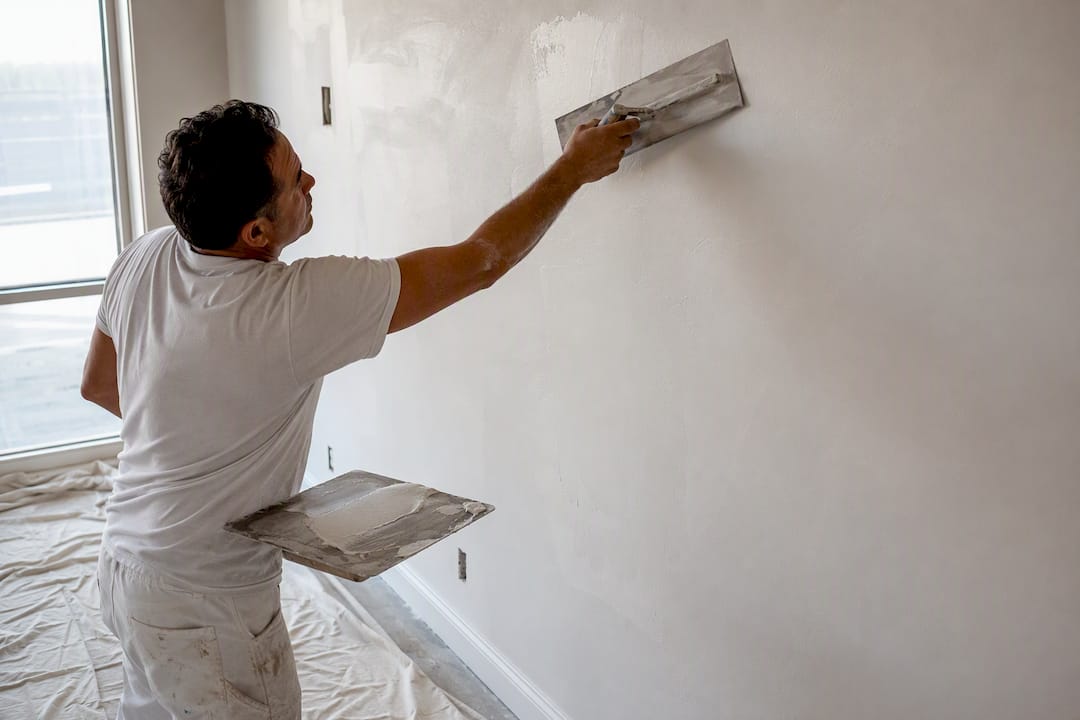
Spot sanding versus full sanding matters just as much. Builder crews sometimes leave nail pops, seam ridges, or drywall dust that only becomes visible once primer goes on under raking light. A contractor who’s priced for spot repairs and then discovers full-surface sanding is needed will either eat the cost or come back with a change order, which is exactly the kind of surprise a detailed prep line item prevents.
A complete prep scope should also cover:
- Masking of floors, windows, and fixtures before any spraying or rolling begins
- Caulking of trim joints, baseboards, and window casings
- Protection of finished surfaces like countertops and flooring installed ahead of painting
- Daily cleanup and final debris removal once the job wraps
For a closer look at what drywall repair specifically involves before a crew ever opens a paint can, see Sigma Painting’s guide on drywall repair before painting.
How Long Does New Construction Painting Take?
A single-family interior typically takes three to seven working days for a crew of two to four painters, depending on square footage and trim detail. Exterior work runs a similar range, though weather delays can stretch it. A full whole-house job, interior and exterior combined, usually takes one to three weeks once you account for dry time between coats.
Sequencing with other trades matters more on new construction than almost any other cost factor that doesn’t show up on a price sheet. Painters typically go in after drywall and taping are complete but before flooring and cabinet installation, since wet paint and installed flooring don’t mix well. If a builder’s schedule pushes painters in after flooring is down, expect extra masking costs and a longer timeline, since the crew now has to protect finished surfaces that weren’t there in a normal sequence. Sigma Painting’s guide to builder scheduling and trade coordination covers this handoff in more detail.
Exterior painting adds a weather constraint that interior work doesn’t have. Most exterior paints need daytime temperatures above 10°C and low humidity to cure properly, which narrows the practical painting window in colder climates to spring through early fall. Scheduling an exterior job during unsuitable weather conditions often means delays that push the whole project timeline out by a week or more.
What Should a Premium New Construction Quote Include?
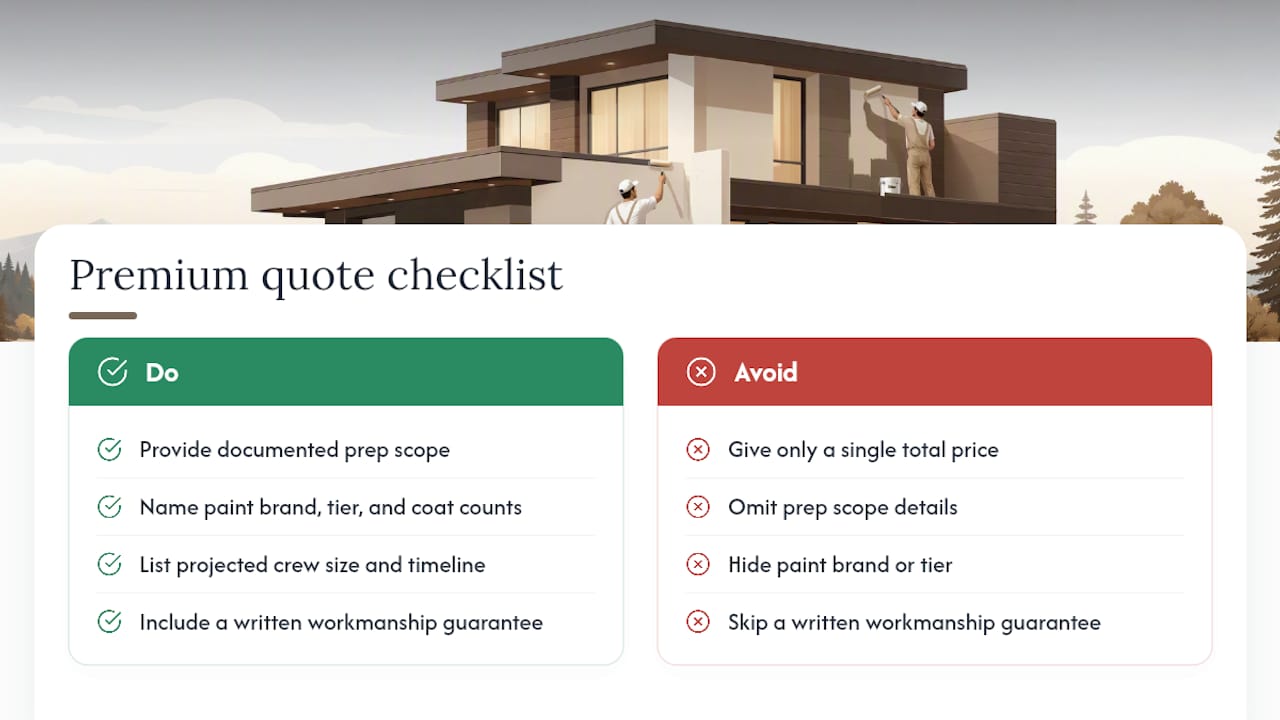
A quote worth trusting reads like a checklist, not a single number. A trustworthy new construction estimate should be built around line-item prep scope, specified coat counts, disclosed paint tier, and a workmanship guarantee, because that’s the only way a homeowner or builder can actually compare it against another bid. Premium materials matter, but they only pay off when the prep underneath them is done right, which is why transparent pricing and a clear scope of work come before any discussion of paint brand.
What you should expect from any premium, itemized quote: a documented prep scope, named paint brand and tier, exact coat counts per surface, projected crew size and timeline, and a written guarantee covering workmanship defects for a defined period after completion.
What Warranties Do Painting Contractors Typically Offer?
Workmanship guarantees vary widely between contractors, and the terms matter more than the length of time printed on the invoice. A guarantee should specify what’s covered (peeling, cracking, or uneven coverage due to application error) versus what isn’t (damage from settling, moisture intrusion, or normal wear). Some contractors offer one-year workmanship coverage as standard, while premium providers extend that further on new construction jobs specifically, since new-build drywall can shift slightly as the house settles in its first year.
Ask whether the warranty covers labor only or labor and materials, since a contractor who used a mid-tier paint line may only guarantee their own application work, not the paint’s fade resistance or durability. It’s also worth confirming whether the warranty transfers if you sell the home within the coverage period, which matters for builders selling spec homes and for homeowners who plan to move within a few years.
A written guarantee should be part of the itemized quote itself, not a verbal promise made on-site. If a contractor won’t put warranty terms in writing before you sign, treat that as a signal to keep shopping, the same way you’d treat a quote missing coat counts or prep details.
How Do Weather and Humidity Affect Painting Cost and Timing?
Temperature and humidity aren’t just scheduling concerns, they show up directly in the invoice. Most exterior paints need surface and air temperatures above roughly 10°C to cure properly, and high humidity slows drying time regardless of temperature, which means crews sometimes need extra days to complete the same scope during a wet or cold stretch.
Interior work is less weather-dependent but not immune. New construction homes often run higher humidity than finished homes because concrete, drywall mud, and other wet trades haven’t fully cured yet. Painting over damp drywall or in a poorly ventilated new build can trap moisture behind the paint film, leading to adhesion problems that show up months later as peeling or bubbling.
Contractors factor this into pricing two ways: by building in schedule buffers during shoulder seasons (spring and fall, when temperature swings are common), or by charging more for winter exterior work that requires temporary heating or specialized low-temperature paint formulas. If your project is scheduled for late fall or winter, ask your contractor directly how they’re pricing around weather risk, since a bid that doesn’t account for it may come with change orders once conditions turn.
What’s the Real Lesson in All These Numbers?
Most cost guides train homeowners to shop by the per-square-foot number, and that’s exactly backward. The number that actually predicts your final invoice is labor hours, since that’s routinely 40% to 50% of the total, and no two contractors estimate hours the same way for the same house. A bid that’s 20% cheaper almost always means fewer labor hours budgeted, not a better deal on paint.
The conventional advice to “get three quotes and pick the middle one” also falls short on new construction specifically, because new-build quotes vary less on price and more on what’s actually included. Two bids at nearly identical totals can represent completely different scopes if one assumes a Level 4 drywall finish and the other assumes Level 5, or one includes a dedicated primer coat and the other doesn’t.
What builders and homeowners should prioritize first isn’t the lowest number. It’s the itemized breakdown: prep scope, coat counts, and crew hours, in that order. Get those three things nailed down in writing, and the price comparison takes care of itself.
— Enrico
How Do You Get an Itemized Quote for Your New Build?
Every reliable estimate should be based on a checklist including documented prep scope, disclosed coat counts, named paint tier, and a written workmanship guarantee, so you’re never comparing a number against a guess.

Before booking a walkthrough, have your square footage, ceiling heights, and desired color count ready, along with any known drywall issues or areas of concern. That’s usually enough for an accurate on-site assessment, which remains the only way to price a new construction job correctly rather than relying on a blended per-square-foot average. Estimators typically walk the site, confirm the drywall finish level, and return a written quote broken into prep, primer, topcoats, and cleanup, not a single lump sum. If your project includes interior rooms specifically, the interior painting services page covers scope and scheduling details, and builders managing multi-unit developments can review commercial timelines on the commercial painting services page. Ready to see numbers for your own project? Request a walkthrough through Sigma Painting’s home painting services page and get a written, itemized quote before your next trade milestone.
Where Do These Numbers Come From?
The per-square-foot ranges and budgeting benchmarks in this guide draw from aggregated contractor pricing data, including LatestCost’s new construction pricing breakdown, PaintPricing’s interior and exterior cost guide, and TheFatBook’s whole-house cost index. Canadian-specific cost commentary and prep-scope insights come from HomeStars, and estimating methodology follows guidance published by Benjamin Moore Canada for contractors.
To turn these ranges into a number specific to your home, run your square footage through Sigma Painting’s instant quote calculator, which accounts for local GTA labor rates rather than national averages.
Sources
- How to Estimate a Paint Job the Right Way — Benjamin Moore (Canada)
- House Painting Estimate: 2026 Interior + Exterior Cost Guide
- Whole House Painting Cost (2026): Full Job Pricing


