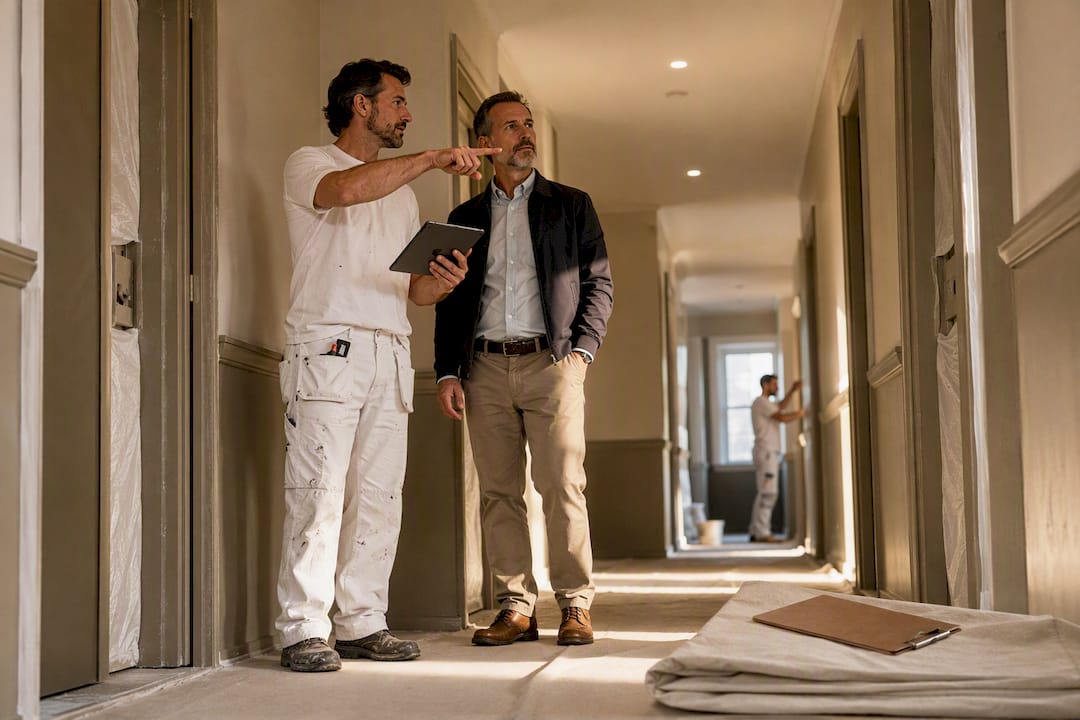
The right multi unit painting coordination approach is a portfolio-wide master schedule, phased execution across buildings, and one accountable point of contact. That combination minimizes resident disruption, keeps finishes consistent from unit to unit, and typically unlocks priority scheduling and bulk pricing when three or more properties get scoped together. An experienced professional built this operational model from years of running multi-building repaint programs across the GTA.
TL;DR:
- Coordinating multiple buildings under a single master schedule and point of contact ensures consistency and allows for bulk pricing on three or more properties.
- A detailed scope including substrate condition, HOA cycles, and priority tiers prevents project delays and overlapping work, especially for exterior jobs.
- Phased interior and exterior rollouts, with buffer days and careful scheduling, help manage resident disruptions and adapt to weather or access issues.
- Clear resident communication, advance notices, and structured access protocols minimize complaints and disruptions during work.
- Standardized product lines, signed-off samples, and documented inspections ensure finish consistency and effective quality control across the portfolio.
Table of Contents
- What Does a Portfolio-Wide Master Schedule Actually Include?
- How Should You Phase Unit Turns and Building Rollouts?
- What Should Resident Communication and Access Protocols Cover?
- How Do You Keep Materials and Finishes Consistent Across a Portfolio?
- What’s the Best Way to Contract and Price a Multi-Unit Program?
- What Happens on Painting Day, and How Do You Keep It Safe?
- How Does a Real Multi-Unit Project Actually Run?
- Why Consolidated Planning Beats Building-by-Building Guesswork
- Sigma Painting’s Multi-Unit Painting Programs
- Where to Verify These Practices and Find Templates
- Sources
- FAQ
What Does a Portfolio-Wide Master Schedule Actually Include?
A master schedule starts with scope, not dates. Before anyone picks a start date, you need a documented list of what’s actually being painted: unit interiors, common area corridors and lobbies, exterior siding or stucco, trim touch-ups, and any deferred maintenance items riding along with the paint crew. Skipping this step is how a “quick refresh” project balloons into a six-month scramble.
Build an inspection checklist for every building before scheduling anything. Walk each property, note substrate condition, and flag units that need more than a coat of paint. Then map the work against your fiscal calendar and, where applicable, your HOA approval cycles, because painting during a board’s slow season saves weeks of back-and-forth on color sign-off.
A workable master schedule usually covers:
- Priority tiers ranking buildings by lease turnover, complaint history, or deferred maintenance urgency
- Finish-level definitions specifying sheen, coat count, and prep standard for each area type
- A documented calendar showing which building or wing gets painted in which week
- A specification sheet contractors bid against, so every proposal covers identical scope
The output isn’t a rough plan. It’s a written document your board, your contractor, and your on-site staff can all reference without a phone call.
How Should You Phase Unit Turns and Building Rollouts?
Sequencing decides whether the project feels organized or chaotic. Single-building rollouts, where one crew works a property start to finish before moving on, work best for smaller portfolios or buildings under 60 units. Parallel rollouts, with two or three crews working different buildings simultaneously, suit larger portfolios where a single-building approach would stretch the timeline past a season.
- Vacant unit turns typically run 2 to 4 days per unit including prep, two coats, and touch-up drying time.
- Occupied unit turns need longer windows, often 4 to 6 hours per room when crews work around furniture and residents, similar to the rapid-turnover model Enrico documented in a hotel room turnover case.
- Buffer days belong in every phase. Build in one contingency day per five scheduled units to absorb weather delays, access issues, or surprise substrate repairs.
- Coordinate with leasing and maintenance before finalizing dates. A unit painted the week before move-in cuts vacancy days; a unit painted mid-lease with no coordination creates complaints.
Industry write-ups on exterior multi-unit projects describe tactics like phased tenant access and temporary walkways that keep residents moving safely while scaffolding or containment stays up. Borrow that logic for interior rollouts too.
What Should Resident Communication and Access Protocols Cover?
Notice timing matters more than notice length. Most portfolios do best with a 7 to 14 day advance notice for common area work and at least 48 hours for in-unit access, posted both physically and digitally.
Every notice should include:
- Exact dates and time windows the crew will be on-site
- What residents need to move or cover (not what the crew will handle)
- Expected disruption: noise hours, odor, temporary loss of parking or elevator access
- A direct contact name and phone number, not a general office line
Access protocols need to be locked down before day one. Occupied units usually require either a scheduled resident presence or a signed access authorization with a lockbox or master-key protocol logged by unit. Build in a simple exception process for residents with medical needs, mobility limitations, or work schedules that make standard hours impossible. A five-minute reschedule call costs far less than a resident complaint to the board.
How Do You Keep Materials and Finishes Consistent Across a Portfolio?
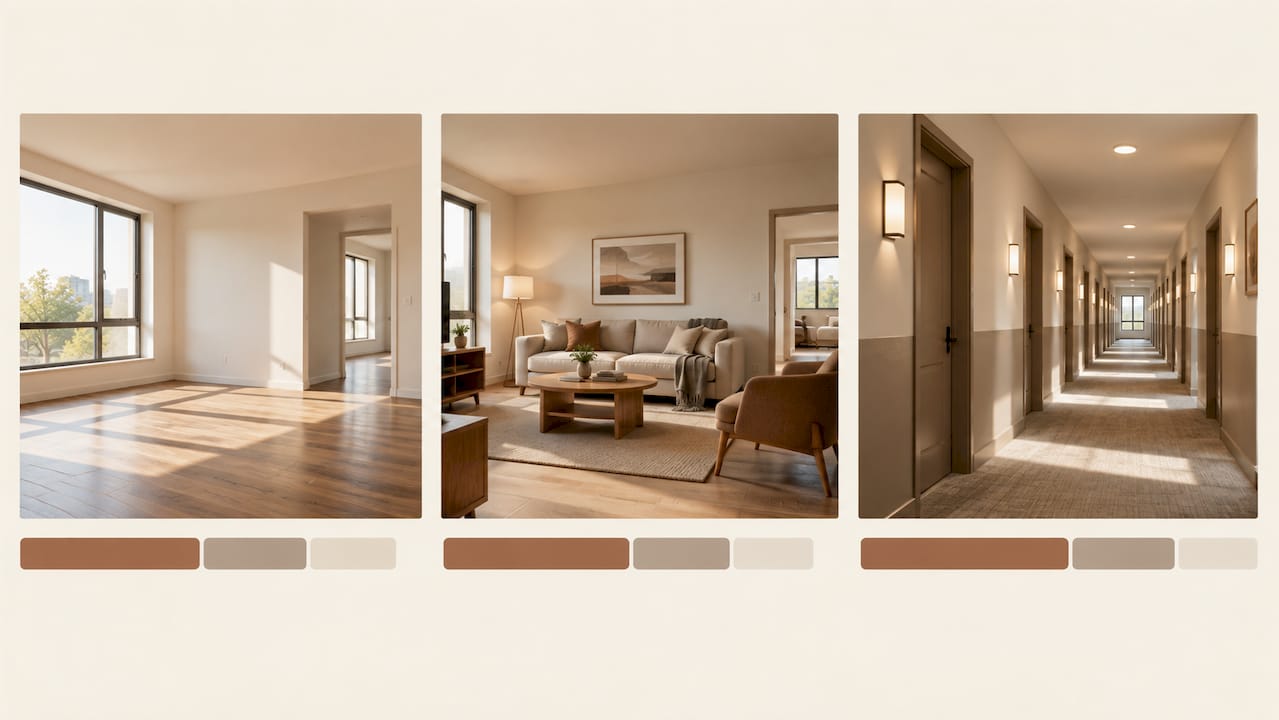
Consistency lives or dies in the product selection stage, not on-site. Standardize product families across the portfolio: low-VOC interior lines for occupied units, washable satin or eggshell finishes for high-traffic corridors, and flat or matte for ceilings. Sheen should be assigned by area type, not left to individual crew judgment.
A repeatable QA process needs:
- A locked color and sheen spec sheet distributed to every crew lead, not just the project manager
- A physical sample board reviewed and signed off by the board or ownership before any unit gets painted
- A documented inspection at the end of each phase, photographed and logged against the spec sheet
- Warranty paperwork tied to specific batch numbers and application dates
Contractor associations that set coatings and environmental-control guidance recommend documenting VOC compliance per product, which matters most in occupied buildings where ventilation is limited during application. Large portfolios that lock in the same product line across every building also tend to negotiate better volume pricing on paint itself, since suppliers can plan batch production around a known order size.
What’s the Best Way to Contract and Price a Multi-Unit Program?
Per-project bidding makes sense for a single building. It falls apart across a portfolio, because every new bid resets pricing, scheduling priority, and crew familiarity with your properties. An annual or seasonal portfolio contract locks in pricing across every property scoped that year and, in most cases, moves you toward the front of the contractor’s queue during peak season.
A solid contract should spell out:
- Line-item pricing by unit type and area, not one lump sum for the whole portfolio
- A defined priority scheduling window, so your buildings don’t lose their slot to a bigger last-minute job
- Change-order procedures for scope additions discovered mid-project
- Performance metrics tied to timeline and callback rate, plus lien waiver requirements for every completed phase
When you request proposals, ask specifically for a dedicated account manager and a written scheduling commitment, not just a total price. Contractor guidance from groups like the AGCGA points to the single-account-manager model as the feature portfolio clients value most, because it means one person owns the schedule instead of three different site supervisors interpreting it differently.
Pro Tip: Ask every bidder to price your portfolio in the same three tiers: vacant unit, occupied unit, and common area. That’s the only way to compare quotes apples to apples instead of guessing which contractor buried costs where.
What Happens on Painting Day, and How Do You Keep It Safe?
Day-of execution is where plans either hold or fall apart in front of residents.
- Post signage at every entry point and elevator bank the morning work starts, not the night before.
- Set containment with plastic sheeting and floor protection in every occupied hallway before any can gets opened.
- Schedule odor-heavy work, like spray application, for low-traffic hours and confirm ventilation runs the full drying window.
- Reserve elevators and parking in writing with building management, since freight elevator conflicts are the single most common day-of delay.
- Confirm safety protocols with the crew lead, including fall protection on any exterior or stairwell work and proper handling procedures if the building predates 1978 and lead paint testing applies.
Buildings pursuing tighter multi-trade coordination, such as scheduling painters around ongoing electrical or lighting upgrades, benefit from the same sequencing logic used in commercial lighting retrofit planning, where trades stagger by floor to avoid stacking crews in the same corridor.
How Does a Real Multi-Unit Project Actually Run?
A mid-rise condo repaint program Enrico coordinated involved staggered common-area and unit work across three linked towers, sequenced so residents in each tower had advance notice before crews moved in. The team ran occupied-unit turns in tight windows, borrowing the same scheduling discipline documented in Sigma Painting’s hotel room turnover case, where full room turnovers landed in the 4 to 6 hour range.
A reusable checklist splits into three phases:
- Pre-work: inspection complete, color board signed, notices distributed, access authorizations logged
- Daily: signage posted, containment set, elevator/parking reserved, crew safety briefing done
- Closeout: final walkthrough against spec sheet, punch list resolved, warranty documentation issued, photos filed
| Phase | Owner | Key Deliverable |
|---|---|---|
| Pre-work | Property manager + account manager | Signed spec sheet and access log |
| Daily execution | Crew lead | Containment and safety checklist |
| Closeout | Site inspector | Warranty file and photo record |
A detailed logistics playbook walks through the full template if you want the source document to adapt for your own portfolio.
Why Consolidated Planning Beats Building-by-Building Guesswork
The biggest mistake I see in portfolio painting isn’t a bad contractor. It’s treating every building as its own isolated project instead of negotiating and scheduling the whole portfolio at once. A single point of contact and one annual contract cut through the scheduling conflicts that come from three different property managers calling three different contractors on three different timelines. You get consistency in the finish and leverage in the price, and those two things usually arrive together, not separately.
The one trap to watch: don’t over-schedule tight buffer windows just to hit a fiscal deadline, and don’t under-scope the spec sheet just to keep the initial bid low. Both mistakes cost more in change orders than they save upfront.
— Enrico
Sigma Painting’s Multi-Unit Painting Programs
A leading painting company runs a model similar to what this article describes: one master schedule, one account manager, and phased execution across every building in your portfolio. If your properties need coordinated interior repaints, exterior work, or common area refreshes, the property management painting service page outlines what a portfolio proposal covers.
When you request proposals, ask for line-item pricing by unit type, a documented priority scheduling window, and a named account manager rather than a rotating site contact. That’s what turns three separate quotes into one comparable decision. Sigma Painting also handles related scopes, from commercial painting for shared amenity spaces to unit-specific work like condo repaints for move-in turnovers. Reach out through the property management page to request a portfolio walkthrough and a written proposal scoped to your buildings.
Where to Verify These Practices and Find Templates
For safety and contractor qualification standards, the AGCGA and ABCGA publish guidance used across commercial and multi-site painting operations. For downloadable scheduling templates, Sigma Painting’s multi-unit logistics playbook and move-in timeline guide cover the checklist structures referenced above.
Sources
FAQ
What Is the 60/30/10 Rule in Painting?
It’s a color-balance rule where 60% of a space uses a dominant wall color, 30% a secondary tone often on trim or furnishings, and 10% an accent color, keeping finishes visually consistent across units without every room looking identical.
What Is the 80/20 Rule in Painting?
In a portfolio context, it’s the idea that 80% of visual consistency comes from getting wall color, sheen, and trim finish standardized correctly, while the remaining 20% covers accent details and unit-specific touches that vary by layout.
What Is the Focal Point in a Painted Space?
The focal point is the wall, feature, or architectural element the eye lands on first, usually the wall opposite the entry or behind a lobby’s reception desk, and it’s typically where a portfolio’s accent color or feature finish gets applied.
How Far in Advance Should Residents Be Notified Before Painting?
Common area work generally needs 7 to 14 days of advance notice, while in-unit access should be confirmed at least 48 hours ahead with a specific time window.
Does Painting Multiple Buildings Together Actually Save Money?
Yes, in most cases. Scoping three or more properties into one contract typically qualifies for volume pricing and priority scheduling that per-building bids don’t get, since contractors can plan crew allocation and material orders around a known, larger job.