
Book your painters to start 2–3 weeks before your move-in date. A professional crew typically completes an average 1,500–2,000 sq ft interior in 2–5 working days, a single room in a day or less, and a full exterior repaint in about one to two weeks depending on weather. Those ranges assume a vacant property, standard prep, and a crew of two or more.
When you first contact a painter, tell them three things immediately: your move-in date, any hard deadlines (closing day, landlord handover, builder inspection), and whether the property will be vacant or occupied during the work. That information determines whether they can allocate a standard crew or need to bring extra hands to compress the schedule.
Here is what drives the calendar:
- Lead time: Crews book out fast, especially in spring and fall. Calling two to three weeks ahead gives the estimator room to assign the right crew size.
- Prep work: Patching, sanding, and priming often take as long as the painting itself.
- Drying windows: Coats need time between them. Rushing that step costs you finish quality.
- Occupied vs. vacant: Occupied homes typically add 10–20% more working time because crews must stage rooms and clean up daily.
Key Takeaways
A professional crew can paint a standard 1,500–2,000 sq ft GTA interior in 2–5 working days, but securing a start date 2–3 weeks ahead and disclosing all prep issues upfront is what keeps that timeline from slipping.
| Point | Details |
|---|---|
| Book 2–3 weeks ahead | Crew allocation and scheduling require lead time, especially near closing dates. |
| Standard interior: 2–5 days | A pro crew finishes a 1,500–2,000 sq ft interior in 2–5 working days; single rooms take a day or less. |
| Prep drives the schedule | Drywall repair, wallpaper removal, and dramatic color changes each add days; disclose all issues at the estimate. |
| Allow 48 hours before move-in | Paint needs at least 48 hours after the final coat before furniture moves in; full cure takes 2–4 weeks. |
| Sigma Painting for GTA projects | Use the instant quote calculator at sigmapainting.com to get a job-specific timeline and crew recommendation. |
Table of Contents
- How long does painting actually take by project scope?
- What prep actually includes and the tasks that quietly extend your schedule
- Drying vs. curing: when is it actually safe to move in?
- How to compress a painting timeline when your closing date is tight
- Sample schedules you can use when planning around a closing date
- Questions to ask at the estimate and red flags to watch for
- Why these timelines are credible
- An honest note on scheduling tight GTA move-ins
- Sigma Painting makes pre-move-in scheduling straightforward
- Sources
How long does painting actually take by project scope?
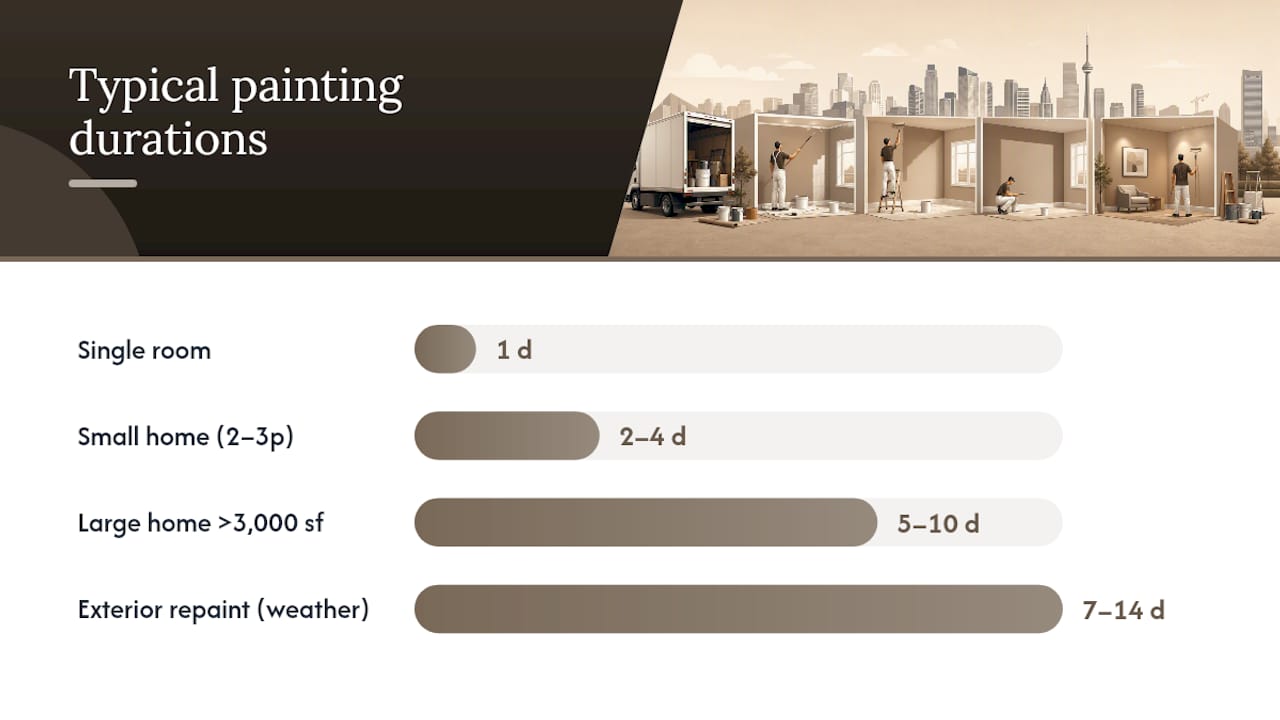
Duration depends on square footage, crew size, and condition of the surfaces. The table below maps common project types to realistic working-day ranges for professional crews.
| Project scope | Typical working days | Notes |
|---|---|---|
| Single room | 1 day | Assumes standard prep, one color |
| Condo / small home (under 1,500 sq ft) | 2–4 days | ~10–16 hours actual work, spread over 2–3 days for drying |
| Mid-sized home (1,500–2,000 sq ft) | Several days | Standard 2–3 painter crew |
| Large home (3,000+ sq ft) | 5–10 days | More rooms, more drying stages |
| Full exterior repaint | About one to two weeks | Weather-dependent; add buffer days |
Randall’s maps these square-footage ranges to working-day estimates, which is useful when you need to convert a labor-hour quote into actual calendar days. Harding’s Painting puts a two-bedroom, two-bath condo at roughly 10–16 hours of actual work, typically spread across two to three days to allow proper drying between coats.
Crew size is the single biggest lever on calendar time. PaintPricing notes that a four-person crew can finish work in a fraction of the days a solo painter would need. A 2–3 painter crew on a standard interior runs 3–8 working days; scaling to four painters on the same job can cut that nearly in half.
Exterior jobs carry a separate complication: paint requires dry surfaces and temperatures above roughly 10°C. A week of rain in October can push a 7-day exterior job to 12 calendar days, so always build a weather buffer into any exterior move-in schedule.
What prep actually includes and the tasks that quietly extend your schedule
Rolling paint is a small fraction of what professional painters actually do. The bulk of labor goes into prep, and that is where most schedule surprises hide.
Standard prep tasks a pro crew performs:
- Moving and covering furniture, fixtures, and flooring
- Filling nail holes, cracks, and minor dents with patching compound
- Sanding patched areas smooth
- Spot-priming repaired surfaces before the finish coat
- Caulking gaps around trim, windows, and baseboards
- Masking trim, ceilings, and hardware
- Addressing minor surface defects (peeling, bubbling, staining)
Three specific conditions commonly push timelines further than clients expect. Significant drywall repair, wallpaper removal, and dramatic color changes (going from a deep charcoal to a bright white, for example) each require extra priming stages and additional drying time. Practitioners routinely add extra days to the schedule for any one of these conditions. Wallpaper removal alone can be a full day’s work per room if the paper was applied directly to drywall without a primer coat.
Pro Tip: Before your estimate, photograph every problem area: water stains, cracked drywall, peeling paint, and any rooms with wallpaper. Send those photos with your inquiry. A painter who sees the scope upfront can give you a realistic timeline rather than a number that grows after demo day.
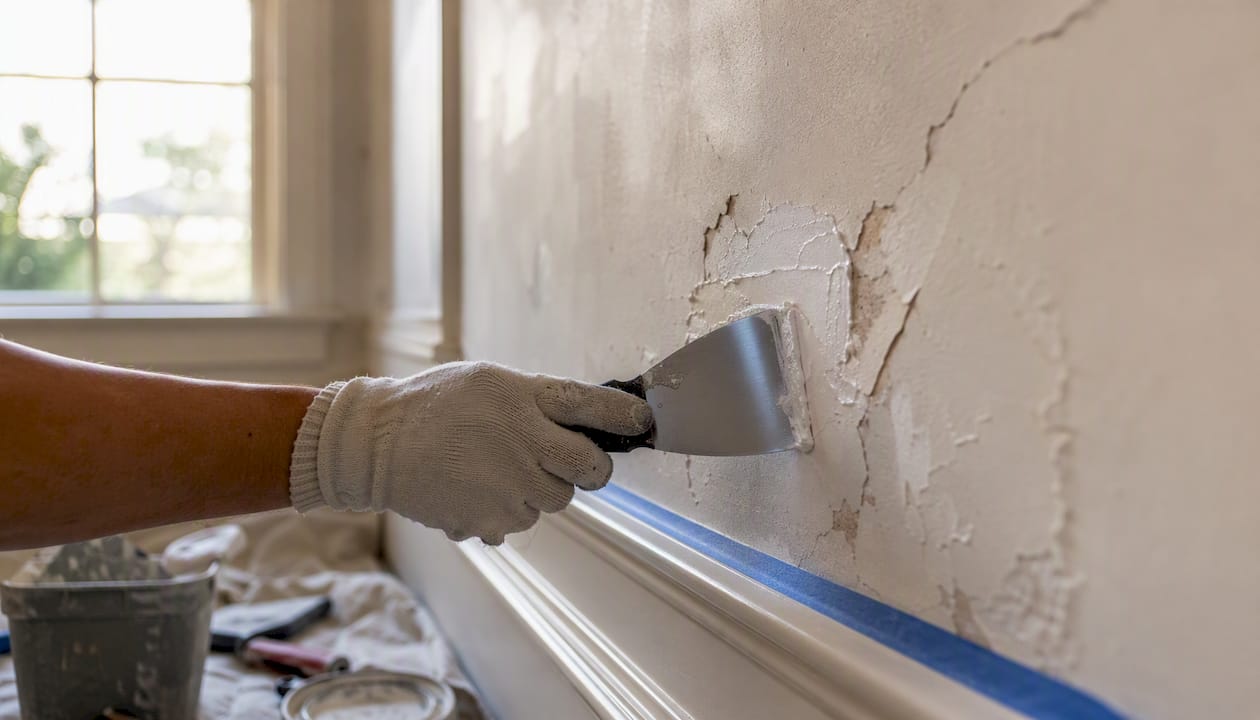
For properties with known drywall damage, Sigma Painting’s drywall repair services are typically scheduled as the first phase, before any painting begins, so the timeline stays clean.
Drying vs. curing: when is it actually safe to move in?
“Dry to the touch” and “fully cured” are not the same thing, and confusing them is one of the most common move-in mistakes.
Paint is dry to the touch within one to four hours for most latex formulas. That means you can apply a second coat. It does not mean you can press furniture against the wall or scrub a scuff mark without damaging the finish. Full cure, where the paint film reaches its final hardness, takes two to four weeks for latex paint and longer for oil-based products.
What this means for move-in timing: You can move furniture into a freshly painted room within 24–48 hours of the final coat if you are careful. Avoid stacking boxes against walls, dragging furniture across baseboards, or washing walls for at least two weeks. Low-VOC paints reduce off-gassing significantly, but ventilation still matters: open windows and run fans for at least 24 hours after the final coat, especially in bedrooms and nurseries.
For a practical ventilation checklist before occupancy:
- Open all windows and interior doors for cross-ventilation
- Run ceiling fans or box fans on low for 24–48 hours
- Keep the HVAC running to circulate air
- Avoid high humidity (keep windows closed during rain)
- Ask your painter specifically about the VOC rating of the products used
If your move-in date is fixed, schedule painting to finish at least 48 hours before furniture arrives. That window covers the critical off-gassing period and gives you a margin if a touch-up coat is needed.
How to compress a painting timeline when your closing date is tight
A tight handover date is not unusual in the GTA. Here are the practical options, along with what each one actually costs you.
- Scale up the crew. The most reliable compression method. Going from two painters to four on a standard interior can cut calendar time nearly in half, with minimal quality trade-off on straightforward work.
- Run parallel crews by zone. Assign one crew to the main floor and another to the upper level simultaneously. Works well in vacant homes where access is unrestricted.
- Phase by priority rooms. Paint bedrooms and bathrooms first so they are livable on move-in day, then finish common areas in the days after. Useful when a hard move-in date cannot move.
- Schedule off-hours or weekend work. Some crews will work evenings or Saturdays for an additional fee. Confirm this at the estimate stage, not after signing.
- Defer non-critical surfaces. Garage interiors, utility rooms, and secondary storage areas can often wait a week without affecting livability.
Compression works best on vacant properties. In an occupied home, staging and daily cleanup requirements limit how many painters can work efficiently in a space at once. Rushing prep to save a day almost always shows in the finish, so the better trade-off is usually to defer a lower-priority room rather than cut corners on a high-visibility one.
Sample schedules you can use when planning around a closing date
These are practical examples, not guarantees. Actual timing depends on prep level, crew size, and property condition.
Scenario 1: Single room, weekend project
- Friday afternoon: Crew arrives, moves furniture, patches and sands surfaces
- Saturday morning: Prime coat applied; drying time through afternoon
- Saturday afternoon/evening: First finish coat
- Sunday morning: Second finish coat; cleanup and punch-list
- Sunday evening: Room ready for careful furniture placement
Scenario 2: 1,500–2,000 sq ft interior, 5-working-day crew schedule (vacant property)
- Day 1: Full prep (patching, sanding, caulking, masking all rooms)
- Day 2: Prime coat throughout; spot-check and re-sand problem areas
- Day 3: First finish coat, all rooms
- Day 4: Second finish coat; touch-ups on trim and doors
- Day 5: Final punch-list, cleanup, and walkthrough
Move-in can begin 48 hours after Day 5 for careful occupancy, or immediately for a staged move where furniture stays away from walls initially.
Scheduling checklist to send your painter at first contact:
- Confirmed move-in or handover date
- Property address and access details (lockbox, superintendent contact)
- Square footage and number of rooms
- Known prep issues: drywall damage, wallpaper, water stains
- Color direction (dramatic change or similar tone?)
- Other trades on site and their schedule (flooring, cabinets, appliances)
- Preferred finish time each day (important for occupied properties)
On sequencing with other trades: paint before new flooring is installed whenever possible. Overspray and drips on new hardwood are a costly mistake. Cabinet painting, on the other hand, is often best scheduled after base cabinets are installed but before countertops arrive. For multi-trade projects, a house makeover sequencing guide can help you map the full order of operations.
Questions to ask at the estimate and red flags to watch for
The estimate call is where you lock the schedule or discover it was never real. Use these questions.
Ask every painter you quote:
- What is your earliest available start date, and can you commit to it in writing?
- How many painters will be on site each day?
- What is your written timeline from start to final walkthrough?
- Do you build in contingency days for drywall or prep surprises?
- What primer are you using, and how long do you allow between coats?
- What is your punch-list and touch-up policy after the final coat?
- Are you WSIB-covered and fully insured for Ontario projects?
Red flags that threaten your move-in schedule:
- A verbal timeline only, with no written scope or milestone dates
- Vague answers about crew size (“we’ll send whoever is available”)
- No mention of primer or drying time between coats
- Reluctance to provide local references or HomeStars reviews
- A quote that seems unusually low with no explanation of what prep is included
Get the start date, crew size, and completion estimate written into the contract before you pay a deposit. A reputable contractor who can meet your deadline will have no hesitation putting it in writing. For a full vetting checklist, Sigma Painting’s guide on choosing a painting contractor covers what to verify before signing.
Why these timelines are credible
The duration ranges in this guide draw from three types of sources: published Canadian pricing and timeline guides (HomeStars, Randall’s, Harding’s Painting), independent painting industry resources (PaintPricing), and Sigma Painting’s direct experience with GTA residential and commercial projects, including new-build touch-ups and tight handover schedules for builders and property managers.
Sigma Painting’s instant quote tool generates a job-specific estimate based on your actual scope, which is a faster way to get a realistic timeline than working backward from generic ranges. The team focuses on GTA projects and has direct experience with the scheduling pressures that come with fixed closing dates and builder handovers.
An honest note on scheduling tight GTA move-ins
The projects that go sideways are almost never the ones with the longest timelines. They are the ones where the painter said “no problem” without asking about the wallpaper in the master bedroom, or where the crew showed up two days late because the start date was never written down.
The fix is straightforward: disclose everything upfront, get the schedule in writing, and build in at least one buffer day for prep surprises. When a closing date is truly fixed, scaling up the crew is almost always the right call. Phasing rooms and deferring low-priority spaces is a reasonable second option. Cutting prep time is not.
Sigma Painting handles tight handover schedules regularly in the GTA, including same-week starts for vacant properties when crew availability allows. When a builder or property manager calls with a hard deadline, the first question is always crew allocation, not whether it can be done.
Sigma Painting makes pre-move-in scheduling straightforward
Tight closing dates and fixed handover deadlines are exactly the kind of projects Sigma Painting is built for. The team covers interior painting across the GTA, including drywall repair, cabinet repainting, and exterior work, all under one crew and one schedule. No coordinating multiple contractors around each other’s timelines.

For move-in projects, the fastest first step is the instant quote calculator. Enter your square footage, scope, and move-in date, and you get a job-specific estimate rather than a generic range. When you reach out, include your confirmed move-in date and any known prep issues. That gives the team what it needs to allocate the right crew size from day one.
Sources
The timeline ranges in this guide are estimates. Local conditions, prep level, crew size, and property occupancy all shift the actual numbers. Always confirm a job-specific schedule with your painter at the estimate stage.
- Cost to Paint a House in Canada: A 2026 Pricing Guide - HomeStars
- How Long to Paint a House: Interior + Exterior Timelines – PaintPricing
- How Long Does It Take to Paint a Full House Interior? – Randall’s