
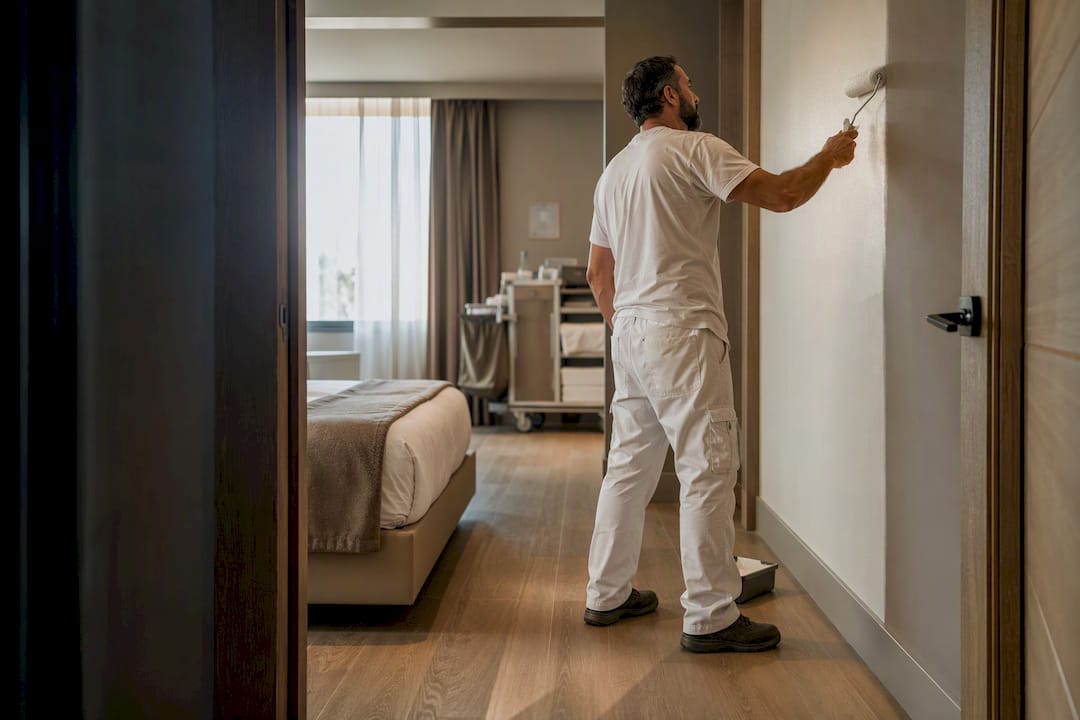
The fastest way to repaint an occupied hotel without losing revenue is to combine floor-by-floor micro-phasing, zero-VOC fast-curing coatings, and a strict housekeeping handoff protocol that guarantees same-day room turnover. Every other decision, crew size, containment method, communication schedule, flows from that core structure. Get the phasing and the products right, and guest disruption becomes a rounding error instead of a line item on your review scores.
TL;DR:
- Ensure product lead times are confirmed and mock-ups are approved before bulk ordering to prevent project delays and color mismatches.
- Use micro-phasing by wing or stack for public areas and schedule work during low-traffic hours to minimize guest disruption.
- Select fast-cure, low-odor, zero-VOC coatings with verified cure times to allow same-day room turnover and avoid revenue loss.
- Maintain strict coordination among departments through daily calls and clear communication to prevent guest complaints and operational conflicts.
- Scale crews in proven ratios, standardize containment, and reserve rework time to ensure consistent quality and efficient project completion.
Table of Contents
- Hotel Painting Logistics: A Planning Checklist and Timeline
- How Should You Phase Painting Across Guest Rooms and Public Areas?
- What Paint Products Actually Allow Same-Day Turnover?
- Coordination and Guest Communication That Actually Works
- Building an Operational Playbook: Crew Size, Containment, and QA
- What I’ve Learned Running Hospitality Repaints
- Get a Hotel Painting Plan Built Around Your Occupancy
- Sources
Hotel Painting Logistics: A Planning Checklist and Timeline
Before a single wall gets touched, three things need to be locked down: color and product approvals, material procurement, and your blackout calendar. Skipping any of these is how a four-week job becomes a six-week fire drill.
- Approve mock-ups first. Paint a sample wall or full model room and get written sign-off from ownership or brand standards before ordering bulk product. This catches sheen and color mismatches before they show up on 40 doors.
- Confirm material lead times. Zero-VOC, fast-cure coatings often ship on different timelines than standard paint. Order 3 to 4 weeks ahead, especially for custom brand-standard colors.
- Map occupancy blackout dates. Pull your booking calendar for the next 60 to 90 days and flag conventions, weddings, or high-occupancy weekends the crew needs to avoid.
- Build the room-by-room sequence. A realistic template for guest rooms is one to two rooms per crew per day; corridors and public areas run on their own separate schedule.
- Set contingency windows. Build 10 to 15% schedule slack into the plan for weather delays (exterior work) or unexpected events that shift room availability.
The multi-unit painting logistics playbook covers how this same phasing logic applies across large residential and mixed-use portfolios, which is a useful cross-check if your property also has attached suites or long-term units.
How Should You Phase Painting Across Guest Rooms and Public Areas?
Guest rooms and public spaces need completely different scheduling logic because they carry different levels of guest tolerance for disruption. A room sits empty for hours during a stay; a lobby never does.
The standard room turnover workflow runs in a fixed sequence: checkout, then the paint window, then ventilation and cure time, then a housekeeping inspection, then re-entry clearance. Breaking that order, rushing housekeeping in before cure time is verified, is the single most common cause of guest complaints about odor.
For corridors, lobbies, and elevator landings, a different playbook applies:
- Micro-phase by stack or wing rather than closing an entire floor, so guests always have an unobstructed path to their room.
- Run public-area work on night or early-morning shifts when foot traffic is lowest.
- Rotate amenity access (one pool entrance closed while the other stays open, for example) instead of shutting a whole amenity down.
- Cross-check your schedule against the property’s event calendar and any planned engineering shutdowns so painting crews and banquet setups never compete for the same hallway.
This kind of floor-by-floor phasing is what lets a full-property repaint proceed without ever forcing a large block of rooms offline at once. If your project also includes exterior repainting, staging that work with lifts and dedicated ground zones keeps exterior crews clear of guest entrances entirely, so both crews can run in parallel.
What Paint Products Actually Allow Same-Day Turnover?
Product selection is not a cosmetic decision in a hotel, it is the mechanism that makes same-day turnover physically possible. Standard interior paint can carry odor and extended cure times that keep a room out of inventory for a day or more. That is revenue you cannot get back.
Pro Tip: Ask any bidding contractor for the technical datasheet on cure time, not just “low odor” marketing language. “Dry to touch” and “safe for guest occupancy” are two different specifications, and only one of them matters for turnover.
The baseline requirements for guest rooms and corridors:
- Zero-VOC, low-odor coatings for every occupied space, non-negotiable given how sensitive guests are to smell in a room they’re paying to sleep in.
- Fast-cure formulations that reach a guest-safe state within hours rather than overnight.
- Scrubbable, higher-sheen finishes in corridors, lobbies, and elevator areas, where housekeeping carts and luggage scuff walls daily.
- Slip-aware coatings on pool decks and patios, where a glossy finish becomes a liability the moment it gets wet.
With the right fast-cure product and an experienced crew, many standard rooms can return to service the same day. Before housekeeping ever enters, confirm ventilation has run its full cycle, air quality checks out, and there’s no lingering odor at door level, not just mid-room.
Coordination and Guest Communication That Actually Works
Painting logistics fall apart at the seams between departments, not inside the paint job itself. A crew can execute a flawless room and still trigger a guest complaint if front desk didn’t know a hallway smelled of primer that morning.
Run a short daily coordination call, 10 to 15 minutes, no longer, with housekeeping, front desk, engineering, security, and the contractor’s project manager all on the line. Weekly look-ahead schedules shared across these teams prevent the kind of double-booking that turns a routine repaint into a guest-facing problem.
For guests themselves, keep it simple:
- Place a discreet in-room notice the night before work begins in that wing.
- Give front desk a short, consistent script so every agent explains the work the same way.
- Use temporary corridor signage that states expected completion time, not just “work in progress.”
Before housekeeping accepts a room back into inventory, they should confirm it’s odor-free, all surfaces and fixtures are unprotected and clean, and HVAC is running normally. A five-item handoff checklist here saves far more time than it costs.
Building an Operational Playbook: Crew Size, Containment, and QA
The numbers matter more than the enthusiasm here. A skilled two-person crew, working with hospitality-grade fast-cure products and an established workflow, typically completes a standard room in 4 to 6 hours. Scale crews up in multiples of two rather than adding solo painters, it keeps quality consistent room to room.
- Set crew ratios to your turnover target. If you need eight rooms done daily, that’s four two-person crews, not one large crew moving room to room sequentially.
- Standardize containment. Drop cloths, sealed corridor sections, and daily cleanup are baseline, not upgrades, in an occupied building.
- Address HVAC directly. Confirm whether in-room units need to run during and after painting to speed cure time, and build that into the crew’s daily checklist.
- Lock QA on color and product. Every room should reference the same signed-off mock-up, the same product datasheet, and the same sheen code, no field substitutions without written approval.
- Build in a rework window. Reserve time for touch-ups before final acceptance, rather than discovering issues after the crew has moved three floors ahead.
| Operational lever | Target |
|---|---|
| Crew productivity | 4–6 hours per standard room, two-person crew |
| Room turnover | Same-day return to inventory with fast-cure product |
| Coordination cadence | Daily 10–15 minute stand-up across departments |
| Public-area work | Night/early-morning shifts, micro-phased by wing |
| Schedule contingency | 10–15% buffer for weather and events |
Treat the whole project as a business-continuity exercise, not a cosmetic one. The real metric isn’t square footage painted, it’s occupied room-nights preserved and guest satisfaction scores untouched.
What I’ve Learned Running Hospitality Repaints
Facilities managers almost always ask about price and timeline first. The question that actually predicts a smooth project is different: how does the contractor handle the handoff back to housekeeping? Sigma Painting sequences every hospitality job around that single moment, because it’s where most projects either succeed quietly or fail loudly.
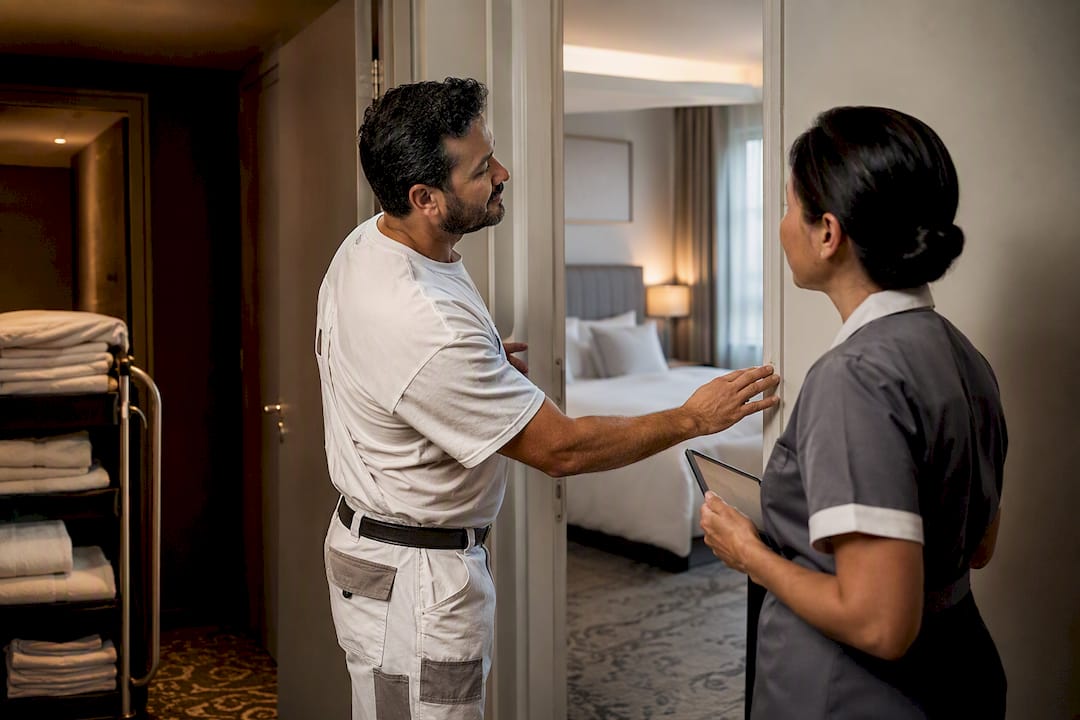
What I’d tell any GM writing a bid request: ask for the cure-time datasheet, not marketing copy. Ask for a named daily point of contact, not a call center. And ask what happens if a room fails inspection, a contractor with a real rework process will have an answer ready, not a shrug.
The properties that get this right treat painting as an operations problem first and a finishing job second.
— Enrico
Get a Hotel Painting Plan Built Around Your Occupancy
Sigma Painting is the alternative to a generic repaint bid for hotels in the GTA: a phased schedule built around your booking calendar, not a one-size timeline that ignores it. We work from mock-up approval through room-by-room handoff, using zero-VOC, fast-cure products chosen specifically so housekeeping can turn rooms same day.
If you’re preparing a bid request, ask for turnover targets in writing, a signed mock-up before bulk ordering, product datasheets with actual cure times, and a defined acceptance test for each room before it returns to inventory. Sigma Painting’s commercial painting services cover exactly this kind of phased hospitality work, and our property management painting team handles the ongoing maintenance cycle once the initial project wraps.
Request a site assessment and we’ll walk your property, review your occupancy calendar, and put together a phased proposal built around the rooms and dates that matter most to your revenue, following our guidelines on how to plan a commercial landscape renovation project.
Sources
- Hotel and Resort Commercial Painting in the Desert Southwest | Moorhouse Blog
- Staging Hospitality Painting Projects Without Room Closures


