

Published: September 22, 2026. Reviewed by: Sigma Painting project team.
Quick answer: Millwork spraying makes sense when built-ins, trim, doors, panelling, or coffered ceilings need a consistent, furniture-like film across repeated profiles. The finish depends on substrate-specific preparation, controlled masking, the right primer and topcoat, sample approval, and enough time for the coating to cure.
Millwork spraying in Toronto is not simply a faster way to paint trim. It is a finish process for architectural woodwork that needs to read as one continuous surface: built-ins, doors, wainscoting, wall panelling, coffered ceilings, crown moulding, cabinet fronts, and detailed MDF assemblies. The result depends as much on what happens before the sprayer arrives as it does on the spray pattern itself.
The right method depends on the substrate, the installation stage, the desired sheen, the condition of the existing finish, the amount of masking, and whether the home is occupied. A good millwork quote explains those decisions instead of treating “spray finish” as a complete specification.
When Millwork Spraying Is the Right Choice
Spraying is useful when a large or repeated millwork package needs a uniform film with consistent sheen. It can reduce visible brush and roller texture across suitable doors, casings, panels, shelving, and built-ins, especially when the finished pieces are viewed in strong natural light or along long sightlines.
Spraying is not automatically better for every surface. A small repair, a tight occupied room, a site-sensitive touch-up, or a finish designed to show hand application may be better served by a brush or a combination of methods. The decision should follow the design intent and site conditions, not the equipment a contractor happens to own.
What a Fine-Finish Millwork Scope Includes
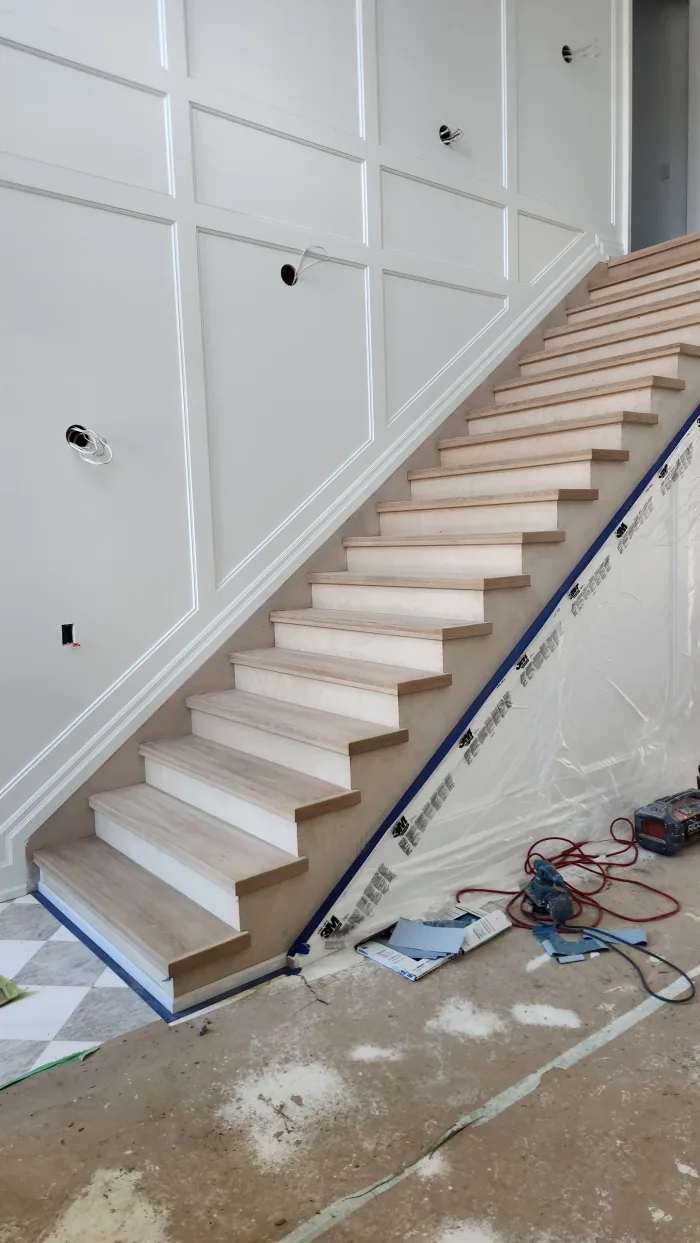
A complete scope may include doors, drawer fronts, fixed boxes, built-in shelving, baseboards, casings, crown moulding, wainscoting, panelling, coffered ceilings, stair components, or a combination of those surfaces. Each item needs to be identified because the access, profile complexity, removal, and reinstall requirements can be different.
Ask whether components will be sprayed in place or finished off site. Removable doors and drawer fronts can sometimes be transported to a controlled finishing area, while fixed panelling and built-ins are normally sprayed in place. The quote should also state whether hinges, handles, glass, electrical plates, lighting, and adjacent finished surfaces are being removed, masked, or excluded.
Preparation Changes by Substrate
“Prep” should never be a single vague line on a millwork quote. The surface underneath the coating determines whether the finished film looks smooth, whether edges remain sharp, whether grain telegraphs through, and whether the coating adheres to the existing finish.
- MDF: Cut edges absorb more material than factory faces and usually need sealing, filling, sanding, and careful priming before the finish coats.
- Poplar and maple: The primer and sanding schedule should manage grain raise and preserve the detail of profiles without burying the edges.
- Oak: The client should decide whether visible grain is part of the design or whether the surface should be filled for a flatter painted result.
- Previously finished wood: Adhesion, sheen, contamination, and compatibility need to be assessed before sanding and priming.
- Mixed assemblies: Built-ins may combine MDF, solid wood, veneer, filler, caulk, and old coatings, each with different preparation needs.
If the project includes walls or ceilings in critical light, pair the millwork plan with the right substrate standard. The Level 5 drywall finishing service explains when a full skim coat is justified before a demanding painted or specialty finish.
Primer, Topcoat, Sheen, and Colour
A professional quote should name the primer and topcoat rather than promising “premium paint.” The system may need to address adhesion, tannin or stain blocking, grain, edge absorption, the selected sheen, and the way the coating will be applied. The final product should be chosen with the substrate and expected use in mind.
Approve a sample before the full package is sprayed. A colour that looks right on a wall chip can read differently on a large panel, in a satin sheen, beside a stone floor, or under the room's actual light. When multiple brands or products are part of the same palette, custom tinting and colour matching can keep walls, trim, cabinetry, and built-ins visually coordinated.
Sigma's guide to paint for luxury homes compares common premium systems by surface and use. The important choice is not the most expensive label; it is the product and sheen that support the approved finish on the specific millwork.
On-Site Spraying and Containment in an Occupied Home
On-site spraying requires a containment plan before equipment enters the room. Floors, stone, glass, hardware, fixtures, appliances, finished cabinetry, furniture, and adjoining rooms need protection appropriate to the material. Air movement and overspray need to be controlled, and access routes need to stay usable without carrying dust or wet material through the house.
Ask who is responsible for masking, how the spray zone will be isolated, what ventilation is required, and how the home will be reset each day. Sigma's home-protection process shows the type of floor, furniture, and circulation planning that should be discussed before work begins.
Cure time is part of the schedule. A surface can feel dry and still be vulnerable to handling, stacking, hardware installation, or contact with protective materials. The product system and site conditions determine the correct interval, so the quote should include when doors, drawers, hardware, and other trades can safely return.
How to Compare Millwork Spraying Quotes
Give each contractor the same drawings, photos, room list, finish schedule, access information, and sample expectations. Then compare the written scope against the same criteria:
| Quote area | Strong evidence | What to question |
|---|---|---|
| Surface and substrate | MDF, poplar, maple, oak, previously finished wood, or mixed assemblies identified | “Millwork” used as one undifferentiated line item |
| Preparation | Edges sealed, defects filled, sanding standard, adhesion review, and primer specified | Premium topcoat named with no plan for grain, edges, or old finish |
| Application method | Spray, brush, or combination method selected for the design intent and site conditions | Spraying treated as automatically better on every piece |
| Containment | Floors, glass, stone, hardware, fixtures, cabinetry, and adjoining rooms protected | Masking and air movement left until the day work starts |
| Samples and colour | Approved sample board, sheen, colour, and grain expectation documented | Colour or finish chosen from a screen image alone |
| Cure and closeout | Drying, handling, reinstall, inspection, touch-ups, and warranty sequence stated | The work is considered complete when the final coat is applied |
How Millwork Spraying Is Priced
Millwork spraying is priced around the work required to deliver the finish, not a simple hourly or room rate. The main drivers are total surface area, profile complexity, substrate condition, the number of colours and sheens, preparation, masking and containment, access, component removal, off-site handling, reinstall, and the required inspection standard.
A long run of new MDF panelling with accessible faces may be straightforward compared with a smaller package of installed oak, built-ins, glass, hardware, and delicate stone in an occupied home. A written quote should make those differences visible instead of hiding them behind a single “spray millwork” number.
If the project is part of a custom build, use the new-construction painting service and the builder and designer workflow to coordinate drawings, finish schedules, installation stages, access, protection, and closeout.
Common Questions About Millwork Spraying
Is spraying better than brushing for custom millwork?
Spraying is usually preferred when a uniform film and consistent sheen are the goal across repeated profiles and large panels. Brushing or a combination of methods may be better for small areas, touch-ups, restricted rooms, or a finish where hand application is part of the design. The surface and site conditions should decide.
Can installed millwork be sprayed in an occupied home?
Yes, if the work area can be isolated and protected. The plan should cover masking, containment, air movement, circulation, daily reset, ventilation, and cure time. Removable doors and drawer fronts may be more efficiently finished off site.
Can oak millwork be painted smooth?
It can be painted with the grain visible or prepared toward a flatter result. Grain filling, sanding, primer, and sample approval determine how much of the oak character remains. The expected appearance should be agreed before production begins.
What should a millwork spraying company show me?
Ask for original project evidence that matches your substrate and finish level, a preparation plan, an approved sample process, the proposed application method, containment details, cure-time assumptions, and a written quote that names the included surfaces and coating system.
Choose the Finish Before You Choose the Sprayer
The best millwork spraying company is not simply the one that owns the best equipment. It is the team that can explain how the substrate will be prepared, how the finish will be sampled, how the home will be protected, how the coating will cure, and how the final work will be inspected. That is what turns spraying into a controlled fine-finish process.
Sigma Painting sprays built-ins, trim, doors, wall panelling, wainscoting, coffered ceilings, and detailed MDF assemblies across Toronto and the GTA. Review the fine-finish millwork spraying service, then request a written estimate for your surfaces, finish standard, and site conditions.