
Published: September 4, 2026. Reviewed by: Sigma Painting project team.
Quick answer: Choose a luxury painter by comparing similar completed work, surface-specific preparation, the coating system, protection, builder coordination, schedule, closeout, and warranty. The word luxury matters less than the evidence behind the quote.
Ready to discuss your project? Explore Sigma's luxury painters in Toronto for service details, completed projects, and an estimate. This checklist helps you compare contractors and their quotes.
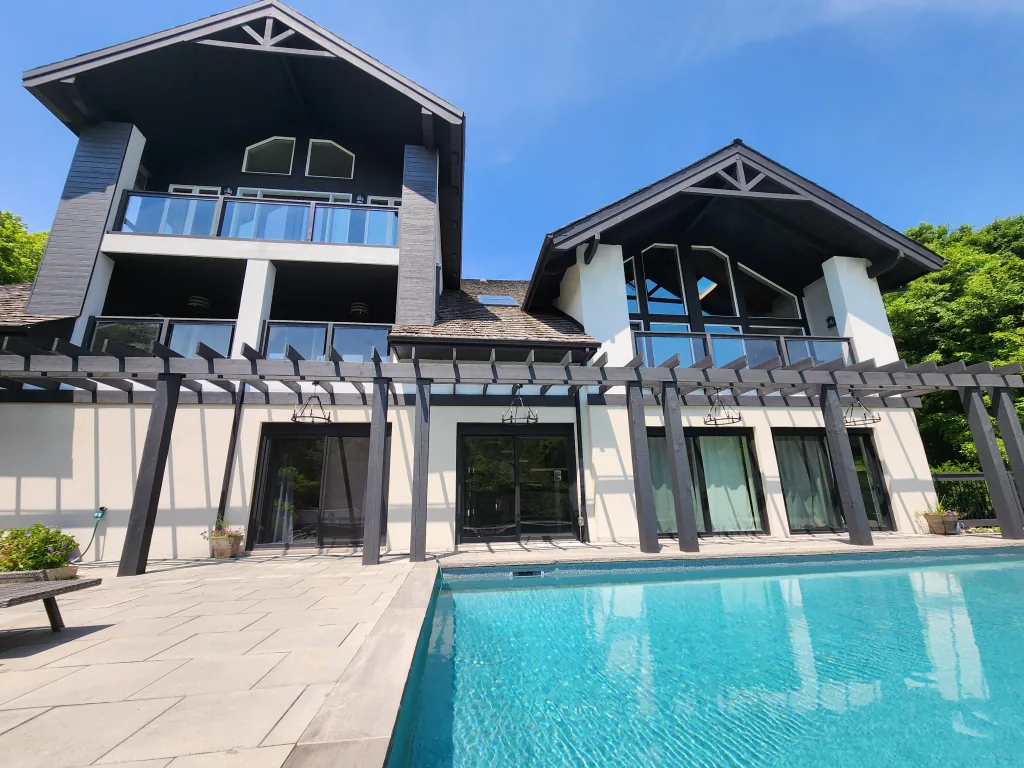
Choosing a painter for a custom home in Toronto is different from hiring someone for a quick room refresh. A high-end home may include tall foyers, detailed millwork, panelled walls, cabinetry, designer colours, specialty finishes, stone floors, and several trades working in the same rooms. Each surface needs its own preparation and application plan, and the order of work matters just as much as the product on the wall.
The best shortlist is not necessarily the company with the largest gallery or the highest price. It is the group that can show comparable work, explain what happened before the first coat, coordinate with the builder or designer, protect the finished parts of the home, and put the scope in writing. Use the criteria below to compare luxury painters in Toronto on evidence rather than labels.
What Makes Luxury Home Painting Different?
Luxury painting is a complete finish system. Walls may be viewed in strong natural light, trim may be close to a dark floor or stone surface, and long sightlines can make a small inconsistency visible from across the room. A good result therefore depends on the condition of the substrate, the primer and topcoat, the sheen, the application method, the dry and cure time, and the inspection standard.
The scope can also be more coordinated. A custom home may need a painter to work from drawings and finish schedules, sequence work around drywall and flooring, return for installed millwork, protect completed areas, and document changes as the project develops. Sigma's custom-home and new-construction painting service explains that sequence in more detail.
1. Start With Comparable Project Evidence
Ask each painter for a project that resembles yours in more than colour. Useful comparisons include the type of home, room height, amount of trim, condition of the existing surfaces, presence of cabinetry or panelling, occupancy, and whether the work was part of a new build or renovation. A photo can show the result, but it cannot tell you what preparation or protection made that result possible.
Look for project notes that identify the surfaces, starting condition, products, application method, duration, and what the crew had to protect. If details are private or unavailable, that should be explained plainly. Sigma's project portfolio is a useful place to review original project photography, while the luxury residential painting service sets out the finish standard and service scope.
2. Read the Preparation Plan Before the Product List
Premium paint cannot hide weak preparation. New drywall, old plaster, MDF, oak, previously oil-painted trim, laminate, and masonry all need different decisions. The quote should identify how the team will address dents, fasteners, cracks, failed caulk, stains, peeling coatings, rough edges, and areas that need spot or full priming.
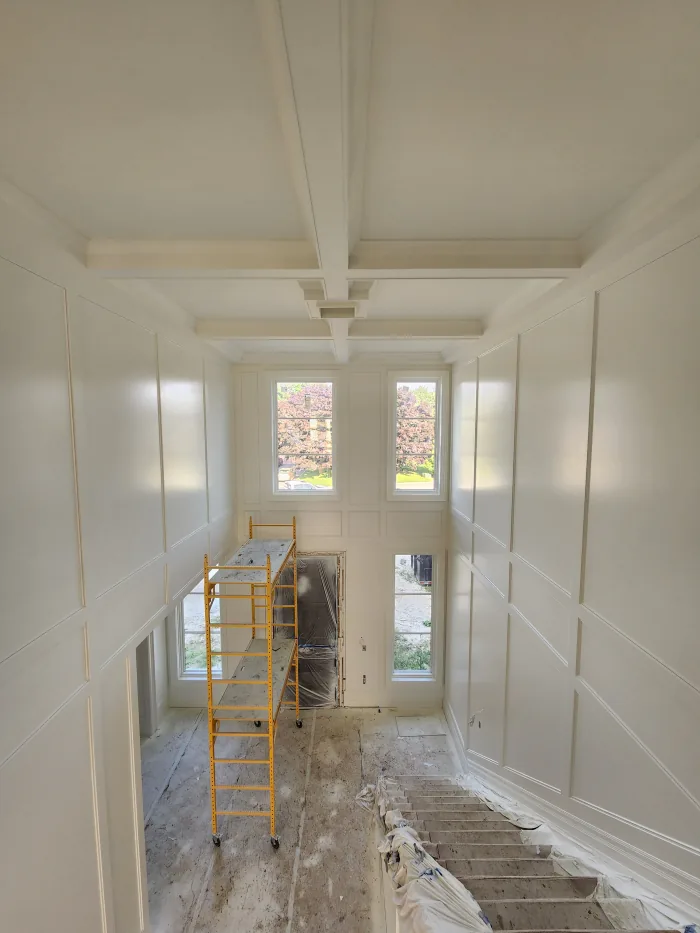
Ask what the expected finish means under normal light and critical light. A smooth wall in a softly lit bedroom has a different preparation requirement from a long hallway beside a window or a two-storey foyer seen from several angles. If the home is older, ask how the team will assess existing coatings before scraping or aggressive sanding. Preparation should be specific enough that the homeowner, designer, builder, and painter mean the same thing by finished.
3. Match the Coating System to Each Surface
A luxury quote should name the primer, topcoat, sheen, colour assumptions, and coat count for walls, ceilings, trim, doors, cabinetry, and specialty surfaces. The right product for a wall is not automatically the right product for a door or a sprayed built-in. If a designer has specified a particular colour or brand, confirm the approved sample in the room's actual light before the full application.
Product selection should also account for how the room will be used. Washability matters in kitchens and family spaces. A hard-curing enamel may suit doors and millwork. A mineral finish needs a different substrate and application method altogether. Sigma's guide to paint for luxury homes compares the situations where common premium systems make sense.
4. Ask How the Painter Will Finish Millwork and Built-Ins
Detailed trim, doors, panelling, cabinetry, and built-ins often determine whether a custom home feels finished. Ask which pieces will be sprayed, brushed, rolled, or finished in a controlled area, and why. Spraying can create an even film on suitable millwork, but the result depends on filling, sanding, masking, ventilation, material control, and cure time.
A painter should explain how fixed boxes, removable doors, hardware, hinges, glass, and adjacent finished surfaces will be handled. Review the dedicated millwork spraying service when the project includes a large trim or cabinetry package. The method is only one part of the result; the preparation underneath it remains visible.

5. Confirm Specialty-Finish Capability
A custom-home specification may call for more than uniform wall paint. Venetian plaster, limewash, Marmorino, microcement, custom tinting, and other specialty finishes have their own substrates, samples, tools, and expectations. Ask whether the painter has completed the specific finish you are considering and how samples are approved before the final application.
The goal is not to add a specialty finish to every room. It is to know whether the same team can coordinate the full palette when a project includes both conventional painting and a feature surface. For a detailed finish, review the specialty finishes service and ask what maintenance, touch-up, and variation should be expected.
6. Verify Builder and Designer Coordination
On a custom build, ask who attends site meetings, who reads the drawings and finish schedule, and who owns communication when the sequence changes. The painter should be able to identify the handoffs that affect their work: drywall completion, sanding and priming, flooring installation, millwork delivery, cabinet installation, hardware, final electrical, and occupancy.
Ask for the practical details as well: crew size, site lead, working hours, access, material storage, daily cleanup, protection of completed work, and how changes are priced and approved. Builders and designers can use Sigma's builder and designer workflow as a reference for the project information that should be settled before scheduling.
Use the Same Scorecard for Every Shortlist
Give each painter the same drawings, room list, finish schedule, access information, and expectations. Then compare the evidence in the same order. If one quote includes repairs, premium coatings, trim, daily protection, and final inspection while another only includes wall painting, the totals are not describing the same job.
| Criterion | Strong evidence | What to question |
|---|---|---|
| Comparable project evidence | Recent work with similar scale, surfaces, finish level, and access conditions | A gallery of unrelated rooms with no scope or project context |
| Preparation specification | Repairs, cleaning, sanding, filling, caulking, priming, samples, and critical-light expectations | Prep as needed with no defined outcome |
| Coating system | Primer, product line, sheen, colour assumptions, and coat count by surface | Premium paint named without a system or coverage plan |
| Application method | Brush, roller, spray, or trowel selected for each substrate and room | One method presented as a universal sign of quality |
| Protection and containment | Floors, stone, glass, cabinetry, hardware, furniture, adjacent rooms, and daily reset | Protection left as an afterthought once the crew arrives |
| Builder coordination | Drawings, finish schedules, trade handoffs, site meetings, access, and written changes | A start and finish date without a phase plan |
| Closeout and warranty | Inspection, deficiency list, touch-up responsibility, care guidance, and written terms | A broad promise that does not match the selected system |
What a Luxury Painting Quote Should Include
A useful quote is specific enough to compare and flexible enough to handle site conditions honestly. It should name the rooms and surfaces, repairs, preparation, primer, product line, sheen, colour assumptions, coat count, application method, protection, access, schedule, cleanup, exclusions, change process, payment terms, and warranty.
Ask what happens if the painter finds damaged drywall, failed caulk, moisture staining, uneven previous repairs, or a coating that cannot safely receive the proposed system. The right answer is a documented change process, not an informal extra added after the work is complete. Sigma's Ontario contractor checklist covers the contract, insurance, change, and closeout questions in more detail.
How to Compare Price Without Choosing on Price Alone
A higher quote may reflect more preparation, complex masking, access equipment, controlled spraying, specialty application, sample boards, supervision, occupied-home protection, or a longer schedule. It may also simply be higher. The written scope is what lets you tell the difference.
Floor area is only a starting point for a high-end home. Ceiling height, trim volume, cabinetry, panelled walls, colour changes, substrate condition, occupancy, and the number of rooms that need to be protected can change the labour substantially. Use the GTA interior painting cost guide for general planning, then request a measured on-site estimate for the actual project.
Questions to Ask Before You Hire
- Which completed project is most similar to this home, and what was included?
- What surface problems do you see, and how will each one be prepared?
- Which primer, product line, sheen, and coat count are included by surface?
- Which areas will be sprayed, brushed, rolled, or trowelled, and why?
- How will floors, stone, glass, cabinetry, hardware, furniture, and adjacent rooms be protected?
- Who supervises the work and coordinates with the builder, designer, or other trades?
- What are the schedule assumptions for access, dry time, cure time, and inspections?
- How are changes approved before extra work begins?
- What happens during final inspection and deficiency closeout?
- Which written warranty applies to this exact coating system?
When You Are Ready to Shortlist a Painter
Ask for a conversation before asking for a final number. Share the drawings or room list, finish schedule, photos of the current condition, desired timing, occupancy plan, and any designer or builder requirements. A painter who asks useful questions early is showing you how the project will be managed later.
Sigma Painting works with homeowners, builders, designers, and general contractors on detailed residential projects across Toronto and the GTA. Review the luxury residential painting service, then request a free on-site estimate when you are ready to compare the actual scope in writing.