

Published: September 7, 2026. Reviewed by: Sigma Painting project team.
Quick answer: The best painting company for your Toronto home is the one whose project evidence, preparation plan, service fit, written quote, communication, and closeout match your actual scope. A high star rating is useful context, but it is not a substitute for comparable work and a clear estimate.
Searching for the best painters in Toronto usually begins with a list of names and ends with a much more practical question: which company is the right fit for this home? A condo repaint, a full interior, an exterior with difficult access, a kitchen cabinet project, and a custom home do not need the same crew, sequence, or coating system.
There is no universal ranking that can decide the answer for every property. A useful comparison looks at the evidence behind each company: similar completed projects, the way surfaces are prepared, what the estimate actually includes, how the team communicates, and what happens at closeout. The scorecard below gives you a consistent way to compare residential painting companies in Toronto without relying on marketing labels alone.
Start With the Scope of Your Home
Before you compare painters, describe the work in plain language. List the rooms, ceilings, trim, doors, cabinets, stairs, exterior elevations, decks, or repairs that may be included. Note whether the home is occupied, whether furniture stays in place, whether there are pets or children, and whether another renovation or construction schedule affects access.
The surface condition matters just as much as the room count. Peeling paint, water stains, failed caulk, rough drywall repairs, nicotine residue, old wallpaper, bare wood, and glossy previous coatings can all change the preparation. A company that asks about those conditions before pricing the work is helping you compare a real project rather than a generic number.
Look for Comparable Project Evidence
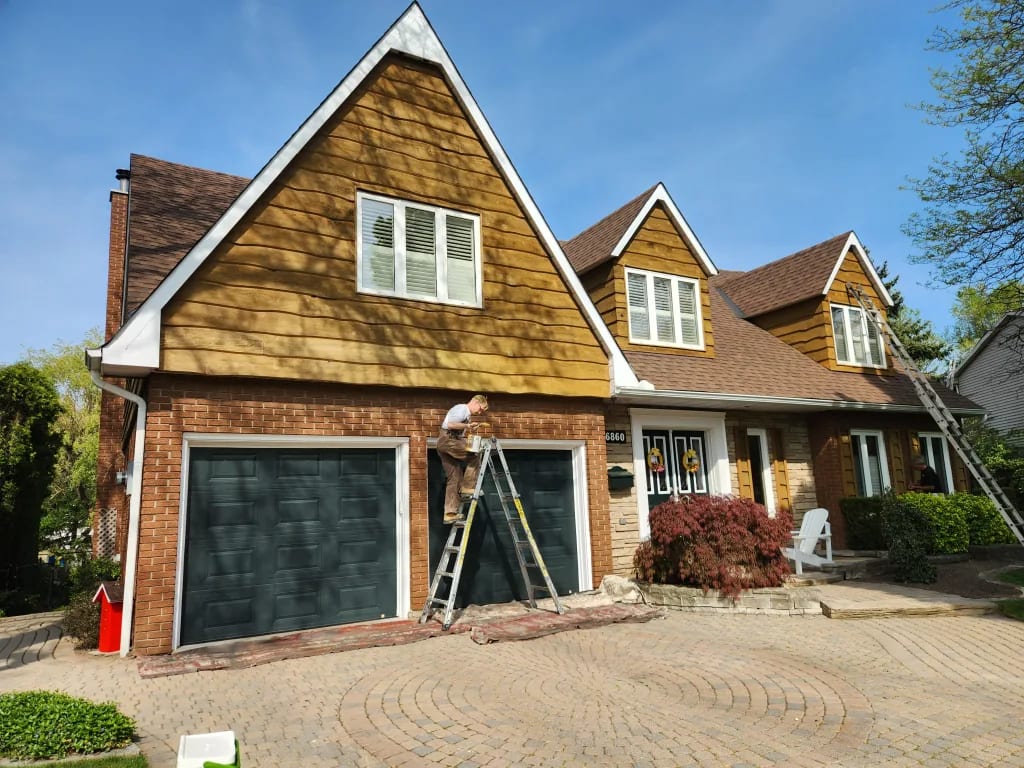
A gallery proves that a company takes photographs. It does not prove that the team has handled your combination of surfaces, access, schedule, or finish expectations. Ask for a completed project that is similar in property type and complexity. For a residential repaint, that may mean comparable trim, ceilings, staircases, cabinetry, or occupied-room protection. For a custom home, it may mean tall spaces, detailed millwork, builder coordination, or specialty finishes.
Useful project evidence explains what was painted, what condition the surfaces were in, what preparation was required, which products were used, how the finish was applied, and how long the work took. If details are private or not recorded, they should be described as unavailable rather than replaced with a broad claim. You can review Sigma's project portfolio for original photography and documented examples, then apply the same standard to every company on your shortlist.
Read Reviews for Specific Signals
Reviews help when they contain details that relate to your project. Look for repeated comments about arriving when promised, protecting floors and furniture, keeping the site clean, explaining changes, responding to questions, and correcting deficiencies. A review that says a crew was pleasant is positive; a review that explains how the crew handled a difficult staircase or an occupied home gives you more useful evidence.
Check whether the reviews connect to a current Google, HomeStars, or other platform profile. Ratings and review counts change, so treat them as a dated signal rather than a permanent guarantee. Sigma's reviews page keeps the source-platform links alongside the transcribed review record so a homeowner can inspect the original profiles. You should expect the same kind of transparency from any painting company you consider.
Compare the Preparation, Not Just the Paint Brand
Two companies can name the same paint and still produce different results. Preparation determines whether the coating bonds, whether repairs disappear under normal light, and whether trim, walls, and doors read as one finish. Ask how the painter will handle cracks, dents, fasteners, stains, failed caulk, peeling areas, glossy coatings, and rough or porous surfaces.
The product list should still be specific. A good estimate names the primer and topcoat, sheen, colour assumptions, and coat count by surface. Walls, ceilings, trim, doors, cabinets, and exterior materials may each need a different system. For detailed preparation questions, use the Ontario painting contractor checklist as a companion to this Toronto-focused comparison guide.
Make Sure the Company Fits the Work
“Residential painter” covers a wide range of work. Ask whether the company regularly handles the service you actually need:
- Interior painting: walls, ceilings, trim, doors, stairs, protection, and occupied-home scheduling.
- Exterior painting: substrate assessment, washing, repairs, caulking, height, landscaping, and weather-dependent scheduling.
- Cabinet painting: degreasing, deglossing, repairs, removable parts, containment, spraying, and cure time.
- Drywall repair and preparation: board condition, seams, fasteners, stains, sanding, primer, and the expected level of finish.
- Luxury or custom-home work: detailed millwork, specialty finishes, designer samples, builder coordination, and formal closeout.
If the project includes detailed millwork, custom-home coordination, or specialty finishes, compare the company against a luxury painter selection guide as well as a general residential checklist. A company can be excellent at standard room repaints without being the right fit for a sprayed millwork package or a multi-trade custom build.
Use the Same Scorecard for Every Company
Send each finalist the same room list, photographs, finish expectations, access information, and timing. Then record what each company actually confirms. If one quote includes repairs, protection, trim, premium materials, daily cleanup, and final inspection while another only includes two coats on the walls, the different totals do not describe the same job.
| Criterion | Strong evidence | What to question |
|---|---|---|
| Project evidence | Recent work with a similar property, surface mix, finish level, and access plan | Uncaptioned photos with no scope, location, or starting-condition details |
| Preparation | Repairs, cleaning, sanding, filling, caulking, priming, and a defined finish expectation | Prep as needed with no explanation of what is actually included |
| Service fit | The company has experience with the exact work: interiors, exteriors, cabinets, drywall, or specialty finishes | A general promise to handle every surface without a method or example |
| Written estimate | Rooms, surfaces, products, coat count, protection, schedule, exclusions, and changes are clear | A single total with no way to compare what the price covers |
| Communication | Questions are answered clearly, site conditions are documented, and decisions are confirmed in writing | The only detailed communication arrives after work has started |
| Reviews and references | Reviews contain specific project details and connect to a real source profile | An average score with no review pattern or independent source |
| Closeout | Final inspection, touch-ups, care guidance, and warranty terms are explained before work begins | The project ends when the crew packs up, with no inspection plan |
What a Written Estimate Should Include
A useful estimate should identify the rooms and surfaces, repairs, preparation, primer, topcoat, sheen, colour assumptions, coat count, application method, protection, access, schedule, cleanup, exclusions, change process, payment terms, and warranty. If an item is not included, it should be listed rather than left for the homeowner to assume.
Ask how changes are handled when the painter finds damaged drywall, failed caulk, moisture staining, uneven previous repairs, or a coating that needs a different primer. A documented change process protects both sides. It also gives you a more honest comparison when the condition of one home is different from the condition of another.
How to Compare Two Different Prices
Price is important, but it only becomes useful after scope is comparable. Check whether both totals cover the same rooms, trim, ceilings, repairs, primer, product line, sheen, coat count, protection, access, supervision, cleanup, and closeout. A lower bid may be reasonable if it is a smaller scope; it is not automatically better value.
Be cautious with a quote that is much lower than the others but does not explain why. It may exclude preparation, use a different coat count, assume empty rooms, or leave repairs out of the price. The painting quote calculator can provide an early planning range, but an on-site review is still needed for a written Toronto painting scope.
Questions to Ask Before You Hire
- Which completed project is most similar to mine, and what was included?
- What surface problems do you see, and how will each one be prepared?
- Which primer, topcoat, sheen, colour assumptions, and coat count are included?
- Which surfaces will be sprayed, brushed, rolled, or trowelled, and why?
- How will floors, furniture, stone, glass, cabinets, hardware, and adjacent rooms be protected?
- Who supervises the crew and answers questions during the work?
- What access, occupancy, dry-time, cure-time, or weather assumptions affect the schedule?
- How are changes priced and approved before extra work begins?
- What happens during final inspection and deficiency closeout?
- Which written warranty applies to this exact coating system?
Choose the Company That Makes the Work Legible
The best painting company for your Toronto home is the one that makes the job easy to understand before it starts. You should know what will be painted, how the surfaces will be prepared, which products will be used, how the home will be protected, when the work will happen, how changes will be handled, and what closeout looks like.
Sigma Painting serves homeowners across Toronto and the GTA with interior, exterior, cabinet, drywall, custom-home, and specialty-finish work. Review the luxury residential painting service for high-detail projects, explore the project portfolio, and request a free on-site estimate when you are ready to compare the actual scope in writing.


