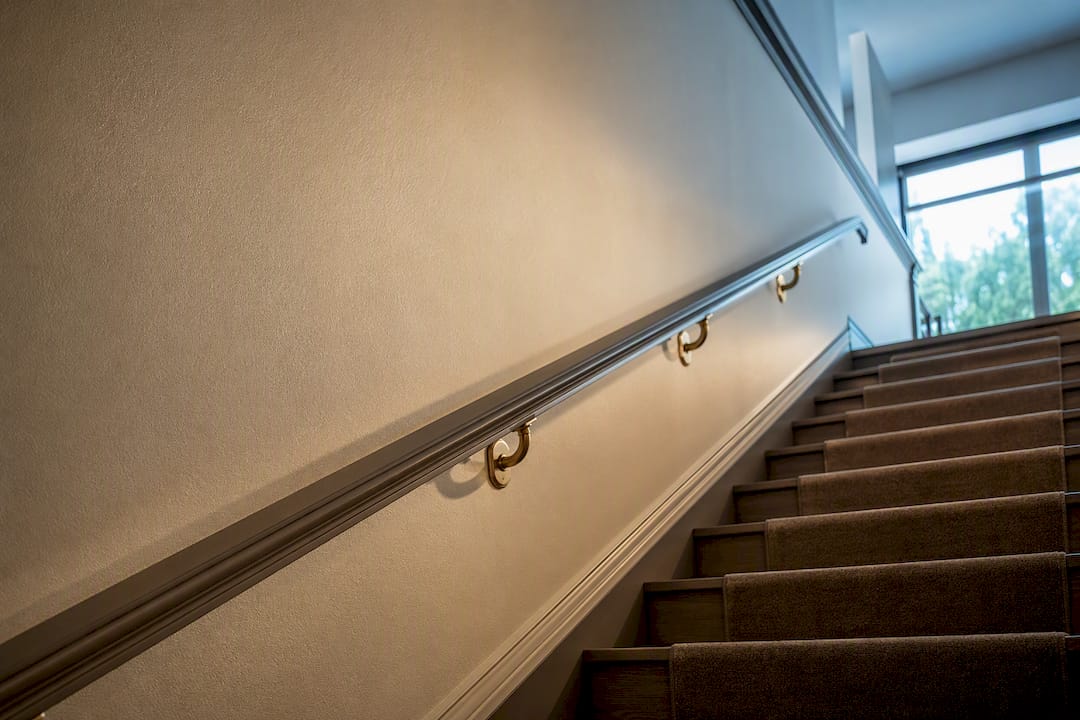
A well-specified commercial paint job runs 3 to 5 years in high-traffic interiors and 5 to 10 years on exteriors, though premium systems applied correctly can push past both ends of that range. The paint itself is only one variable. Durability comes from the whole system: the coating, the surface it’s bonded to, how it was applied, and what it’s exposed to every day. Inspect your existing paint, note where it’s failing first, and use that pattern to plan your next assessment.
TL;DR:
- Proper surface preparation and primer application tailored to the substrate are critical to achieving five or more years of durability.
- Exterior coatings based on acrylic resin outperform other types in UV stability and lifespan, especially when applied correctly under suitable conditions.
- Regular inspections every six months to two years, including adhesion tests, can prevent small issues from escalating into costly full reapplications.
- Choosing professional-grade coatings and ensuring detailed, documented surface prep can significantly extend the life of a commercial paint job.
- Skipping steps like proper prep, using correct primer, or applying outside recommended conditions commonly causes early failure, not the product’s quality.
Table of Contents
- What Determines Commercial Paint Durability?
- Which Coating Type Lasts Longest by Location?
- When Should You Inspect, Repair, or Repaint?
- What Should You Ask a Painting Contractor Before Hiring?
- Why Process Matters More Than Product Choice
- Ready to Protect Your Property’s Paint Investment?
- Sources
What Determines Commercial Paint Durability?
The resin in a coating decides what it can survive. Acrylic resins hold up well against UV exposure and stay flexible through temperature swings, which is why they dominate exterior work. Epoxies resist chemicals and abrasion but chalk badly in direct sun, so they belong indoors or under cover. Urethanes split the difference, offering decent UV stability with strong scuff resistance for corridors and stairwells.
None of that matters if the substrate underneath is wrong for the job, or if primer gets skipped to save a few hours. Bare drywall, previously painted masonry, and galvanized metal each need a different primer chemistry to actually bond. Skip that step and you’re not buying five years of durability. You’re buying a callback in eighteen months.
Surface prep is where most premature failures start. Dirt, grease, chalking residue, and rust left on a surface create a weak layer that paint bonds to instead of the substrate itself. On steel and masonry, the surface profile (how rough or porous it is) has to match the coating’s requirements, which is exactly the kind of detail proper surface preparation practices are built around.
Application conditions finish the equation. Film thickness, humidity, and temperature at the time of application all affect cure quality, and under or overbuilding the film changes how the coating performs for years afterward. PCI Magazine’s guidance on commercial coatings makes the point plainly: durability is a system, not a can of paint, and skipping prep or rushing application undercuts even the best product on the shelf.
What shortens the life of any coating, regardless of brand:
- Direct southern or western sun exposure without UV-stable resin
- Standing moisture, poor drainage, or vapor pressure from behind the wall
- Road salt and de-icing chemicals on ground-floor exteriors
- Physical impact from carts, foot traffic, or loading equipment
- Painting outside the manufacturer’s temperature and humidity window
Pro Tip: Ask your contractor what the dew point was on application day. If they don’t know, they weren’t tracking it, and that’s the single most common cause of early adhesion failure on exterior jobs.
Which Coating Type Lasts Longest by Location?
Different areas of a commercial building wear out at different rates, and matching the coating family to the use case is where a lot of budget gets wasted or saved.
Interior lobbies, corridors, and stairwells take constant abrasion from bags, carts, and shoulders against the wall. Standard interior latex holds up for several years in these zones before scuffing becomes visible. Scuff-resistant formulas, such as Benjamin Moore’s Scuff-X line, are built specifically for this wear pattern and hold their finish through repeated washing far better than a standard eggshell. Waterborne epoxies go a step further in back-of-house areas, kitchens, and mechanical rooms where chemical exposure is routine.
Exteriors face a longer list of stressors. According to guidance on commercial repaint cycles, most buildings land in a 5 to 10 year window depending on exposure and coating quality. A 100% acrylic exterior coating is the standard workhorse. Elastomeric systems cost more upfront but bridge hairline cracks in stucco and masonry, which matters on older buildings with movement in the substrate. Masonry-specific coatings extend that further on brick and block where moisture transmission is the real enemy.
Specialty applications run on their own clock entirely:
- Epoxy floor systems in warehouses and retail back rooms generally last multiple years under normal forklift and foot traffic.
- Traffic marking paints, including Sherwin-Williams’ Hotline waterborne formula, which is designed for fast dry times and repeated vehicle contact
- Thermoplastic markings for parking lots, which typically outlast painted lines by several seasons
Specifying a professional-grade product line, the kind detailed in Behr Pro’s commercial coatings guide, usually costs more per gallon but delivers meaningfully better mildew and water resistance where it counts.
When Should You Inspect, Repair, or Repaint?
Most property owners treat paint failure as a surprise. It isn’t. Coatings degrade on a predictable schedule if you’re watching for it, and catching problems early is what separates a $2,000 spot repair from a $40,000 full recoat.
A tiered inspection cadence works well for most commercial portfolios:
- Tier 1, every six months: Walk the exterior and high-traffic interior zones looking for chalking, fading, and visible dirt buildup.
- Tier 2, annually: Closer inspection for blistering, cracking, and early adhesion loss, especially at corners, sills, and grade level.
- Tier 3, every two years: Full assessment including adhesion testing on suspect areas and substrate condition checks where coating has already failed.
This structure comes directly from Moorhouse Coating’s preventive maintenance framework, and the logic holds up: catching failure early and acting on it consistently extends coating life and lowers what you spend over the building’s lifetime.
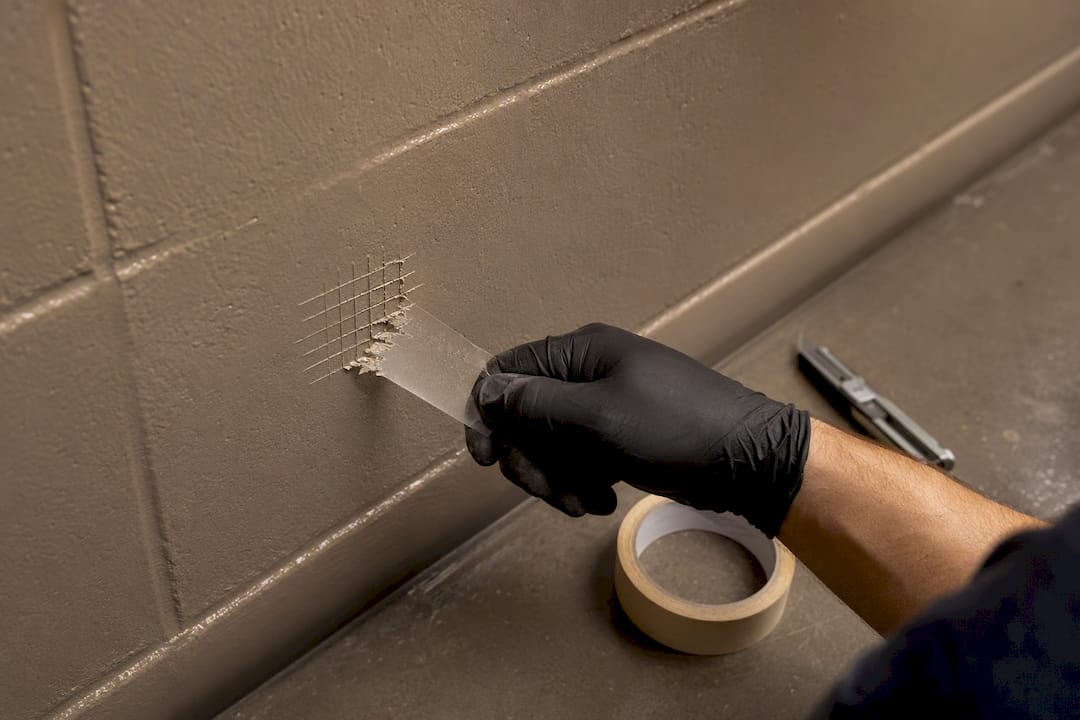
You don’t need lab equipment to check adhesion. A simple cross-hatch tape test tells you whether paint is bonding to the substrate or lifting at the edges. Photograph problem areas with a date stamp every time you inspect. That record becomes useful the moment you need to make a repair decision, and it’s often required to keep a manufacturer warranty intact.
The decision matrix is simpler than most managers assume. Clean surfaces first since dirt alone can mimic failure. Once failure spreads past that threshold in a contained zone, a localized recoat of that section is more cost-effective than waiting. Full recoats make sense only when failure is widespread or the coating has aged past its expected service life across the board.
Deferred maintenance has a cost, and it compounds. Small recoats done partway through a coating’s life can defer a full repaint by several years and reduce overall lifecycle costs, according to maintenance data. Skip that window and you’re often looking at full substrate repair, not just repainting.
Manufacturers pay attention to this too. Many warranty terms are conditioned on documented maintenance and inspection intervals, so skipping your Tier 2 walk-through isn’t just a durability risk. It can void the coverage you’re paying for.
What Should You Ask a Painting Contractor Before Hiring?
A proposal that skips surface prep detail is a proposal to reread. Ask specifically what prep the substrate will get, whether primer is included and matched to that substrate, and what the solids content is on the products they’re quoting. Higher solids content generally means a thicker, more durable dry film, and a contractor who can’t answer that question probably hasn’t looked at the product data sheet closely.
Watch for red flags in both the proposal and on-site behavior:
- Vague line items like “paint as needed” with no prep specified
- No mention of primer on bare or previously failed surfaces
- Application scheduled during rain, high humidity, or near-freezing temperatures
- Reluctance to share the manufacturer’s technical data sheet or safety data sheet
Insist on documentation before the crew starts: product data sheets, written warranty terms, a maintenance schedule for the finished work, and a sign-off checklist at completion. If a contractor won’t provide these, treat that as your answer. For larger or higher-risk buildings, an independent coatings assessment before signing a contract is worth the fee, especially on facades with unknown paint history.
Pro Tip: Ask to see a job they finished three years ago, not last month. Fresh paint always looks good. Three-year-old paint tells you the truth about their prep work.
Why Process Matters More Than Product Choice
Most durability failures Sigma Painting encounters on commercial re-inspections trace back to the same root cause: someone skipped a step to save a day. Not a bad product. A skipped step.
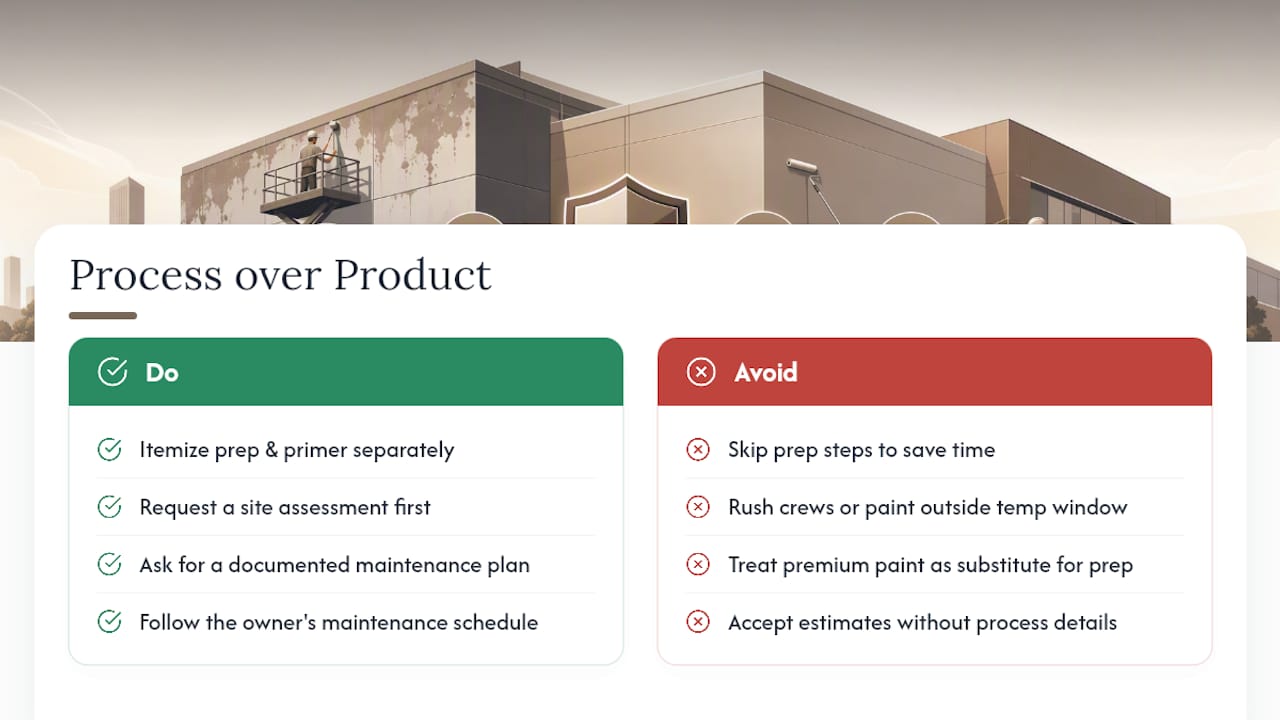
That’s the case for treating premium materials, full prep, and documented process as inseparable from the paint itself. Transparent pricing that itemizes prep and primer separately from paint isn’t a sales tactic. It’s what lets a property manager verify the work actually matches the warranty terms attached to it. Timely completion matters too, since rushed crews are the ones most likely to paint outside the temperature window that determines whether a coating cures properly in the first place.
The buildings that get the longest service life out of their paint aren’t the ones with the fanciest product on the wall. They’re the ones with an owner who asked for a maintenance schedule and actually followed it. Request a site assessment before your next repaint cycle, and ask for a documented maintenance plan alongside the estimate, not as an afterthought.
— Enrico
Ready to Protect Your Property’s Paint Investment?
If you’re managing paint across multiple units, a corridor, or a full commercial facade, the math favors hiring it out. A professional crew that gets prep, primer, and application conditions right the first time costs less over ten years than a cheaper job you repaint every three, and it keeps your manufacturer warranty intact along the way.
Sigma Painting handles this across the Greater Toronto Area with premium materials, full surface preparation, transparent pricing broken out by line item, and completion timelines that don’t cut corners to hit a deadline. For property managers overseeing multiple units or a single commercial building, the commercial painting services page outlines how a maintenance-first approach gets built into the original scope, not bolted on after something fails. Managers running recurring maintenance across a portfolio should also look at the property management painting offering, built around documented inspections and scheduled recoats rather than reactive fixes.
Request a site assessment and get a maintenance plan attached to your next quote, before the next failure forces the decision for you.
Sources
- PCI Magazine — Paint durability tips for commercial and industrial applications
- Benjamin Moore — Scuff-X interior paint
- Behr Pro — Coatings specification guide (commercial)


