
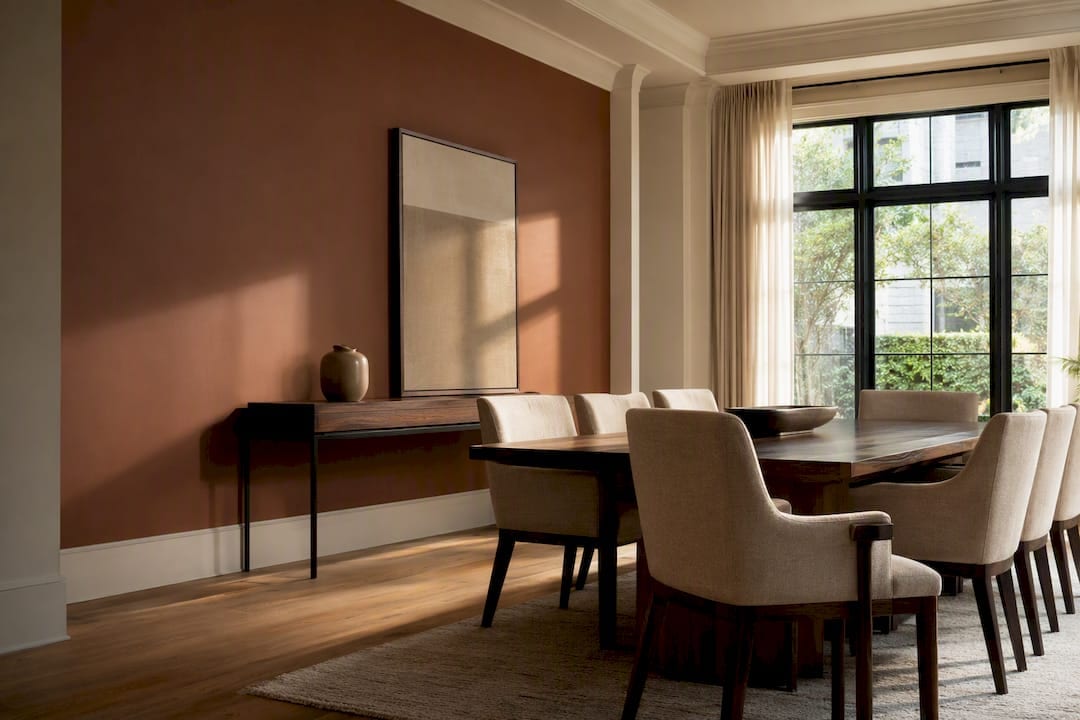
An accent wall is one wall in a room finished differently from the rest to create a focal point, and paint remains the fastest way to pull it off. Wood slats and peel-and-stick wallpaper come next for impact per hour of work. Pick a wall your eye already lands on, test your color first, and if the finish gets complicated (deep saturated tones, tile, structural slats), bring in a professional rather than risk a redo.
TL;DR:
- Painting offers the quickest, cheapest option, with a single saturated color covering a wall in about a day, ideal for renters or those hesitant to commit.
- Wallpaper or peel-and-stick options are suitable for pattern lovers and renters, as they are easy to install and remove without damage and can be completed in hours.
- Material choices like wood slats or tile require more time, skill, and often professional help, especially when structural mounting or waterproofing is involved.
- Selecting the right wall depends on room function, such as the wall behind the sofa in a living room or behind the bed in a bedroom, with outdoor and moisture-prone areas needing specialized finishes.
- Proper prep, including primer for deep or saturated colors, level surfaces, and clean edges, is essential for a polished DIY or professional accent wall result.
Table of Contents
- Accent Wall Ideas: A Quick List of the Best Approaches
- Accent Wall Ideas by Room
- Materials and Execution: Paint, Wallpaper, Wood, and Tile
- Choosing and Testing Your Accent Wall Color
- Budget, Timeline, and When to Call a Pro
- What Pros Do Differently on Accent Walls
- What an Accent Wall Is Actually For
- An Editorial Take on Committing to an Accent Wall
- Get an Accent Wall Done Right With Sigma Painting
- Sources
Accent Wall Ideas: A Quick List of the Best Approaches
Some accent wall treatments take an afternoon. Others take a weekend and a miter saw. Here’s how the main options stack up.
- Paint block. One saturated color, floor to ceiling, on a single wall. Cheapest option by far and the easiest to change if you get tired of it.
- Wallpaper or peel-and-stick. Best for pattern lovers who don’t want to freehand a mural. Peel-and-stick wallpaper works especially well for renters since it comes off cleanly at move-out.
- Wood slats. Vertical boards mounted with a small gap between each one. Reads as high-end architecture, though it eats a weekend and requires level walls.
- Board-and-batten or molding. Trim applied in a grid or geometric pattern, then painted one color. Adds texture without the color commitment.
- Tile or stone veneer. Best in bathrooms, kitchens, or fireplace walls. Heavy, permanent, and usually a job for a tradesperson.
- Geometric color blocking. Painter’s tape and two or three colors in angular shapes. Low cost, high visual punch, easy to redo.
- Gallery or textile wall. Framed art, woven hangings, or fabric panels covering most of the wall. Zero permanent commitment.
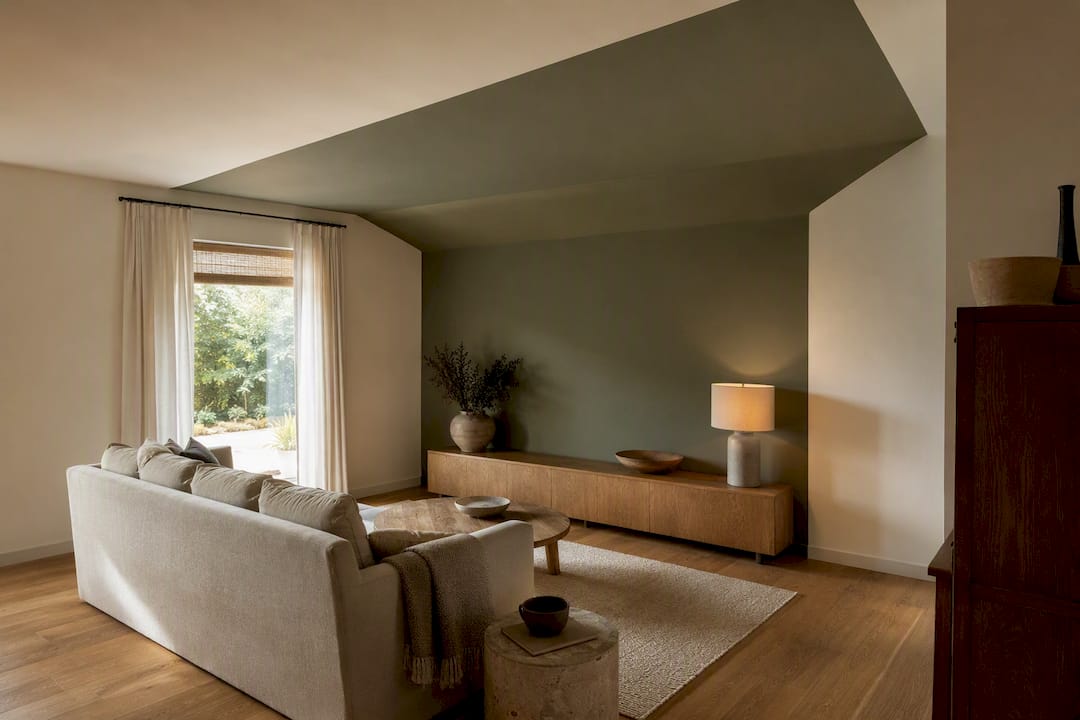
- Ceiling as accent. Extending color or wallpaper up and across the ceiling. Works well in rooms with no obvious focal wall.
Pro Tip: Match the treatment to your lease and your patience. Renters and commitment-shy homeowners should stick with paint, peel-and-stick, or textiles. Slats, tile, and structural molding are for people staying put.
Accent Wall Ideas by Room
The right wall changes with the room, and so does the safest treatment.
- Living room: the wall behind the sofa or around the fireplace. Paint or vertical slats both work, and slats add warmth without competing with a TV mounted nearby.
- Bedroom: the wall behind the headboard. A wallpaper mural or a deep, saturated paint color (think forest green or navy) makes the bed the visual anchor of the room.
- Home office: the wall behind your desk, since it’s what shows up on every video call. A mid-tone color, not too dark and not stark white, photographs better on camera than either extreme.
- Dining room: whichever wall guests see first walking in. A warm, textural finish like board-and-batten reads as intentional rather than an afterthought.
- Bathroom or powder room: the vanity wall, using moisture-rated paint or tile since humidity will peel a standard finish within a year.
- Hallway or entry: the end wall you face when you walk in, or a stair run painted in a bold color. Small spaces don’t need a full wall. A partial-height accent or a single geometric shape does the job.
Renters and tight budgets fare well with removable wallpaper, a painted arch or half-wall, or a gallery of framed art. Full commitment isn’t a requirement for a real focal point.
Materials and Execution: Paint, Wallpaper, Wood, and Tile
Paint is still the default, and for good reason: it’s cheap, reversible, and fast; check out how to paint walls for professional results at home for tips that can elevate your DIY accent wall. Prime first, especially over dark existing colors or drywall patches. For deep hues, tinted primer reduces the number of topcoats needed and keeps color uniform. Eggshell or satin sheen is the standard call for accent walls. Both give the color visible depth without showing every roller mark the way flat paint can, or every fingerprint the way semi-gloss does.
Wallpaper splits into two camps. Peel-and-stick installs in an afternoon and removes without damaging drywall, though it can bubble on uneven walls. Traditional wallpaper lasts longer and lies flatter, but it needs paste, seam rolling, and patience.
Wood slats need vertical blocking behind them, not just adhesive, or they warp within a season. Leave a small gap at the floor and ceiling for expansion, and consider acoustic-backed panels if the room doubles as a home theater or office.
Tile and stone veneer are the one category where hiring a tradesperson almost always pays off. Waterproofing and layout mistakes are expensive to fix after the fact.
Checklist for a cleaner DIY result:
- Painter’s tape, a 2 inch angled brush, and a microfiber roller
- Tinted primer for dark or saturated colors
- Level, stud finder, and a miter saw for slats or molding
- Drop cloths and a shop vac for dust control
Pro Tip: Cut in your edges with a brush before you roll the field. Rolling first and cutting in second is how most DIY accent walls end up with visible tape lines.
Choosing and Testing Your Accent Wall Color
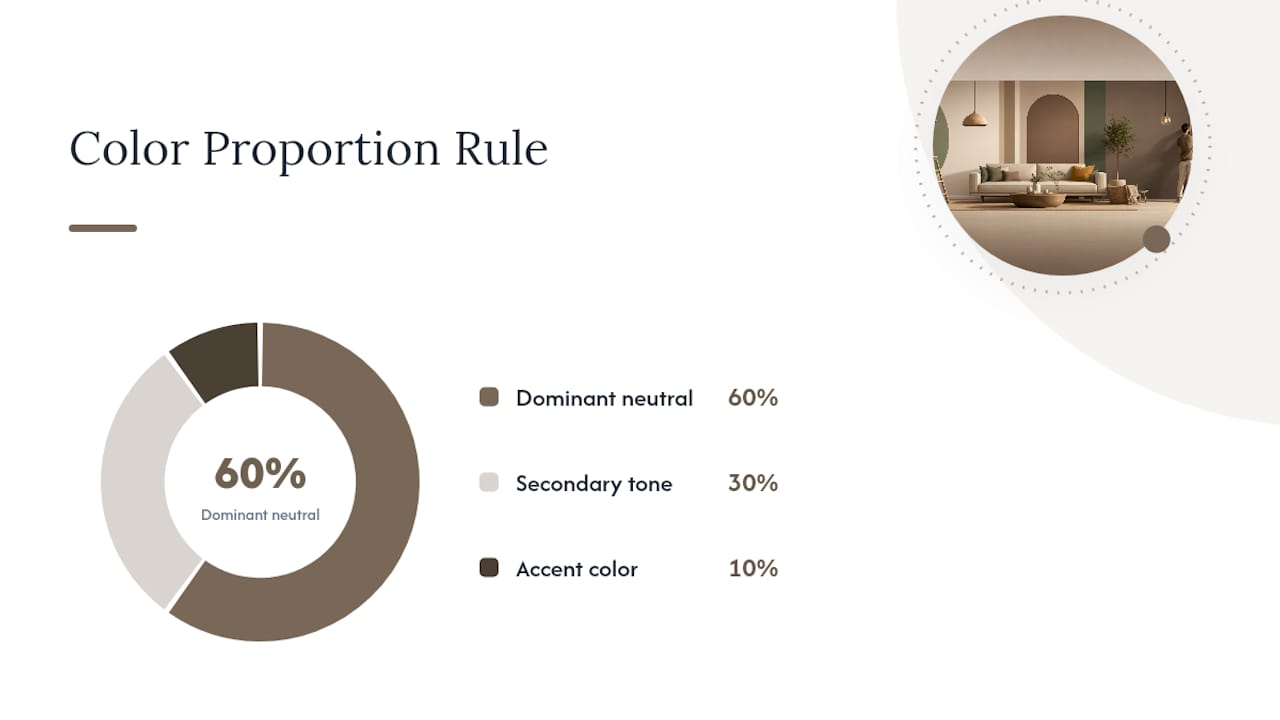
Designers lean on the 60-30-10 color rule to keep an accent wall from looking like a random splash of color: 60% of the room in a dominant neutral, 30% in a secondary tone (furniture, rugs), and 10% as the accent color itself, usually the wall. Treated this way, the wall reads as part of a plan rather than an afterthought.
A few rules make the difference between a color that works and one you’ll repaint in a year:
- Keep undertones consistent. A warm-white room paired with a cool-toned blue accent will fight itself under any light.
- Go darker for drama, lighter for a soft lift. Both work; the mistake is picking a shade so close to your base color that the accent barely registers.
- Test on a poster-board panel, not a paint chip. Viewing a large sample across morning, afternoon, and evening light catches undertones a 2 inch swatch never will.
- Match sheen to the mood. Higher sheen reads bolder and reflects more light; matte or eggshell reads calmer and hides wall imperfections.
- Bring the accent color into a pillow, a piece of art, or a lamp shade so the wall doesn’t look like it’s floating on its own.
Budget, Timeline, and When to Call a Pro
A single painted accent wall runs cheap in materials and typically finishes in a day, including drying time between coats. Peel-and-stick wallpaper costs more per square foot but installs almost as fast. Wood slats, board-and-batten, and tile all move into multi-day territory once you count cutting, mounting, and finish coats.
The most common DIY mistakes:
- Skipping primer on a color change from dark to light, or light to dark, which causes patchy, uneven coverage
- Pulling painter’s tape too late and tearing the fresh edge
- Underestimating dry time between coats on deep, saturated colors, which shows as roller marks once fully cured
Call a professional when you’re dealing with tile, stone veneer, structural slat mounting, water-damaged drywall that needs repair before anything goes on the wall, or a finish where a visible mistake means starting over. Sigma Painting’s prep checklist covers the groundwork either way, whether you’re doing it yourself or briefing a contractor.
What Pros Do Differently on Accent Walls
Sigma Painting’s crews prep every accent wall the same way regardless of color: prime first, cut clean edges before rolling, and control dust before it settles into wet paint. For deep or near-black tones, tinted primer paired with a low-luster sheen preserves depth while hiding minor wall imperfections. Structural slats, tile, and veneer go to a contractor because timeline and finish quality both suffer when they’re rushed.
What an Accent Wall Is Actually For
An accent wall exists to give a room a visual anchor, a spot the eye lands on first before taking in everything else. That’s the entire purpose. It’s not about picking the boldest color in the store; it’s about deciding what the room should say when someone walks in.
Rooms without a clear focal point, an oddly shaped living room, a bedroom with the bed against an interior wall, benefit most from an accent wall because it does the organizing work furniture placement can’t. When there’s no obvious wall to treat, designers sometimes extend color or paper onto the ceiling as a fifth surface, which anchors an asymmetrical room without needing a single dominant wall.
The current shift toward textured molding and vertical slats over flat single-color statements reflects a practical reality: texture ages better than trend colors. A slat wall installed today still looks intentional in five years. A trend-color paint job might not.
That’s really the tension behind every accent wall decision: how much you want to commit to a look now versus how the room needs to function for years. Paint splits the difference well, since it’s the easiest choice to walk back if a color stops working for you.
An Editorial Take on Committing to an Accent Wall
Most people overthink the color and underthink the wall. Pick the spot your eye naturally goes to first, then worry about the shade. If you’re not sure a color will hold up, test it big and test it under real light before you commit a whole wall to it. Permanent materials like tile or slats deserve real certainty. Paint doesn’t, and that’s exactly why it’s still the smartest place to start.
— Enrico
Get an Accent Wall Done Right With Sigma Painting
Sigma Painting handles the parts of an accent wall project that go wrong most often for DIYers: color matching, tinted primer for deep tones, clean edge work, and full cleanup when the job’s done. Beyond a single wall, the same crews handle full interior repaints, kitchen and cabinet refinishing, and repairs where water damage needs to be fixed before any new color goes on.
A consultation with Sigma Painting includes an honest look at your space, a transparent quote with no surprise line items, and a realistic timeline before any brush touches the wall. If you’ve settled on a color but want a professional finish, or you’re still deciding between a few options, request a color consultation and quote for your interior painting project and get a plan for the wall before you commit to it.
Sources
- How to Choose an Accent Wall: Essential Dos and Don’ts — The Spruce
- How To Choose a Stunning Accent Wall for Your Home — This Old House
- 34 Accent wall ideas — Architectural Digest
- How To Choose an Accent Wall — D and G Flooring


