
Painting contractor insurance is not a single policy. It’s a coordinated set of coverages that protect against the real financial risks of painting work: a spill that ruins hardwood floors, a worker who falls from a ladder, a van that gets rear-ended on the way to a job site. For homeowners and commercial property managers hiring a painting crew, understanding what those policies cover, and how to verify them, is the difference between a protected project and an expensive surprise.
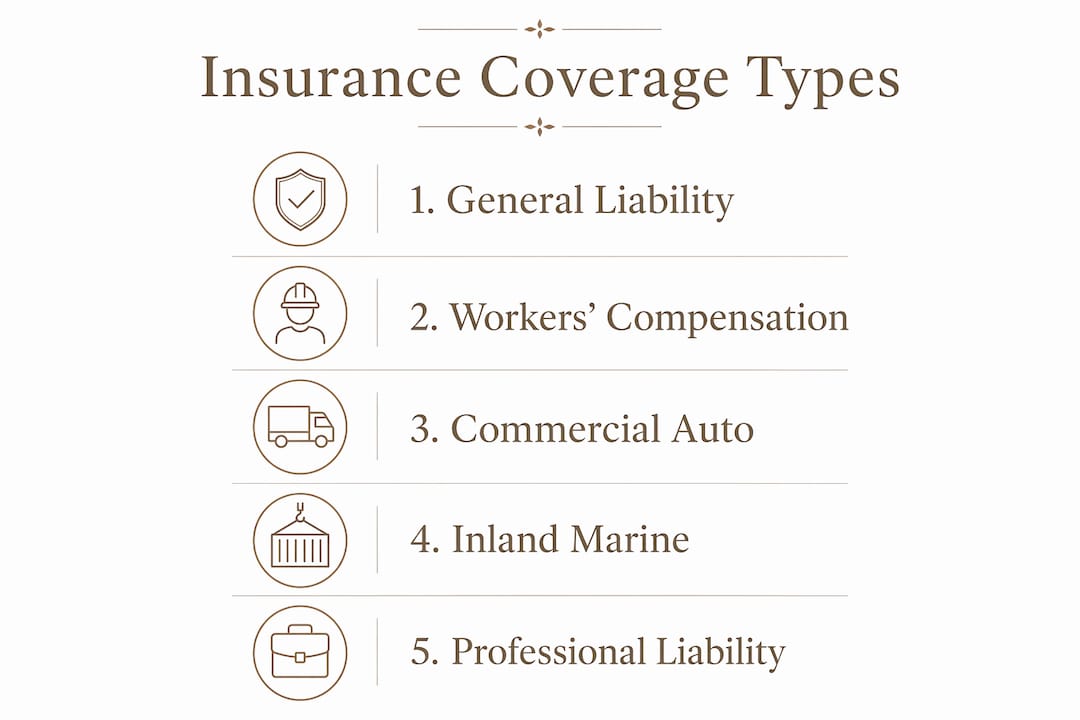
The core policies every professional painting contractor should carry include:
- General liability insurance covering third-party property damage, bodily injury, and completed operations claims
- Workers’ compensation insurance protecting employees injured on the job and satisfying state legal requirements
- Commercial auto insurance covering work vehicles that personal auto policies explicitly exclude
- Inland marine insurance protecting tools and equipment in transit, on-site, and in storage
- Contractors’ bonds as a complementary protection confirming contract performance (distinct from insurance)
- Endorsements such as lead pollution coverage or additional insured provisions for specific project requirements
Together, these policies form the financial backbone of a professionally run painting operation.
Table of Contents
- What painting contractor insurance actually covers
- How the Certificate of Insurance works in practice
- How insurance needs shift as a painting business grows
- Why hiring an insured contractor protects you directly
- How bonds differ from insurance
- Endorsements that matter for painting contractors specifically
- How to verify a contractor’s insurance before work begins
- Key Takeaways
What painting contractor insurance actually covers
General liability is the foundation. Standard coverage limits run $1 million per occurrence and $2 million aggregate, though commercial contracts routinely require higher. This policy responds to paint spills on client flooring, overspray on neighboring property, a client who trips over a drop cloth, and claims that arise after the job is finished (called completed operations coverage). Without it, a single incident can wipe out a contractor’s operating capital.
Workers’ compensation is legally mandatory in most states the moment a contractor hires employees. Only Texas operates differently; every other state requires it. It covers medical bills, lost wages, and rehabilitation for injured workers. For clients, this matters because an uninsured worker injured on your property can become your liability.
Commercial auto insurance covers the vans and trucks painters use daily. Personal auto policies contain explicit business-use exclusions, meaning a contractor driving to your job site in an uninsured work vehicle leaves you exposed if there’s an accident.
Inland marine insurance fills a gap most clients don’t think about. Standard property insurance excludes gear stored in vehicles or at off-site locations. Inland marine covers airless sprayers, compressors, ladders, and other equipment wherever they happen to be.

Professional liability (errors and omissions) coverage applies when a client claims the work failed to meet professional standards. Wrong coating selection on a historic facade, for example, could trigger this type of claim. It’s less common in residential painting but increasingly relevant on high-end commercial projects.
How the Certificate of Insurance works in practice
A Certificate of Insurance, or COI, is the document that proves all of this coverage is active. It’s not the policy itself. It’s a one-page summary issued by the insurer listing coverage types, limits, effective dates, and the insurer’s name.
For property managers and general contractors, same-day COI issuance is a practical necessity. A contractor who can’t produce a COI before work begins often loses the bid entirely. Reputable insurers and brokers can issue certificates the same day they’re requested.
Two provisions on a COI deserve close attention from clients:
- Additional insured endorsement: adds the property owner or general contractor to the policy so they’re protected if a claim arises from the contractor’s work
- Waiver of subrogation: prevents the insurer from suing the property owner to recover claim costs after paying out
Both provisions are standard requirements in commercial contracts and should appear on any COI you receive before a project starts.
Pro Tip: Request the COI directly from the insurer, not just from the contractor. Call the insurer’s number listed on the certificate to confirm the policy is active and the limits match what’s shown. Expired or altered COIs are a known fraud risk in the trades.
How insurance needs shift as a painting business grows
A solo painter doing residential repaints needs basic general liability and, if driving a work vehicle, commercial auto. That’s a manageable starting point. The picture changes significantly once crews, commercial contracts, and subcontractors enter the picture.
Insurance requirements evolve as business complexity increases. Moving from residential work to commercial subcontracting typically triggers higher liability limits, umbrella policies that stack additional coverage over existing GL and auto policies, and specialized endorsements. Annual policy reviews aren’t optional at this stage; they’re how a contractor avoids being underinsured on a job that requires $5 million in total limits when their policy caps at $2 million.
For work on pre-1978 properties, EPA Lead-Safe RRP certification is required by federal law, and standard insurance policies exclude lead-related claims entirely. A lead pollution endorsement is the only way to close that gap. Large institutional contracts add another layer: many require an Experience Modification Rate (EMR) of 1.0 or lower, a safety metric calculated from a contractor’s claims history. A high EMR can disqualify a contractor from bidding on government or institutional painting work regardless of their technical qualifications.
Why hiring an insured contractor protects you directly
Painting is a high-claim environment despite its seemingly low-risk reputation. Working at height and handling hazardous solvents generate property damage and bodily injury claims with real frequency. When a contractor carries proper insurance, those claims run through the contractor’s policy, not yours.
For homeowners, the practical protection is straightforward: if a painter damages your hardwood floors or a worker is injured in your home, a properly insured contractor’s general liability or workers’ comp policy responds. Without that coverage, you may face a lawsuit or be left paying for repairs out of pocket.
Commercial clients face the same exposure at greater scale. A painting crew working in an occupied office building or retail space creates third-party injury risk every day. Requiring proof of insurance before signing a contract is standard practice, and it should be non-negotiable.
Sigmapainting carries comprehensive insurance coverage across its interior painting and commercial painting operations in the Greater Toronto Area. Clients can request a COI before any project begins, and Sigmapainting’s crews work under policies that include the additional insured and waiver of subrogation provisions commercial clients routinely require.
How bonds differ from insurance
A contractor’s bond and an insurance policy are not interchangeable, though they’re often mentioned together. A surety bond protects the client. If a contractor abandons a job, fails to meet contract terms, or causes financial harm through non-performance, the bond compensates the client up to the bond’s limit.
Contractors’ bonds are required for licensing in many states, but they don’t cover the contractor’s own losses. Insurance does. A bond is a performance guarantee; insurance is a risk transfer mechanism. Clients should require both, not treat one as a substitute for the other.
Endorsements that matter for painting contractors specifically
Standard general liability policies are written for broad contractor use. Painting work has specific exposures that require targeted endorsements:
- Lead pollution endorsement: required for any work on pre-1978 structures where lead paint may be disturbed
- Additional insured endorsement: extends policy protection to property owners and general contractors
- Waiver of subrogation: blocks the insurer from pursuing recovery against the client after a claim
- Completed operations coverage: covers claims that arise after the job is finished, not just during active work
- Umbrella liability: stacks additional limits over GL and auto policies for high-value commercial contracts
Trade classification also matters more than most clients realize. A painting contractor placed under the wrong ISO or NCCI class code may carry a policy that technically excludes their primary work. Proper classification is the insurer’s job, but clients can ask a contractor which class codes their policy uses as a basic due diligence check.
How to verify a contractor’s insurance before work begins
Asking for a COI is the first step, not the last. Here’s how to confirm the coverage is real:
- Check the insurer’s name and call them directly. The insurer’s contact information appears on the COI. A quick call confirms the policy is active and the limits are accurate.
- Confirm effective and expiration dates. A policy that expired last month offers no protection today.
- Verify the coverage limits match your contract requirements. If your contract requires $2 million per occurrence, confirm that number on the certificate.
- Look for your name as an additional insured. If the COI doesn’t list you, ask the contractor to have the insurer add you before work starts.
- Request updated COIs for long projects. A policy can lapse mid-project. For jobs running more than a few weeks, request a fresh certificate at renewal.
Contractors who can’t produce a COI quickly, or who resist requests for additional insured status, are signaling something worth taking seriously before you hand over access to your property.
Key Takeaways
A properly insured painting contractor carries at least four distinct policies, and verifying that coverage before work begins is the most direct protection a client has.
| Point | Details |
|---|---|
| Core coverage types | General liability, workers’ comp, commercial auto, and inland marine are the four essential policies. |
| Standard GL limits | $1 million per occurrence and $2 million aggregate are typical minimums; commercial work often requires more. |
| COI verification | Request the COI, confirm it with the insurer directly, and check that you’re listed as an additional insured. |
| Bonds vs. insurance | A surety bond protects the client against non-performance; insurance protects against accidental loss and injury. |
| Coverage evolves with scale | Commercial contracts trigger higher limits, umbrella policies, and endorsements like lead pollution coverage. |


