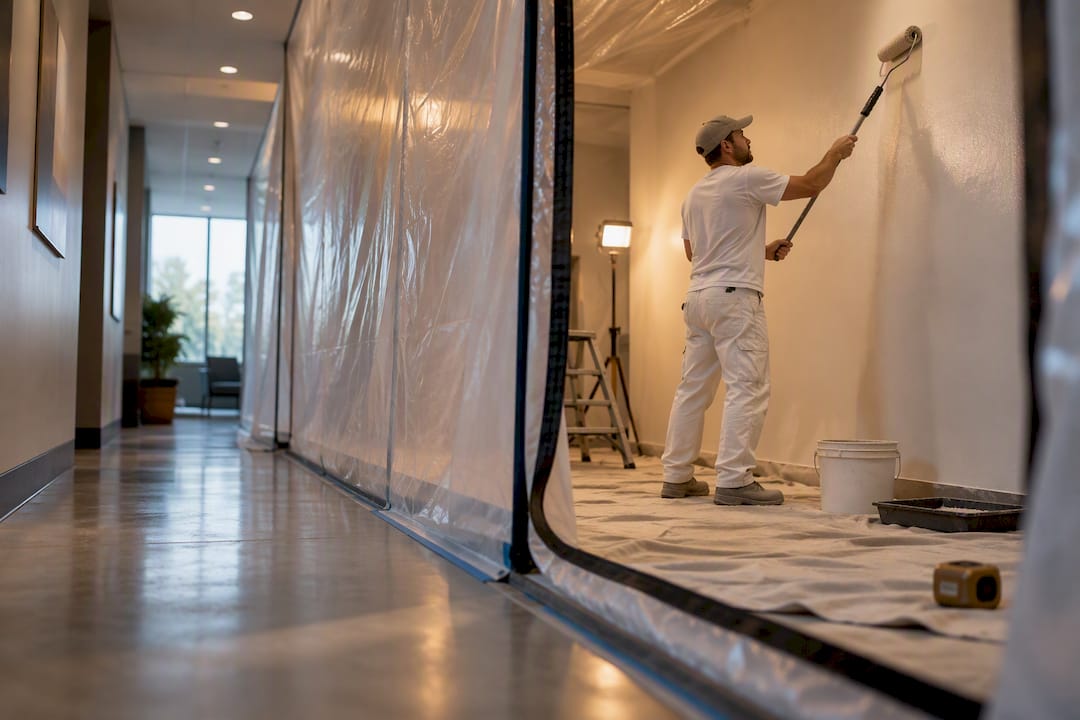
Expect a standard interior office repaint to run roughly $1.50 to $6.00 per paintable square foot, with small suites totaling $2,000 to $7,000 and mid-size floors landing between $6,000 and $22,000. The final number depends on prep work, coat count, and whether the crew has to work around your business hours. Measure your wall area and get two or three on-site quotes before you set a budget.
TL;DR:
- Labor expenses, which make up 40% to 70% of the total, are the primary cost driver and can range from $60 to $100 per hour per painter.
- Extra costs arise from scheduling constraints like after-hours work, occupied space, or high ceilings requiring lifts, which can increase overall expenses by 20% to 50%.
- Accurate quotes require detailed scope, measured wall area, and transparency in labor and materials, as lump-sum bids without itemization can hide risks and extra charges.
- A true comparison depends on requesting detailed, on-site, itemized estimates with clear terms for schedule, insurance, scope, and change order procedures.
Table of Contents
- Office Painting Cost: How Contractors Build the Bid
- What Actually Drives Office Painting Cost
- Sample Budgets by Office Size
- Why Scheduling and Access Rules Change the Price
- How to Get Quotes You Can Actually Compare
- How Sigma Painting Builds Its Commercial Estimates
- The Real Gap in Most Office Painting Budgets
- Ready to Turn Your Square Footage Into a Fixed Quote
- Sources
- FAQ
Office Painting Cost: How Contractors Build the Bid
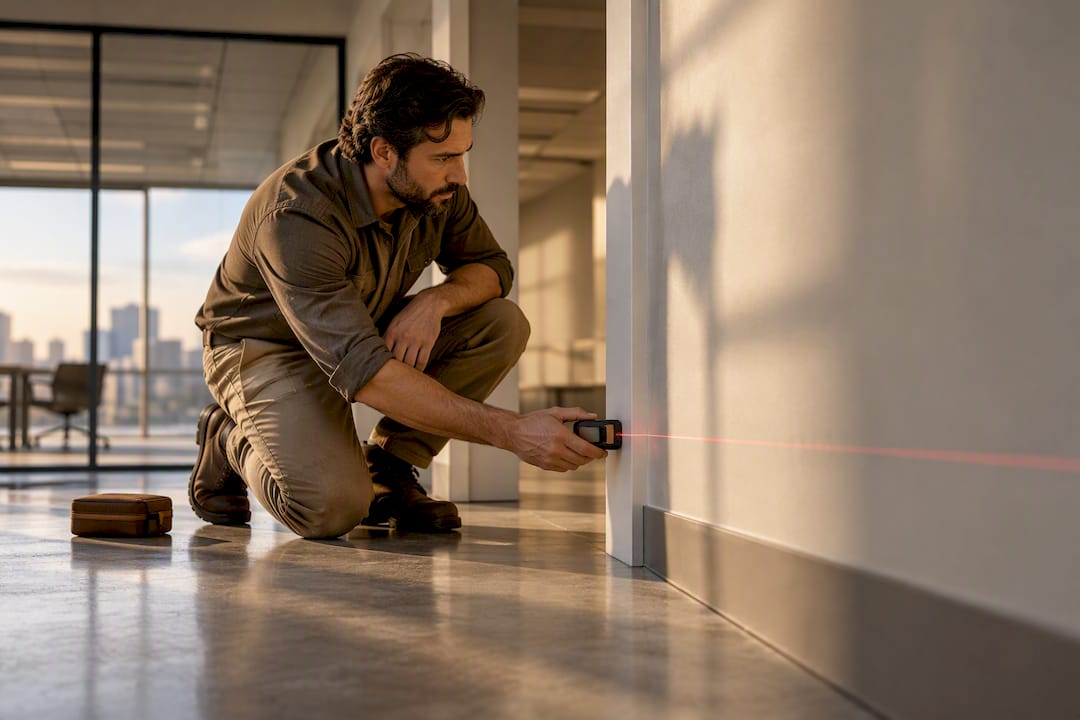
A painter who quotes off your floor plan alone is guessing. Real bids start with paintable wall area: height times perimeter, minus doors, windows, and other openings that don’t get paint. A 3,000 sq ft floor with 10-foot ceilings might only have 4,200 sq ft of actual paintable surface once you subtract glass walls and doorways, and that number is what drives the math.
From there, estimators apply a production rate. Brush-and-roller work typically covers 150 to 300 square feet per hour per painter, depending on wall texture and how many cut-in edges exist around trim. Spray-and-backroll setups on open floors move faster. Divide your paintable area by that rate and you get labor hours, the backbone of every commercial quote.
A complete bid usually itemizes:
- Surface prep and patching
- Masking and floor protection
- Priming (required for color changes or bare drywall)
- Two finish coats on walls
- Trim, doors, and frame painting as separate line items
Going from a light color to a dark one, or covering existing high-gloss paint, often forces an extra primer coat.
What Actually Drives Office Painting Cost
Most commercial interior repaints fall in the $1.50 to $6.00 per paintable square foot range, with many metro-area jobs clustering closer to $2.80 to $4.20 per square foot. Where you land inside that range comes down to a handful of variables: ceiling height, how much trim and door detail exists, the number of color changes, and how much of the surface needs repair before a brush ever touches it.
Labor alone typically runs $60 to $100 per hour for professional commercial painters, and it accounts for 40% to 70% of a project’s total cost. That’s the single biggest lever in your budget, bigger than paint brand or finish type.
Materials and equipment fill out the rest of the estimate:
- Standard commercial-grade paint runs a modest premium over big-box residential lines
- Low-VOC and scrub-resistant formulas, common in offices for air quality and cleanability, typically add a per-gallon upcharge
- Lifts or scaffolding for high ceilings or atrium spaces add rental fees that get passed through as a separate line
- Contractors layer overhead and profit margin on top of raw labor and materials, often adding 10% to 20% depending on job complexity and risk
Consumer pricing guides put the broader commercial range at $2 to $6 per square foot, which lines up closely with the metro baseline above and confirms these numbers hold across different markets.
Sample Budgets by Office Size
Turning square footage into a real number gets easier once you see it applied to actual office sizes.
- Small office suite (500 to 1,500 sq ft). Expect a total between $2,000 and $7,000, with most jobs wrapping in one to four days. This assumes standard drywall in reasonable condition and no major color changes.
- Mid-size suite (2,000 to 5,000 sq ft). Budgets typically run $6,000 to $22,000. If the space stays occupied during business hours, plan for after-hours or weekend scheduling, which extends the timeline and adds to labor cost.
- Large floor (7,500 to 10,000+ sq ft). A documented 8,000 sq ft office repaint totaled $24,600, broken into labor, materials, mobilization, and a retainage holdback. That kind of line-item breakdown is what you should expect on any bid this size.
Ask upfront how draws and retainage are structured before you sign anything.
Why Scheduling and Access Rules Change the Price
The per-square-foot number is only the starting point. Access and scheduling constraints are where a clean estimate gets more expensive, and they’re predictable if you know to ask about them.
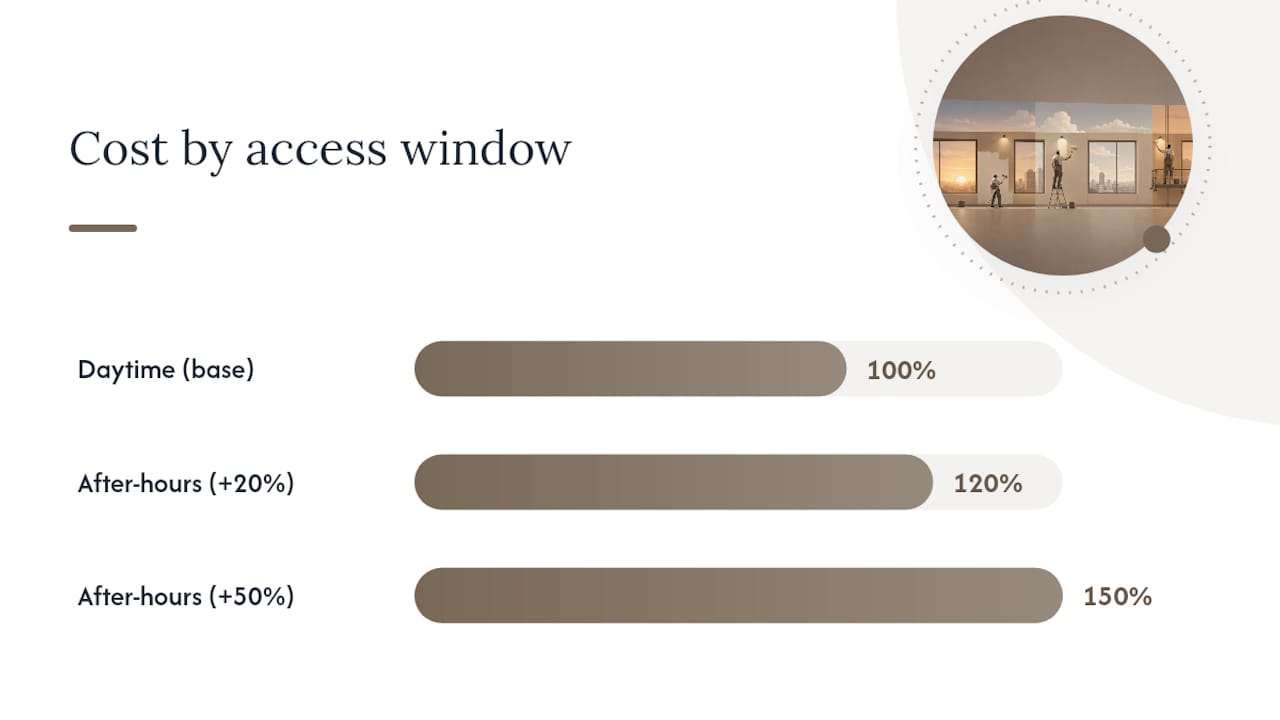
- After-hours or overnight work commonly adds 20% to 50% to labor-related costs because of overtime rates and added coordination
- Phased work around occupied desks or departments slows productivity and stretches the timeline
- Tight deadlines that compress the schedule often require extra crew, which raises the day rate
- Class A buildings frequently mandate low or zero-VOC paint and require landlord sign-off on colors and materials, adding administrative time
- Landlords and property managers often require the painting contractor be named on a certificate of insurance before badge access is granted
Coordination costs hide in the details too: security escorts for after-hours crews, visitor badge setup, and reconnecting phones or network drops moved during the job all add time that doesn’t show up on a simple per-square-foot estimate.
Pro Tip: When you request a quote, ask the contractor to price both a daytime and an after-hours version of the same scope. Seeing the dollar gap side by side tells you exactly what your schedule constraints are costing you, instead of guessing at a vague “premium.”
How to Get Quotes You Can Actually Compare
Two bids that look similar on the bottom line can hide very different assumptions. A line-item breakdown protects you from that.
Before you compare a single number, require:
- An on-site visit and a schedule-of-values showing labor hours, material quantities, and production rates
- A current certificate of insurance (COI) naming your building or company as required
- A written scope of work specifying paint brand, sheen, and number of coats
- A proposed schedule with start date, phasing plan, and completion date
- Clear terms on payment draws, retainage percentage, and how change orders get priced
Watch for red flags: a scope described in one vague sentence, no COI on file, a flat lump sum with no line items behind it, or pressure to accept a number quoted verbally without paperwork. Reading a quote breakdown carefully before signing catches most of these problems early. For more on vetting a contractor generally, see how to choose a painting contractor.
How Sigma Painting Builds Its Commercial Estimates
Some professional painting companies price commercial jobs using measured wall area, itemized labor and materials, and a written scope before any number gets locked in. That transparency is a stated part of how the company operates, along with a written workmanship warranty and a commitment to finishing on schedule.
For a fast starting number before scheduling a visit, the instant quote calculator gives a preliminary range based on square footage and scope. A full commercial estimate still requires an on-site walkthrough to confirm wall condition, access rules, and any prep work like drywall repair that a photo can’t fully capture.
The Real Gap in Most Office Painting Budgets
Most facility managers get the per-square-foot math right and still get surprised by the final invoice. The gap isn’t in the paint pricing. It’s in everything commercial jobs carry that residential quotes don’t: certificates of insurance, schedule-of-values documentation, landlord submittal approvals, and the coordination overhead of working around occupied space. Skip those line items when comparing bids and you’re not comparing bids at all.
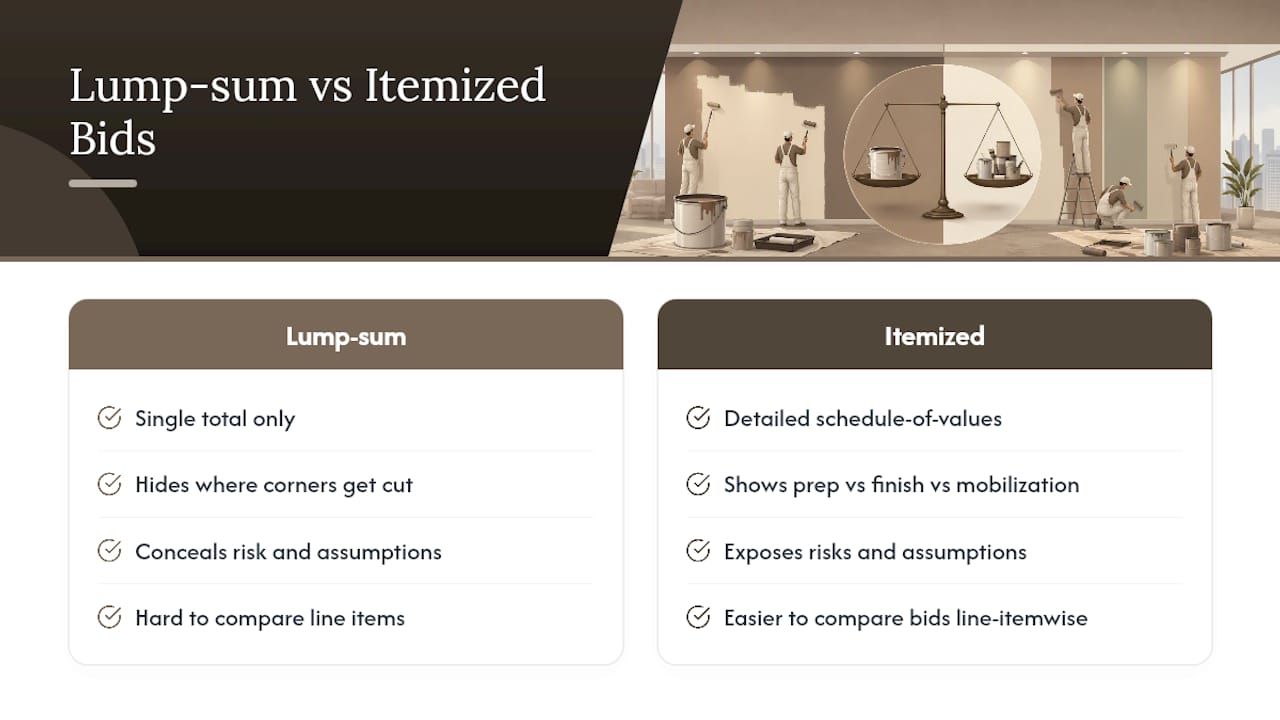
The conventional advice to “get three quotes and pick the middle one” falls apart here, because a lump-sum bid with no line items and a detailed schedule-of-values can both land at the same total dollar figure while representing completely different levels of risk. The lump sum hides where corners might get cut. The itemized bid shows you exactly what you’re paying for prep versus finish coats versus mobilization.
If there’s one thing to prioritize first, it’s this: don’t request a single number. Request the math behind the number. A contractor who can’t break down labor hours, material quantities, and production rate assumptions on request is asking you to trust a guess, not a quote.
— Enrico
Ready to Turn Your Square Footage Into a Fixed Quote
Some professional painting companies build commercial estimates using measured wall area, a written scope, and a line-item breakdown instead of a flat number pulled from a floor-plan glance.
To speed up an accurate estimate, have your paintable square footage (or floor plan) ready, along with a few photos of wall condition, any scheduling constraints like after-hours access, and whether your building requires a certificate of insurance on file. That alone can turn a rough phone quote into a real number within a day. Browse Sigma Painting’s commercial painting services or check the office painting page for scope details specific to occupied workspaces, or run the numbers yourself with the instant quote calculator before booking a site visit for a fully itemized proposal.
Sources
Local labor rates shift by region, so cross-check any quote against current data. Job Bank’s wage trends for painters and decorators give a baseline for hourly labor costs. The 8,000 sq ft commercial estimate sample shows a full line-item breakdown worth comparing against any bid you receive, and the broader commercial painting cost guide offers additional per-square-foot benchmarks for smaller projects.
FAQ
How much should it cost to paint 1,000 square feet of office space?
At $1.50 to $6.00 per paintable square foot, small commercial office projects often fall in the low thousands range, though most jobs land closer to the $2.80 to $4.20 per square foot metro baseline. The exact figure depends on ceiling height, trim detail, and whether a color change requires extra priming.
How much would a painter charge to paint a 12x12 room?
A typical small room with standard ceiling height has several hundred square feet of paintable wall area before subtracting doors and windows. Using the per-square-foot range given, a basic repaint can vary widely in cost, with many straightforward jobs falling toward the lower part of the commercial pricing band.
How much should a painter charge per day?
Professional commercial painters typically bill $60 to $100 per hour, and labour often accounts for 40% to 70% of a project’s total cost. Multi-person crews and after-hours schedules push the daily labor cost higher.
What is the labor cost to paint a 10x10 room?
A small room may have several hundred square feet of wall area. At typical brush-and-roller production rates of 150 to 300 square feet per hour, labor hours can be estimated accordingly, with hourly rates ranging from $60 to $100 per painter before materials and prep.
What should I ask for when requesting an office painting quote?
Ask for an on-site visit, a line-item schedule-of-values, and a current certificate of insurance before comparing any numbers. Sigma Painting builds estimates this way as standard practice, and you can request one through the commercial painting services page.