
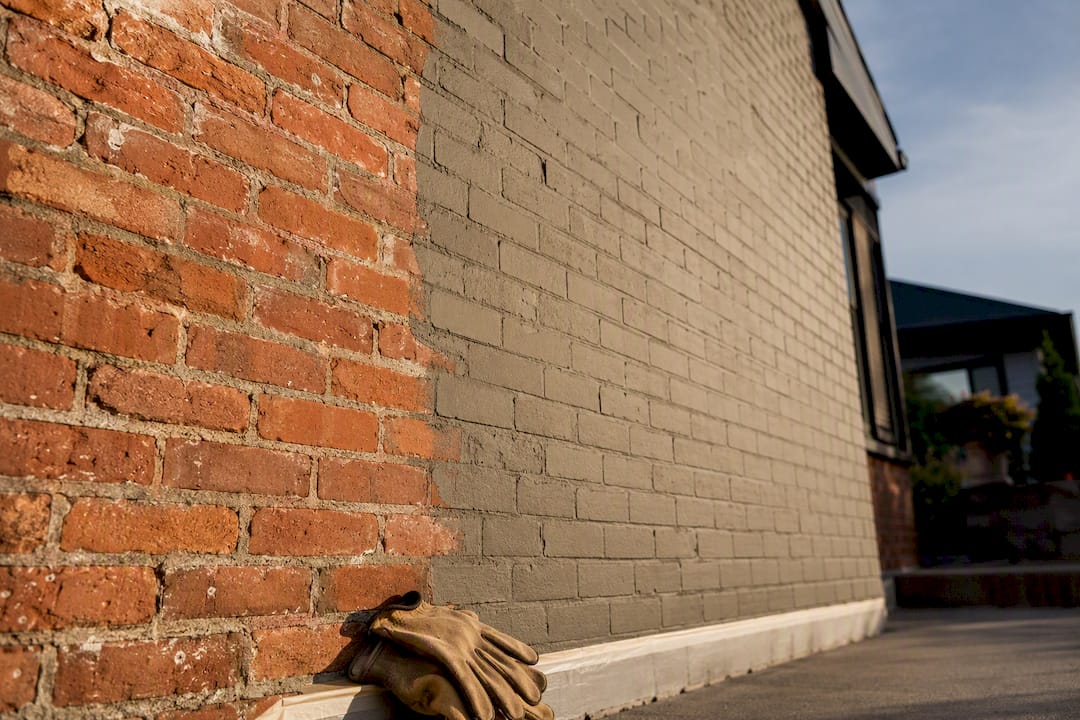
Painting exterior brick is a gamble most homeowners should approach with real caution: once you coat brick with a film-forming acrylic paint, you risk trapping moisture inside a material designed to breathe, which can lead to spalling and costly hidden damage. The exception is brick that passes a proper inspection, especially when you choose a breathable mineral stain or silicate system instead of standard paint. If the brick shows efflorescence, cracked mortar, or spalled faces, fix those problems first or skip the coating entirely.
TL;DR:
- Efflorescence, cracked mortar, and rising damp indicate underlying issues that must be repaired before any painting, as moisture problems cause paint failure and brick damage.
- Mineral stains and silicate paints offer a breathable alternative to traditional paint, reducing the risk of moisture entrapment and spalling when applied to sound brick.
- A quick site inspection should include checking for efflorescence, spalls, mortar deterioration, and moisture signs, guiding whether to repair or consider alternatives.
- Proper preparation, including cleaning and tuckpointing, significantly influences coating longevity, with mineral systems lasting longer but at a higher initial cost than acrylic paint.
- Contractors experienced in masonry should provide material specs, offer a test patch to evaluate moisture resistance, and include warranties to avoid costly failures.
Table of Contents
- Brick Painting Pros and Cons: Why Homeowners Consider It
- Cons of Painting Brick: Moisture, Maintenance, and Regret
- Alternatives That Let Brick Keep Breathing
- How to Decide: An On-Site Checklist Before You Commit
- Preparation, Lifespan, and What Cost Depends On
- Sigma Painting’s Perspective on Brick Projects
- Why Most Brick Painting Advice Gets the Order Backward
- If You Decide to Proceed: Working With Sigma Painting
- Sources
Brick Painting Pros and Cons: Why Homeowners Consider It
The pull toward painting brick is usually visual, and it’s a legitimate one. A tired, mismatched, or dated brick exterior can look decades newer after a single weekend of work, and that transformation is a big reason “why paint brick” keeps trending on renovation forums and Pinterest boards alike.
Here’s what draws homeowners in:
- Fast curb appeal wins. Painted brick reads as clean and current almost immediately, which matters if you’re listing soon or just tired of looking at orange or brown brick from the 1970s.
- Resale potential in the right markets. Mid-century ranches and older brick bungalows sometimes see a bump in buyer interest once the brick is unified in a modern white or gray tone.
- Color consistency after repairs. If a chimney rebuild or patch job left you with mismatched brick, paint hides the seams that stain can’t always cover.
- Easier surface cleaning, in theory. A painted surface feels less porous, so some owners assume it resists grime better than raw brick.
Those benefits of brick painting are real, but they’re short-term wins measured against a much longer-term material risk.
Cons of Painting Brick: Moisture, Maintenance, and Regret
Brick is a porous material built to absorb and release moisture as conditions change. Standard acrylic paint forms a solid film over that surface, and when water vapor can’t escape outward, it either pushes the paint off the wall or gets trapped behind it, where it slowly breaks down the brick itself. This is the core mechanism behind spalling, where the outer face of the brick cracks, flakes, and eventually crumbles away.
Before anyone touches a roller to brick, a few technical realities deserve attention:
- Efflorescence is a warning sign, not a cosmetic issue. That white, chalky residue on brick means moisture is actively moving through the wall, and coating over it accelerates paint failure and masonry deterioration if the underlying moisture source isn’t addressed.
- Spalling and rising damp both predict coating failure. If you already see cracked or flaking brick faces, or damp patches near the foundation, paint will not fix the underlying problem and will likely make it worse.
- Repainting becomes a recurring cost. Once painted, brick generally needs regular upkeep and occasional repainting, with frequency varying widely based on climate and paint quality, compared to mineral systems that can last considerably longer between refreshes.
- Removal is expensive and rarely clean. Stripping paint from brick is costly and rarely fully reversible, since mechanical or chemical methods often leave ghosting or damage the textured face underneath.
There’s also a resale angle that gets overlooked: in neighborhoods where original masonry is part of the architectural character, painting it can permanently alter that identity and may reduce appraised value in heritage-conscious markets. What feels like an upgrade to you might read as a liability to a buyer who wanted exposed brick in the first place.
Alternatives That Let Brick Keep Breathing
If the goal is a color change without the moisture risk, paint isn’t the only tool available, and it usually isn’t the best one.
- Mineral stains and silicate paints. These chemically bond with the brick rather than forming a surface film, so they preserve vapor permeability and carry a lower risk of spalling than acrylic paint. Expect a longer lifespan than standard paint when applied correctly.
- Limewash. A traditional lime-based wash that sits into the pores of the brick rather than sealing it. The finish has a soft, chalky texture that many homeowners find more authentic than flat paint, and it typically needs refreshing every few years rather than a full strip-and-redcoat cycle.
- Traditional acrylic paint. Still the most opaque, uniform finish available, and the cheapest upfront option, but it carries the highest long-term risk of the group.
- German smear (mortar wash). A textured, whitewashed look achieved by troweling thinned mortar over the brick and wiping some back off, prized for its aged, European farmhouse aesthetic rather than full color coverage.
Technical guidance on masonry staining is clear that properly applied stains don’t seal the brick and resist peeling, but product choice and application technique determine whether that promise holds up. Reach for stain or limewash over paint any time the brick is sound but you simply want a different color, and save conventional paint for situations where full opacity matters more than long-term breathability.
How to Decide: An On-Site Checklist Before You Commit
Walk the exterior with a critical eye before calling anyone. A five-minute inspection can save you from a decision you can’t easily undo.
- Check for efflorescence (white, powdery deposits) anywhere on the wall.
- Estimate the percentage of spalled or cracked brick faces across the elevation.
- Inspect mortar joints for crumbling, gaps, or previous patch jobs.
- Look for damp staining near grade level, which can signal rising damp.
- If none of those show up, weigh leave-natural, limewash, or a mineral stain against full paint, based on how much color change you actually want.
When you do talk to a contractor, ask about their perm rating on the coating product, whether they’ll run a test patch before committing to the full job, what prep work (tuckpointing, soft washing) is included, and whether they offer a written warranty. Any contractor who skips the test-patch conversation or can’t tell you the perm rating of their product is a red flag worth walking away from.
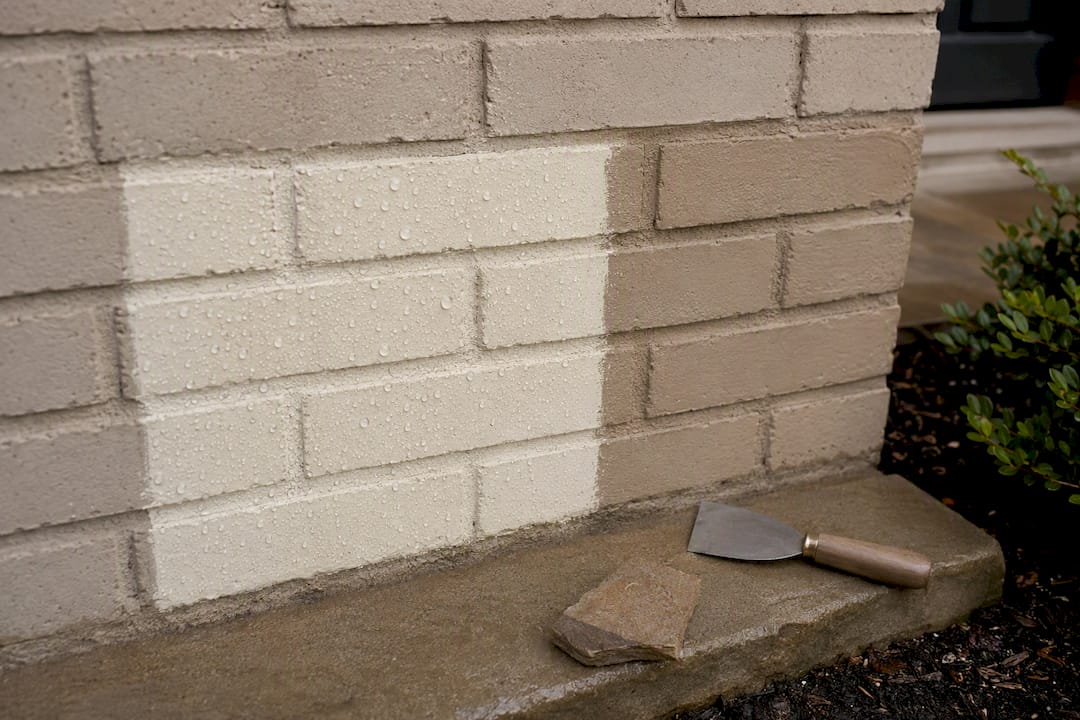
Pro Tip: Ask for the test patch to sit through at least one full rain cycle before you approve the rest of the job. Coatings that look fine dry can still trap moisture and show problems within days of getting wet.
Preparation, Lifespan, and What Cost Depends On
Proper prep drives most of the outcome, regardless of which coating you choose. That typically means a soft wash to remove grime, targeted efflorescence cleaning, tuckpointing on any failing mortar joints, and a test patch left to weather before full application.
Lifespan varies meaningfully by coating class. According to the decision matrix comparing leave-natural, limewash, and paint approaches, mineral coatings often cost more upfront than acrylic paint but last longer and remain easier to touch up or reverse over time.
- Acrylic paint: shortest lifespan, highest risk of trapped moisture.
- Mineral stain or silicate systems: longer service life, higher material cost.
- Limewash: shorter refresh cycles but simple, low-cost touch-ups.
Climate plays a bigger role than most people expect. Walls facing prevailing wind and rain, or brick in freeze-thaw climates, put more stress on any coating than a sheltered, south-facing wall in a milder region.
Sigma Painting’s Perspective on Brick Projects
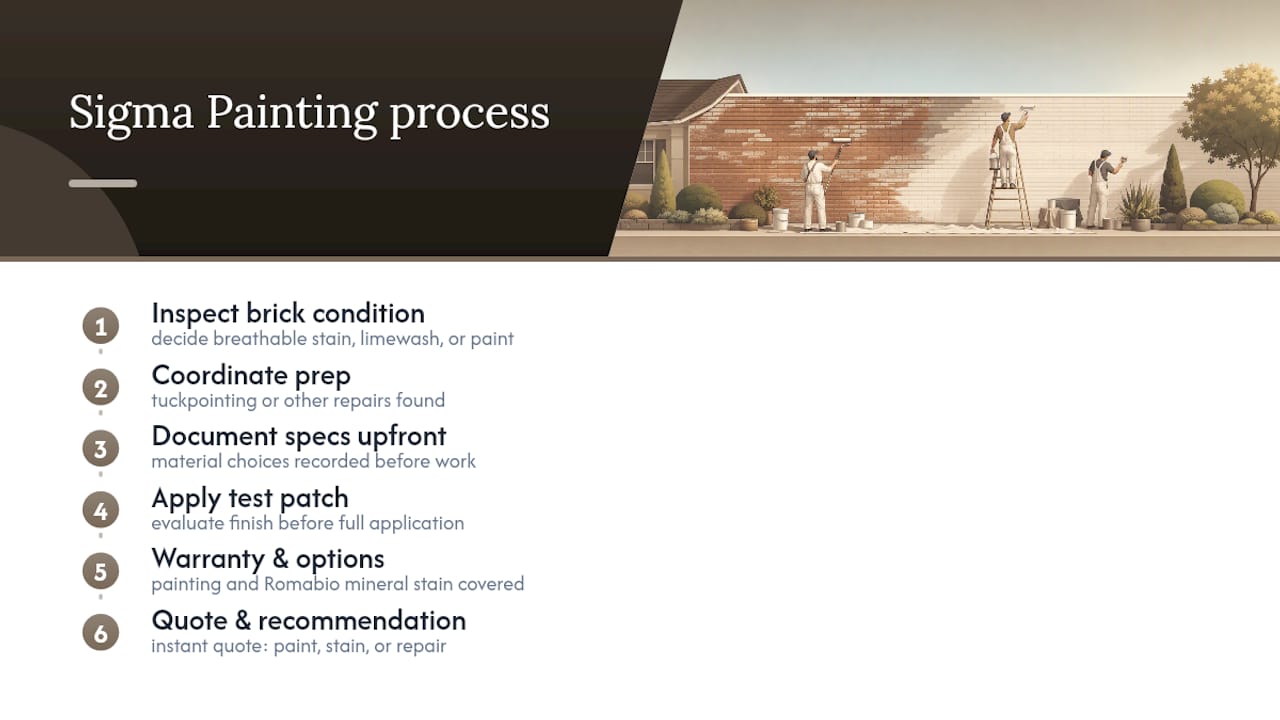
Some contractors generally steer clients toward breathable stains or mineral systems over conventional acrylic paint, reserving full opaque paint for brick that’s already sound and where the homeowner wants maximum color coverage. Every project should include documented material specs, a test patch, and recorded prep work. Ask about exterior brick staining options if breathability is your priority.
Why Most Brick Painting Advice Gets the Order Backward
Most articles on this topic treat “should I paint my brick” as a style question first and a technical question second. That’s backward. The style decision is the easy part. What actually determines whether you’ll regret this project in five years is whether anyone bothered to check for efflorescence and spalling before the first coat went on.
The conventional wisdom oversells paint’s permanence and undersells how often “just repaint it” quietly becomes “now we need $8,000 in masonry repair.” Homeowners fixate on color swatches and skip the fifteen-minute inspection walk that would have told them paint was the wrong call from the start.
If you take one thing from this guide, prioritize the inspection over the aesthetic. Sound brick with no moisture issues gives you real options, including paint. Brick with active efflorescence or spalling gives you exactly one responsible option: repair it first, then reconsider. Everything else, including which finish looks best in your driveway, is a secondary decision that only matters once the first one is settled correctly.
— Enrico
If You Decide to Proceed: Working With Sigma Painting
Painting brick without breathability in mind is how a cosmetic upgrade turns into a masonry repair bill. Some painting professionals work with homeowners to figure out whether a breathable mineral stain, a limewash system, or conventional paint actually fits your brick’s condition, and coordinate any tuckpointing or prep the inspection turns up before a drop of coating goes on.

Some professional painting processes include documenting material specs upfront, applying a test patch to evaluate before the full job starts, and may involve warranties. For homeowners weighing paint against staining, Sigma Painting’s exterior painting services cover both approaches, and the Romabio mineral staining option is worth a look if preserving the brick’s ability to breathe matters to you. Before you commit to a finish, compare the trade-offs the way you would weigh painting against replacing an aging surface anywhere else in the home.
Ready to see where your brick stands? Request an instant quote and get a straight answer on whether your exterior is a paint candidate, a stain candidate, or needs repair first.
Sources
For technical depth beyond this guide, the Masonry Advisory Council’s staining guidance covers application standards, and The Spruce’s breakdown of brick painting risks explains moisture mechanics in more detail.
- 4 Ways to Paint Brick | Redfin
- Why You Should Never Paint Brick | The Spruce
- Brick House: Paint vs Leave Natural Guide 2026
- Staining Brick Masonry (Masonry Advisory Council)


