
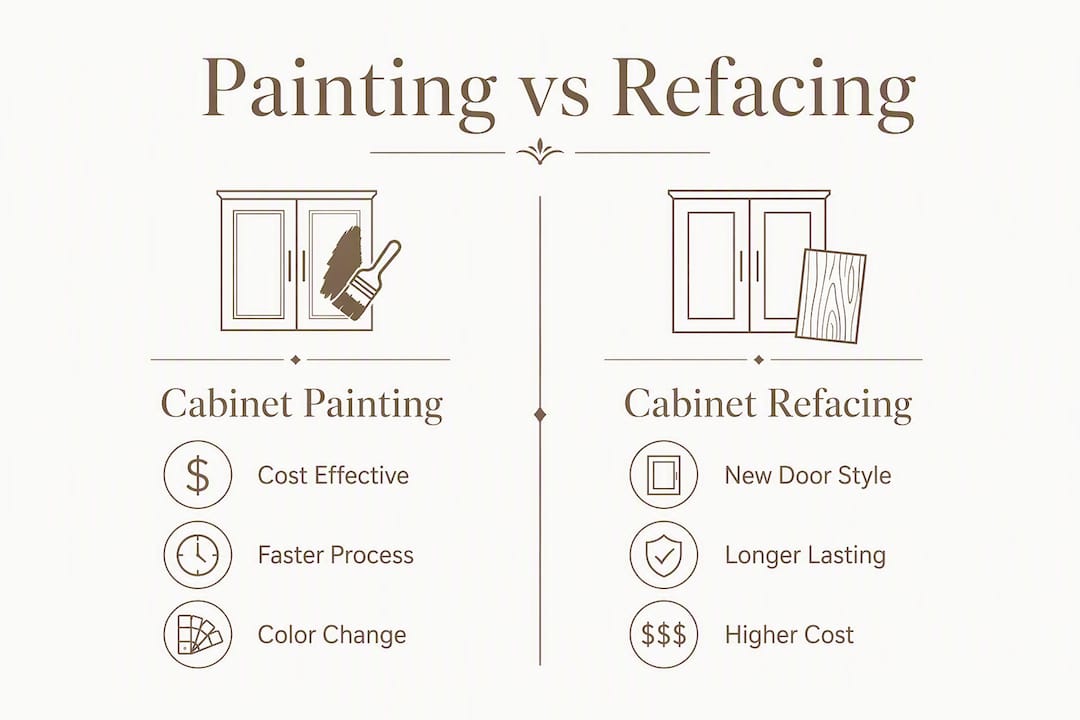
If your cabinets look dated but the boxes are solid, painting almost always wins on cost and speed. If you want a different door profile or your doors are warped and delaminating, refacing is the smarter call. Professional cabinet painting typically runs $1,800–$5,500; professional refacing runs $4,000–$10,000. The one-line rule: paint if you like the door shape and just want a color change, reface if you need a new door style, and replace only if the boxes themselves are water-damaged or the layout has to change.
Table of Contents
- What is cabinet refacing and how does it work?
- How does professional cabinet painting actually work?
- Cabinet painting vs refacing: a side-by-side comparison
- What does cabinet painting or refacing actually cost?
- How do you decide, and what should you ask a contractor?
- When does DIY make sense, and when should you hire a pro?
- What experts check before recommending paint or reface
- Key Takeaways
- What we actually recommend at Sigma Painting
- Useful sources for further reading
- Sigma Painting brings professional cabinet results to the GTA
What is cabinet refacing and how does it work?
Refacing keeps your cabinet boxes exactly where they are and replaces everything you actually see: the doors, drawer fronts, and a thin veneer applied over the face frames. The result looks like a brand-new kitchen without touching plumbing, layout, or the structural carcasses behind the doors.
The process, step by step:
- A contractor measures every opening and templates the face frames.
- Existing doors and drawer fronts are removed and set aside.
- New doors are manufactured or ordered in your chosen style (shaker, slab, raised panel, beadboard).
- A laminate, thermofoil, or wood veneer is adhered to the face frames with contact cement and edge banding.
- New doors are hung, drawer fronts are attached, and new hardware is installed.
On-site, most professional refacing jobs wrap up in 2–5 days, and your kitchen stays usable throughout. There’s no demolition, no dumpster, and no contractor dust everywhere.
Materials involved: laminate, thermofoil, or real-wood veneer for the face frames; MDF or solid-wood doors; new hinges, pulls, and edge banding. Material quality is the biggest cost driver. Laminate and thermofoil sit at the low end; solid-wood veneer with custom doors pushes toward the top of the range.

Cost: Professional refacing typically runs $4,000–$10,000 for a standard kitchen. DIY refacing kits cover materials only and usually land between $1,500 and $4,000, but the labor is substantial and the margin for visible error is high.
What refacing solves: a door profile you dislike, delaminating thermofoil doors, worn or chipped door surfaces, and outdated hardware. What it cannot fix: a broken layout, damaged or swollen cabinet boxes, or interior drawer-box problems. Structural damage to the boxes means replacement is the only reliable path forward.
Refacing is the right call when:
- Your doors are warped, chipped, or delaminating beyond cosmetic repair.
- You want to switch door profiles (raised-panel to flat shaker, for example).
- You want a wood-grain look on existing painted boxes.
- Multiple doors are damaged and painting them would still leave visible problems.
How does professional cabinet painting actually work?
Painting refinishes the existing doors, drawer fronts, and exposed frames in place. No new doors, no veneers. The color changes; the door profile stays exactly as it is.
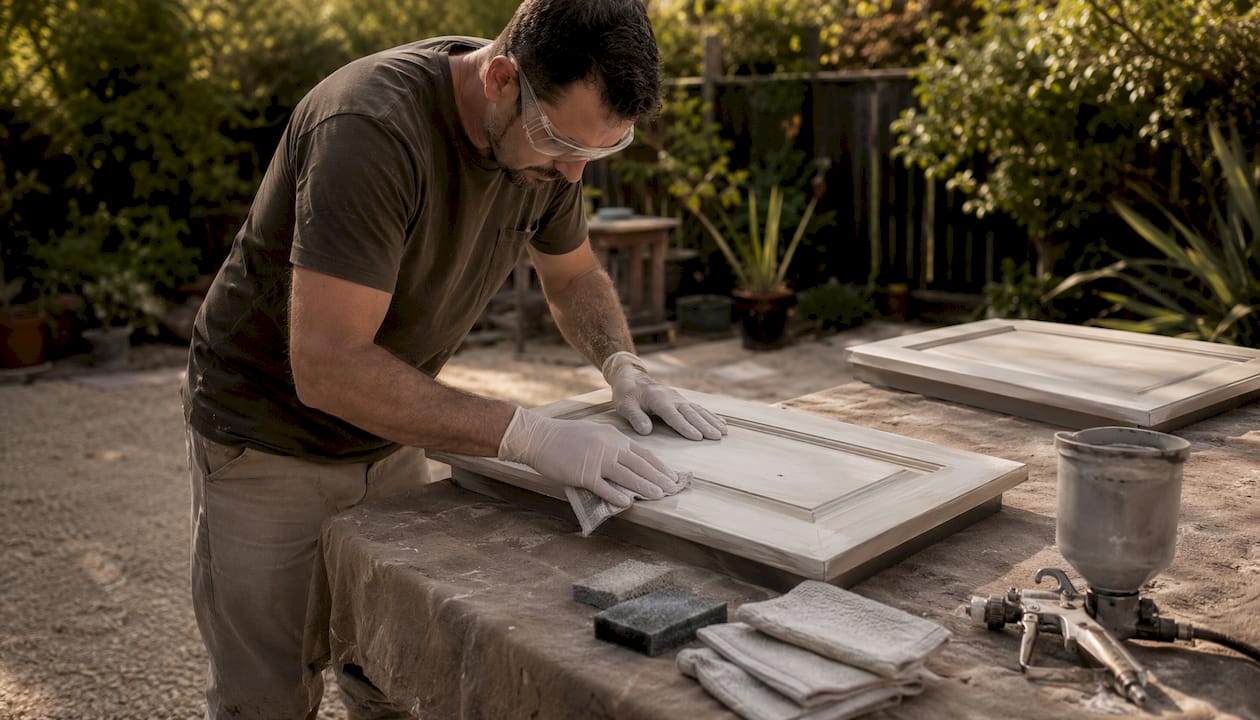
The professional process: A good painter starts with a thorough degreasing using a TSP substitute or similar cleaner, because kitchen grease is the number-one cause of adhesion failure. After degreasing comes sanding or scuff-abrading every surface, then a bonding primer. Most professional shops spray two or more finish coats, either on-site or by pulling the doors and spraying them off-site in a controlled environment. Off-site spraying produces a smoother, more factory-like result because there’s no ambient dust.
Finish chemistry matters more than most homeowners realize. Standard latex or acrylic enamel from a hardware store will chip and yellow within a few years on cabinet doors. Professional-grade finishes like 2K polyurethane or pre-catalyzed lacquer cure to a much harder surface and hold up to daily cleaning and impact far better. When you’re getting quotes, ask specifically which finish system the contractor uses.
Cost: Professional painting typically runs $1,800–$5,500 for most kitchens. Many pros price by piece at $50–$135 per door rather than by square foot, which makes it easy to compare quotes apples-to-apples. DIY painting saves labor but costs more time and carries real risk: insufficient prep is the leading cause of peeling, and fixing a bad DIY paint job often costs more than hiring a pro from the start.
Pros: Lower cost than refacing, faster turnaround, minimal disruption, and the ability to change color dramatically (white oak stain to painted white, for example). Cons: The door profile doesn’t change, and a painted finish on a heavily used kitchen will show wear sooner than a factory-finished replacement door, especially if the prep or finish system was cut-rate.
Cabinet painting vs refacing: a side-by-side comparison
Painting is cheaper and faster. Refacing costs more but delivers a new door profile and a longer-lasting door surface. Here’s how the two options stack up across the dimensions that actually drive the decision.
| Dimension | Cabinet Painting | Cabinet Refacing |
|---|---|---|
| Typical pro cost | A moderate price range | A higher price range |
| DIY material cost | — | $1,500–$4,000 |
| On-site timeline | 3–7 days | 2–5 days |
| Color change | Yes | Yes |
| Door profile change | No | Yes |
| Door condition required | Good (no warping/delamination) | Damaged doors replaced entirely |
| Durability (door surface) | Moderate (finish-dependent) | Higher (factory-finished new doors) |
| Environmental impact | Lower material use | ~70% material reuse vs. replacement |
| Kitchen disruption | Low | Low |
| DIY feasibility | Moderate (prep is critical) | Difficult (veneer adhesion, templating) |
| Best for | Good boxes, acceptable profile, budget-focused | Damaged doors, profile change, longer-term look |
When to paint: boxes are solid, you like the door shape, and a color change is all you need. When to reface: doors are damaged or the profile is wrong, and the boxes are structurally sound. When to replace: boxes show rot, swelling, or delamination, or the layout needs to change.
Painting can cost significantly less than refacing upfront, but refacing tends to last longer on door surfaces, so the cost-per-year gap narrows over time.
What does cabinet painting or refacing actually cost?
Several factors push costs up or down regardless of which method you choose.
Main cost drivers: number of doors and drawer fronts, kitchen size, door material (solid wood vs. MDF vs. thermofoil), hardware upgrades, finish type, prep complexity (heavy grease buildup, existing damage), and geographic labor rates. A 10-cabinet kitchen in a rural area and a 25-cabinet kitchen in a major metro are entirely different projects.
Typical U.S. price bands
| Project type | DIY cost | Professional cost |
|---|---|---|
| Cabinet painting | — (materials) | $1,800–$5,500 |
| Cabinet refacing | $1,500–$4,000 (materials) | $4,000–$10,000 |
Per-piece pricing for painting commonly runs $50–$135 per door, which gives you a useful sanity check when comparing contractor quotes.
Timeline and lifespan
Refacing typically finishes in 2–5 days on-site. Painting runs 3–7 days when you factor in off-site door spraying and curing time. Custom door orders for refacing can add 2–4 weeks of lead time before the contractor even shows up.
Lifespan depends heavily on finish quality and kitchen use. A professionally painted kitchen with a 2K polyurethane finish in a moderate-use household can last 8–12 years before needing a refresh. Refaced cabinets with quality doors typically last 15–20 years. Full replacement with solid-wood or plywood-box cabinetry can last 25 years or more. Heavy moisture, frequent cleaning with harsh chemicals, and high-traffic households shorten all three timelines.
Use Sigma Painting’s quote calculator to get a fast cost estimate before you call a contractor.
How do you decide, and what should you ask a contractor?
Start with a physical inspection before you call anyone.
Decision checklist:
- Open every lower cabinet near the sink and dishwasher. Press on the box floor and sides. Soft, spongy, or swollen material means the box is compromised. Stop here: you need replacement, not painting or refacing.
- Check every door for warping. Lay a straightedge across the face. A bow of more than 1/8 inch will telegraph through any finish.
- List what you actually want to change. Color only? Paint. Door profile? Reface. Layout? Replace.
- Check your countertops. If they’re also dated, a full replacement might make more financial sense than layering updates.
- Estimate how long you’ll stay in the home. A 2-year horizon favors painting. A 10-year horizon makes refacing’s higher upfront cost easier to justify.
- Compare budgets against the price bands above and decide which range you’re working in.
Questions to ask every contractor:
- What finish system do you use? (Require a specific answer: 2K polyurethane, pre-catalyzed lacquer, or equivalent. “Premium paint” is not an answer.)
- Do you spray on-site or pull doors and spray off-site?
- What prep steps do you include? (Degreasing, sanding, and priming should all be named.)
- What warranty do you offer on the finish, and what does it cover?
- Can you provide photos of completed cabinet projects and two references I can call?
- How do you handle a door that’s damaged or warped — do you replace it, or paint over it?
- What’s the written project timeline, and how do you handle cleanup?
Red flags to walk away from:
- A quote with no prep details listed. Prep is where quality is won or lost.
- No written warranty or a warranty shorter than 2 years on a professional finish.
- A price significantly below the market range with no explanation.
- No references, no portfolio photos, or a contractor who can’t name the finish product they use.
- Vague timelines like “a few days” with nothing in writing.
Trust signals to require in writing: project photos from similar jobs, the finish specification by product name, a written warranty with coverage terms, a project timeline, and a cleanup plan.
When does DIY make sense, and when should you hire a pro?
DIY painting is reasonable for a small kitchen (under 10 doors), a homeowner with previous spray or brush experience, and a project where a garage or basement can serve as a spray area. The material cost is low, and the process is learnable. The risk is prep: most DIY failures come from skipping or rushing degreasing and sanding, not from the paint itself.
DIY refacing is a harder sell. Templating face frames, cutting veneer cleanly, and achieving bubble-free adhesion across every surface takes skill and patience. A visible seam or bubble in veneer is difficult to fix without starting over.
Scenarios that strongly favor hiring a pro:
- Whole-kitchen projects where consistency across 20+ doors matters.
- Any project where you want a warranty that means something.
- Thermofoil or complex profile doors that require precise templating.
- Any job where you want industrial 2K coatings, which require spray equipment and proper ventilation.
DIY painting can take four times as long as a professional crew. That’s not a knock on DIYers; it’s just the reality of doing it alone without commercial spray equipment.
DIY vs. professional comparison
| Factor | DIY | Professional |
|---|---|---|
| Upfront cost | Lower (materials only) | Higher (labor + materials) |
| Finish durability | Lower (consumer-grade products) | Higher (2K polyurethane or lacquer) |
| Timeline | Longer (4× on average) | Faster |
| Warranty | None | Typically 2–5 years |
| Risk of visible defects | Higher | Lower |
| Equipment needed | Brush/roller or rented sprayer | Commercial spray rig, booth |
For most whole-kitchen projects, the finish quality and warranty from a professional crew justify the cost difference. For a small bathroom vanity or a garage project where you’re comfortable with the tools, DIY is a perfectly reasonable path.
What experts check before recommending paint or reface
The single most reliable predictor of which path is right isn’t the door condition or the budget. It’s the cabinet box integrity. A box that looks fine from the outside can be hiding soft particleboard near a slow-drip under the sink. Check the underside and floor of lower cabinets near water sources by pressing firmly. Swelling or softening there is a hard stop: no finish system fixes a compromised box.
Beyond the boxes, check door straightness with a straightedge, identify whether the boxes are plywood or particleboard (plywood holds fasteners better and resists moisture longer), and test every hinge and drawer glide. Sticky drawers and loose hinges are often the real source of homeowner frustration, and upgrading hardware with either painting or refacing dramatically improves daily use.
Pro Tip: When reviewing contractor quotes, require the finish product name in writing. “2K polyurethane” or “pre-catalyzed lacquer” are specific, verifiable answers. A quote that says “high-quality paint” without naming the system is a red flag for a consumer-grade product that will chip within a few years.
Refacing reuses roughly 70% of existing cabinet materials by keeping the structural boxes in place, which makes it meaningfully less wasteful than full replacement. For homeowners weighing environmental impact, that’s a real consideration.
Hybrid approaches are worth knowing about. Replacing or refacing a handful of damaged doors while painting the rest is common and cost-effective. Painting all doors and adding new soft-close hinges and hardware delivers a near-full transformation at a fraction of refacing cost. When door replacement is limited to the worst offenders, the overall project cost drops significantly without sacrificing the finished look.
Key Takeaways
Cabinet painting wins on cost and speed when the boxes are solid and the door profile works; refacing wins when you need a new door style or the doors are too damaged to finish well.
| Point | Details |
|---|---|
| Box condition decides everything | Soft or swollen boxes near water sources mean replacement — no finish system fixes structural damage. |
| Paint for color, reface for profile | If you like the door shape, painting at $1,800–$5,500 pro delivers the same color outcome for less. |
| Refacing costs more, lasts longer | Pro refacing runs $4,000–$10,000 but typically outlasts a painted finish on door surfaces. |
| Finish system drives durability | Require 2K polyurethane or pre-catalyzed lacquer in writing — consumer-grade paint underperforms within a few years. |
| Sigma Painting for GTA cabinet work | Sigma Painting handles professional cabinet painting and kitchen repainting across the Greater Toronto Area with premium finish systems. |
What we actually recommend at Sigma Painting
Most homeowners who call us thinking they need refacing actually need a high-quality paint job. If the door profile is acceptable and the boxes are sound, painting with a proper 2K finish delivers a result that rivals factory-made doors in daily wear. We see this pattern consistently: the door shape is fine, the color is the problem, and a professional repaint at a fraction of refacing cost solves it completely.
That said, we’re straightforward when refacing or replacement is the right answer. Damaged doors, delaminating thermofoil, or a profile the homeowner genuinely dislikes are situations where painting would be a short-term fix at best. Our cabinet painting and refinishing service uses premium finish systems and thorough prep on every job, and our kitchen repainting work covers everything from single-color refreshes to full multi-tone transformations.
[Author credentials, certifications, and project portfolio to be added here.]
Useful sources for further reading
These are the primary sources used in this article. Each covers a distinct part of the decision.
- This Old House — Cabinet Refacing: Everything You Need to Know: Best for understanding the refacing process and material reuse figures.
- PaintPricing — Cabinet Painting Estimate: Best for per-piece pricing models and professional cost ranges for painting.
- Captivating Cabinets — Is Refacing Worth It?: Covers refacing cost ranges, timeline, DIY kit costs, and structural limits.
- 180 Kitchens — Cabinet Refacing vs Painting vs Replacing: Useful for long-term cost-per-year comparisons between all three options.
- Davis Painting — Cabinet Painting vs Refacing vs Replacing: Practical inspection guidance for identifying box damage before choosing a path.
Sigma Painting brings professional cabinet results to the GTA
If you’ve read this far, you know the decision comes down to box condition, door profile, and budget. What you need next is an honest assessment and a finish system that actually holds up.
Sigma Painting specializes in cabinet painting and refinishing across the Greater Toronto Area, using premium coatings, thorough prep, and a process built around getting the finish right the first time. No consumer-grade shortcuts, no vague warranties. Every cabinet project includes a written finish specification, a clear timeline, and full cleanup. Whether you’re refreshing a dated kitchen or doing a full color transformation, the work is done by a crew that treats your home the way you’d want your own treated. Get a fast estimate with Sigma Painting’s online quote calculator and see what a professional result actually costs for your kitchen.