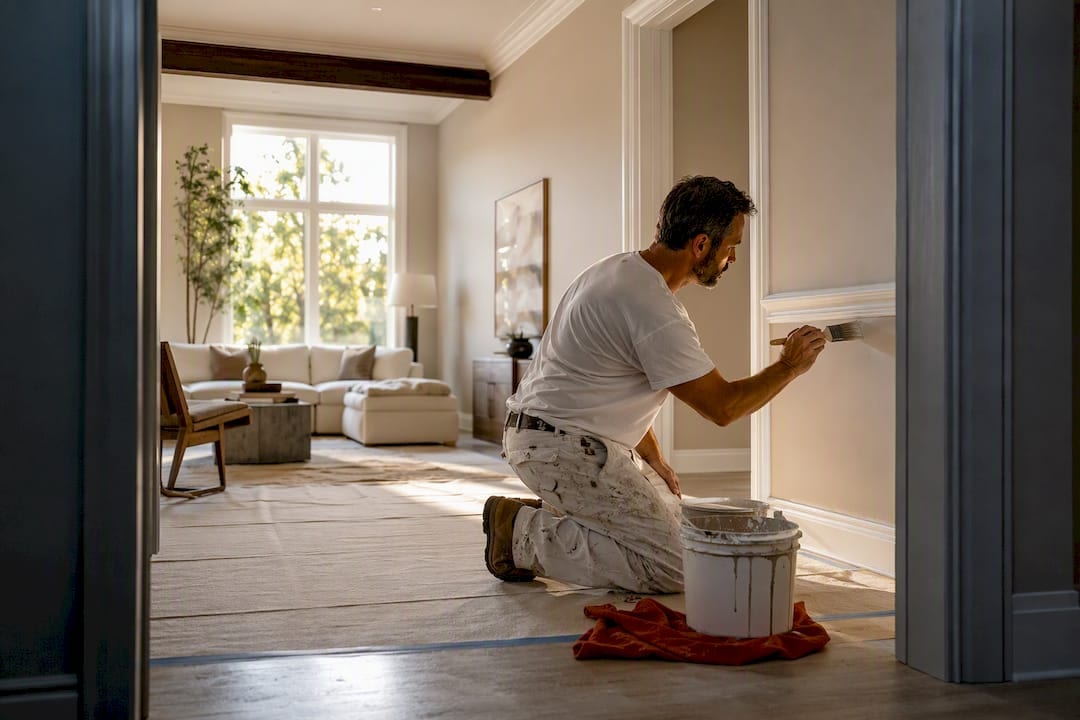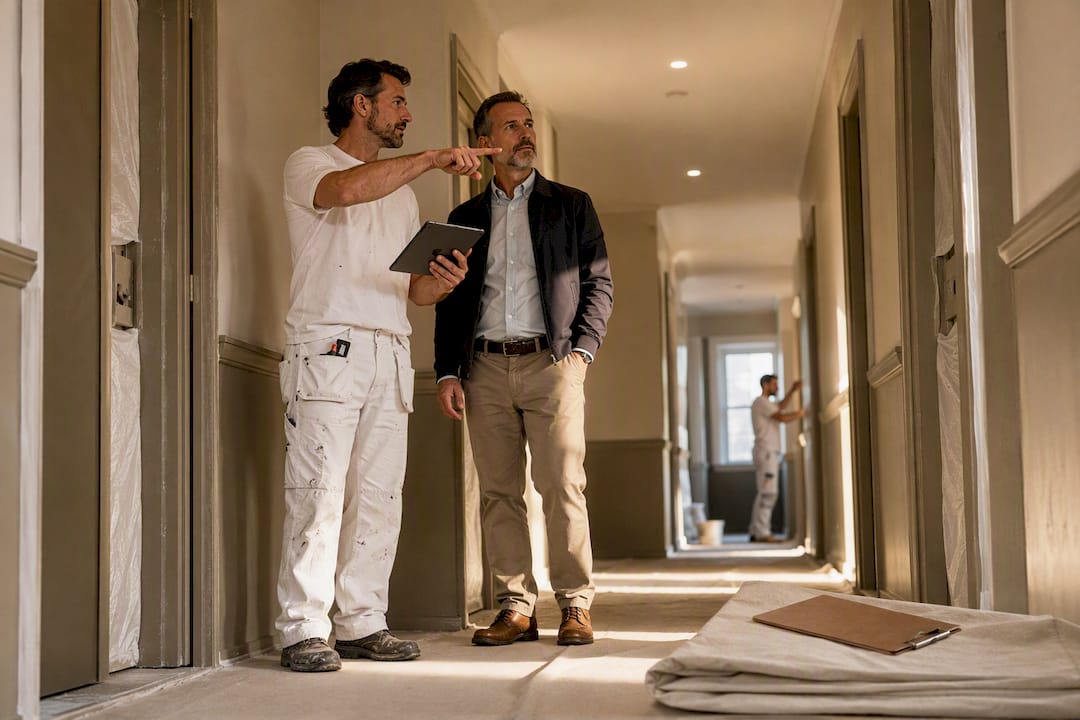

For most rental units, a full repaint is the right call when damage is widespread, odors linger, or the existing paint is significantly aged. Touch-ups work only when the unit was repainted recently and damage is truly isolated. If you’re unsure, walk the unit with a flashlight at a low angle, count the patches per wall, and call Sigma Painting for a same-day quote before you list.
Table of Contents
- What apartment turnover painting means for your vacancy rate and ROI
- How do you decide between a touch-up and a full repaint?
- Which paints and finishes hold up best in rental units?
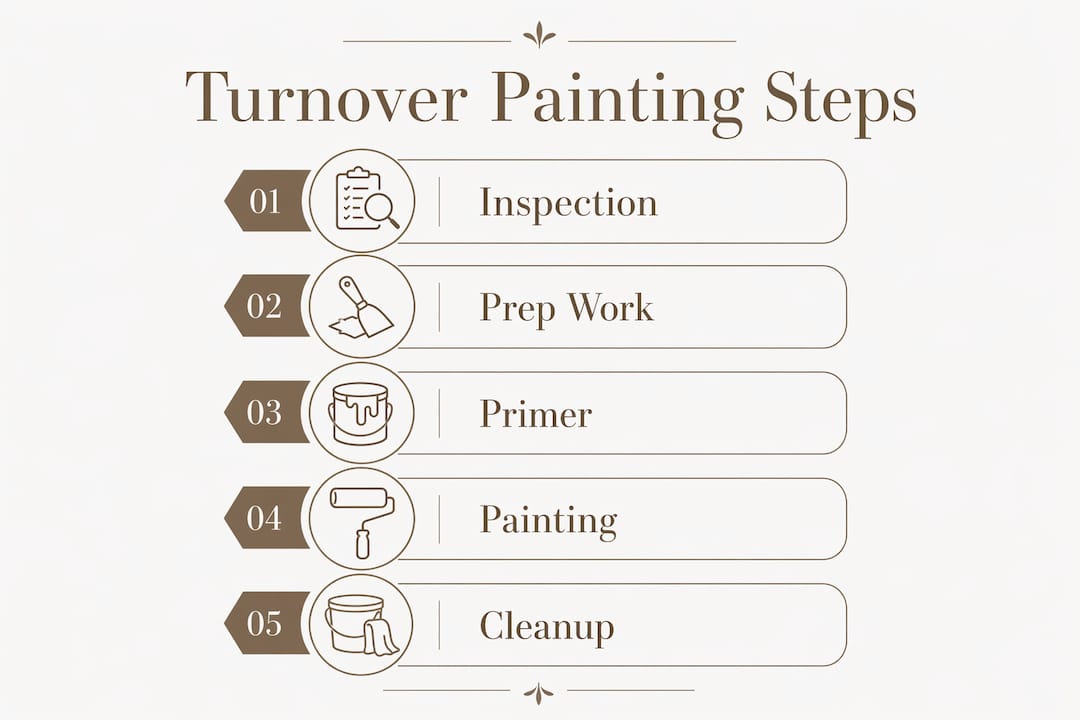
- What does a standard turnover paint job look like, step by step?
- How is the cost of apartment painting calculated?
- How do you schedule turnover painting to cut vacancy time?
- What should you ask a painting contractor before signing?
- Scope-of-work and inspection checklist you can copy into bids
- Key Takeaways
- Why landlords should treat turnover painting as a revenue tool
- Sigma Painting handles turnover painting for GTA landlords and developers
What apartment turnover painting means for your vacancy rate and ROI
Apartment turnover painting is the process of refreshing a rental unit’s walls, trim, doors, and ceilings between tenancies as part of a broader make-ready workflow. It ranges from light touch-ups on a recently painted unit to a full apartment repainting service that covers every surface. The goal is always the same: hand the next tenant a unit that looks, smells, and photographs like new.

A fresh, uniform coat of paint directly influences how quickly a unit leases and how well it photographs for digital listings, reducing vacancy days. That connection between paint quality and leasing speed is the core business case. A unit that photographs poorly sits on the market longer, and every extra day vacant is lost rent.
Standard scopes break into three tiers:
- Light touch-up: spot-fill nail holes, blend a few marks, no primer needed
- Spot prime and blend: multiple patches per wall, stain or scuff coverage, sheen-matched blending
- Full unit repaint: every wall, ceiling, trim, and door gets two coats, usually with primer
Consistent turnover painting programs act as preventative maintenance, keeping costs predictable and reducing the risk of large, budget-breaking repairs down the road.
How do you decide between a touch-up and a full repaint?
Use this checklist during your move-out walkthrough. It takes about 15 minutes and gives you a defensible scope before you call a contractor.
- Count patches per wall. When a wall has more than five patches, rolling the entire wall is usually faster and produces a more consistent result than repeated spot blending.
- Check for odor. Smoke or pet damage requires a full repaint with an odor-blocking primer. No amount of touch-up covers embedded odors.
- Assess color drift. Paint fades unevenly. If the existing color looks noticeably lighter near windows or darker in corners, spot repairs will stand out under listing-photo lighting.
- Inspect trim and doors. Scuffed baseboards and dinged door frames are often the most visible defects in listing photos. If trim is rough throughout, include it in the scope.
- Test for moisture. On older walls or units near exterior corners, press a moisture meter against the drywall before patching. Painting over active moisture causes blistering within weeks.
Touch-ups are suitable for isolated marks or nail holes in recently repainted units. A full repaint is necessary for significant damage, smoke or pet damage, or faded paint that makes spot repairs look patchy.
Which paints and finishes hold up best in rental units?
Paint grade is where landlords lose money quietly. Flat paint looks fine at move-in and shows every scuff by month three. The better choice is a commercial-grade washable finish in eggshell or satin for walls and semi-gloss for trim and doors. These sheens withstand cleaning cycles and extend the time between full repaints.
Key recommendations:
- Walls: eggshell or satin latex, commercial grade (Sherwin-Williams ProMar 200, PPG, or Benjamin Moore Regal Select)
- Trim and doors: semi-gloss latex for durability and easy wiping
- Primer: spot-prime for isolated stains; full-prime when switching from a dark color, covering smoke damage, or painting new drywall patches
- Color: warm neutrals (greige, soft white, warm gray) photograph well and appeal broadly; pick one community-wide standard and keep color records so future touch-ups match exactly
Many professional turnover teams use zero-VOC fast-dry latex such as Sherwin-Williams ProMar 200 to speed turnaround and allow faster re-occupancy. For ventilation, open windows and run exhaust fans for at least two hours after the final coat, even with low-VOC products.
Pro Tip: Ask your contractor to log the exact paint color code and batch for every unit. A spectrophotometer can match aged wall color when the original code is unavailable, preventing visible delta-E mismatches on future touch-ups.
What does a standard turnover paint job look like, step by step?
A well-run rental unit painting job follows a fixed sequence. Skipping steps is where callbacks come from.
| Stage | Task | Typical Duration |
|---|---|---|
| Walkthrough/quote | Inspect surfaces, photograph damage, confirm scope | 30 min |
| Protection | Cover floors, fixtures, and cabinets | 30 min |
| Patching and texture match | Fill holes, skim coat, sand smooth | 1–3 hrs |
| Priming | Spot or full prime per scope | 1–2 hrs |
| Two-coat wall application | Roll walls, cut edges | 2–4 hrs |
| Trim and door work | Brush semi-gloss on all trim and doors | 1–2 hrs |
| Final inspection and photo report | Walk with checklist, photograph completion | 30 min |
Turnaround times: touch-ups can complete in 4–6 hours; a single room repaint commonly takes about one day; a full 1BR repainted room by room typically finishes in 1–2 days, and a 2BR+ can take 2–3 days.
Prep and cleanup checklist to prevent callbacks:
- Remove all hardware (outlet covers, switch plates, door handles) before painting
- Sand and feather every patch to match surrounding texture
- Wipe walls with a damp cloth before priming to remove dust and grease
- Remove all tape and protection before the final inspection
- Dispose of paint cans and materials off-site
How is the cost of apartment painting calculated?
Cost drivers in order of impact:
- Labor intensity of prep: heavy patching, texture matching, and odor-blocking primer add hours
- Paint grade and primer: commercial-grade products cost more per gallon but reduce recoat frequency
- Scope of trim and doors: full trim and door work can add 20–30% to a base wall quote
- Drywall repair: large holes or water damage require a separate repair line item
- Rush or priority scheduling: expedited slots carry a premium, but vacancy costs can exceed the cost of a professional repaint when a delayed job adds one to two weeks of empty unit
A quick estimation method: multiply the unit’s total wall square footage by your contractor’s per-square-foot rate, then add flat line items for trim, doors, and patching. For a standard 1BR with moderate wear, expect line items for labor by room, paint and materials, patching, trim work, and debris disposal. Get at least two itemized bids so you can compare scope, not just total price.
How do you schedule turnover painting to cut vacancy time?
Sequence matters more than speed. The most common scheduling mistake is booking painting after cleaning, which means the crew tracks dust and debris through a freshly cleaned unit.
The correct order: move-out inspection → repairs and patching → painting → final paint inspection → deep cleaning → listing photos → tenant move-in.
Practical tactics:
- Pre-stage paint and materials the day before the crew arrives so no time is lost on supply runs
- Bundle patching, painting, and turnover cleaning services under a coordinated schedule to prevent gaps between trades
- Use fast-dry, low-VOC latex to compress drying time between coats to 2–4 hours instead of overnight
- For buildings with multiple simultaneous vacancies, use slot-based scheduling: assign each unit a fixed start date at lease signing so the contractor can plan crew capacity weeks in advance
- Keep a contingency slot open each week for unexpected move-outs
What should you ask a painting contractor before signing?
The right contractor answers these questions without hesitation. The wrong one hedges.
- What is your guaranteed turnaround time for a 1BR and 2BR unit?
- Do you provide before-and-after photos with every job?
- Can you show proof of general liability insurance and workers’ compensation coverage?
- What paint brand, grade, and sheen do you use, and will you provide the color code in writing?
- What is your remediation policy if a callback is needed within 30 days?
Contract must-haves: itemized scope (surfaces, coats, primer triggers), timeline commitment with a penalty or remediation clause, photo deliverables at completion, and documented color records for each unit.
Red flags: vague scopes (“paint as needed”), no references from property managers, heavy reliance on unsupervised day-labor, and no written color records. A contractor who cannot tell you the exact paint grade they plan to use is not a contractor you want on a tight turnover schedule.
Pro Tip: Require before-and-after photos as a contract deliverable, not a courtesy. Photos resolve disputes, speed payment approvals, and create a visual maintenance record for each unit.
When turnover work includes painting vs. replacing interior doors, a good contractor will give you an honest cost comparison rather than default to the higher-ticket option.
Scope-of-work and inspection checklist you can copy into bids
SOW template (paste into your RFP):
- Surfaces included: all interior walls, ceilings (if scoped), interior doors, and trim in the unit
- Coats: minimum two finish coats over spot or full prime as required
- Primer triggers: any stain, odor, color change greater than two LRV steps, or new drywall patch
- Excluded items: exterior surfaces, appliances, and cabinet interiors unless separately scoped
- Cleanup: all protection removed, hardware reinstalled, paint debris disposed off-site
- Photo deliverables: before photos at walkthrough, after photos at final inspection
- Warranty: 30-day workmanship guarantee covering peeling, missed coverage, and sheen inconsistency
Post-completion inspection checklist:
- Wall finish: uniform sheen, no lap marks, roller texture consistent across each wall
- Seam and texture match: patches invisible under raking light
- Trim and doors: smooth semi-gloss, no brush marks, hardware reinstalled
- Touch-up completeness: no missed spots at corners, behind doors, or above windows
- Odor control: no solvent smell; unit is ventilated and ready for occupancy
- Photo verification: contractor has submitted before-and-after set
Sign off with a dated acceptance line: “Unit [number] turnover painting accepted as complete. Date: ___. Inspector: ___.”
Key Takeaways
Apartment turnover painting pays for itself fastest when you use the right scope, the right paint grade, and a contractor who documents everything.
| Point | Details |
|---|---|
| Touch-up vs. full repaint | Use the five-patch threshold: more than five patches per wall means roll the whole wall. |
| Paint grade matters | Commercial-grade eggshell or satin on walls, semi-gloss on trim, extends time between full repaints. |
| Timeline benchmarks | Touch-ups: 4–6 hours; 1BR full repaint: 1–2 days; 2BR+: 2–3 days. |
| Vacancy cost math | A two-week delay can cost as much as a full professional repaint; prioritize scheduling. |
| Sigma Painting | Sigma Painting offers turnkey interior painting for GTA landlords and developers with itemized scopes, photo documentation, and premium-grade finishes. |
Why landlords should treat turnover painting as a revenue tool
Most property managers think about turnover painting as a cost to minimize. That framing leads to the wrong decisions: cheap flat paint that scuffs in six months, skipped primer that lets odors bleed through, and vague contractor scopes that produce callbacks and delay listings by days.
The more useful frame is revenue protection. A unit that photographs well leases faster. A unit painted with commercial-grade washable finishes costs less to maintain over a three-year tenancy than one painted with builder-grade flat. And a contractor who documents every job with before-and-after photos gives you a defensible maintenance record if a tenant disputes damage at move-out.
The contractors worth hiring are the ones who push back when your scope is too light. If a painter quotes a touch-up on a smoke-damaged unit without mentioning odor-blocking primer, that is not a deal. That is a callback waiting to happen.
Sigma Painting handles turnover painting for GTA landlords and developers
Landlords and property managers in the Greater Toronto Area who want predictable timelines, documented quality, and premium finishes without managing multiple trades have one straightforward option: Sigma Painting.
Sigma Painting’s interior painting services cover the full turnover scope: patching, priming, two-coat application on walls and ceilings, semi-gloss trim and doors, and a photo-backed completion report for every unit. For multi-unit buildings or larger development projects, the commercial painting services team handles bulk turns with slot-based scheduling designed to minimize vacancy gaps. Premium paint brands, color records kept on file, and a 30-day workmanship guarantee are standard. Get an estimate now with the instant quote calculator and have a scope and price in minutes.